2026-07-30
Using a snow blower the right way saves time and prevents damage. This guide explains how to use a snow blower safely and efficiently, whether you run a compact tractor, skid steer, UTV setup, or maintain multiple machines on a property. You’ll learn what a snow blower is, how a snow blower works, how to start and clear snow correctly, and how to use a snow blower on a driveway without clogs or broken parts.
A snow blower is a machine that picks up snow and throws it away through a chute. Snow blowers are used to clear driveways, yards, lanes, parking areas, and access paths where pushing snow into piles is not ideal.
A snow blower can be walk-behind or mounted as an attachment. Off-road machinery owners often use blowers to avoid building tall windrows that block traffic or freeze into hard berms.
A snow blower moves snow in two main actions. First, an auger pulls snow into the housing, and then an impeller (fan) throws it out the discharge chute.
This matters for operation. If you drive too fast or feed snow unevenly, the auger and impeller cannot keep up, and clogs happen.
“Feed the machine steadily. Forcing it is how you plug the chute.”
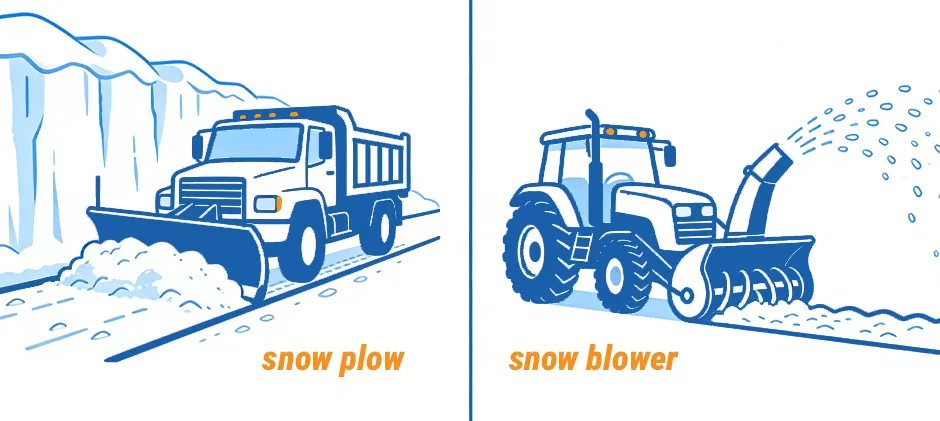
A snow blower is best when you must move snow far away. It helps when space is tight, when banks keep growing, or when you need clean edges along buildings and fences.
A plough is often faster for light snow with plenty of push room. If you are deciding between tools, use the blower when stacking becomes a problem or when drift control matters more than speed.
A quick inspection prevents most failures. Do these checks every time, especially if your machine sits outdoors.
Fresh fuel and a correct oil level are required. Old fuel causes hard starts, rough running, and carburettor issues.
Shear pins protect the auger gearbox. Confirm they are installed and not partially broken, and keep spares on the machine.
“A $5 shear pin is cheaper than a gearbox.”
A clear intake prevents jams. Remove rocks, wood chunks, frozen newspapers, straps, and anything hidden under the snow.
Loose belts reduce throwing distance. Confirm guards are in place and nothing is rubbing or fraying.
Smooth chute movement keeps you safe. Make sure chute rotation and deflector controls move freely and hold position.
Traction controls safety. Check tyre pressure, track tension (if applicable), and that the machine drives straight under load.
A clean path prevents dangerous projectiles. Walk the route and remove cords, doormats, stakes, and loose gravel where possible.
These steps show how to operate a snow blower in a way that is easy on the machine and safe for the operator.
Step 1: How Should You Dress And Prepare?
Warm gear and eye protection are important. Wear tight-fitting clothing, sturdy boots, and gloves that still let you feel the controls.
Chute direction comes first. Aim away from people, glass, vehicles, and animals, and plan for wind so snow does not blow back.
“Always know where the snow will land before you pull the trigger.”
Stable footing prevents falls. Start on level ground, follow your model’s choke/prime steps, and let the engine warm up for a short time.
Slow speed is the default for heavy snow. Run the engine speed high enough for a strong impeller throw, and use a low ground speed to avoid overload.
Engage in a clear spot first. Do not drop the auger into a frozen bank at full bite because that is how shear pins snap.
Even feeding prevents clogs. Keep a steady forward pace and let the blower “eat” at its own rate.
Smaller bites work better. Take half-width passes or raise the intake slightly and make a first “top cut,” then clear the rest.
Controlled movements protect drivetrains. Disengage the auger when repositioning in tight areas, and avoid spinning tyres on gravel.
Stop in the right order. Release drive and auger controls, lower throttle, and shut down only after the machine is stable and clear.
The driveway technique saves time. Use these methods if you’re learning how to use the snow blower for clean, repeatable results.
Starting in the middle reduces rework. Blow snow to one side on the first pass, then return and blow to the other side.
Small overlap prevents streaks. Overlap each pass by a few inches, like mowing a lawn.
Wind direction controls visibility. Throw with the wind when possible to avoid blowback and ice dust in your face.
Low intake and slow speed help early season. If the base is not frozen, reduce bite depth and avoid aggressive scraping.
Break hard piles in layers. Take narrow bites from the top and edges first instead of ramming straight in.
Choose safe landing zones. Do not throw snow where it will block sight lines, doors, drains, or access routes later.
Hands should never go into the chute. Shut off the engine, wait for all movement to stop, remove the key, and use the clean-out tool.
Stored energy is real. Even with the engine off, packed snow can release and spin the auger suddenly.
“Never clear a chute with your hand—ever.”
End-of-job care prevents next-start problems. Keep it simple and consistent.
Run the auger briefly after the last pass. This helps eject slush before it freezes inside.
Brush off snow and ice from the controls and belt areas. Do not chip aggressively with metal tools that can damage paint and guards.
A fast walk-around is enough. Look for missing bolts, loose skid shoes, and any wobble in the chute.
Refuel only after cooling. This reduces fire risk and makes the next start easier.
Dry storage matters most. Keep it under cover and off wet ground when possible.
Do deeper service on a schedule. Belts, scraper bars, skid shoes, and shear pins should be checked regularly during peak season.
Bad habits break snow blowers. Avoid these to reduce downtime across your fleet.
Good snow blowing is simple. Do quick safety checks, feed snow steadily, aim the chute with a plan, and clear clogs only with tools after shutdown. If you need routine wear parts (like shear pins, belts, skid shoes, or engine service items), you can find options on MechLink’ snow equipment page.