2026-09-06
The biggest thing about an excavator is that its upper body can spin a full 360 degrees right on the tracks. It’s this spinning ability that makes the machine so powerful and versatile. But have you ever wondered what makes this all possible? The answer is a key part called the slew bearing. Let’s take a look at what this part is, how it works, and how to maintain it.
A slew bearing—also called a slewing ring or turntable bearing—might look like just a big, plain metal ring. But it’s actually a precision-built part. To really get how it works, you need to check out the components that team up to handle heavy forces.
One more thing worth mentioning: the swing drive. It’s a separate system, but it works directly with the slew bearing. The swing drive has a hydraulic motor and a gearbox that turns a small pinion gear. This pinion gear meshes with the teeth on the slew bearing, and that’s what gives the machine the force to rotate its upper house.
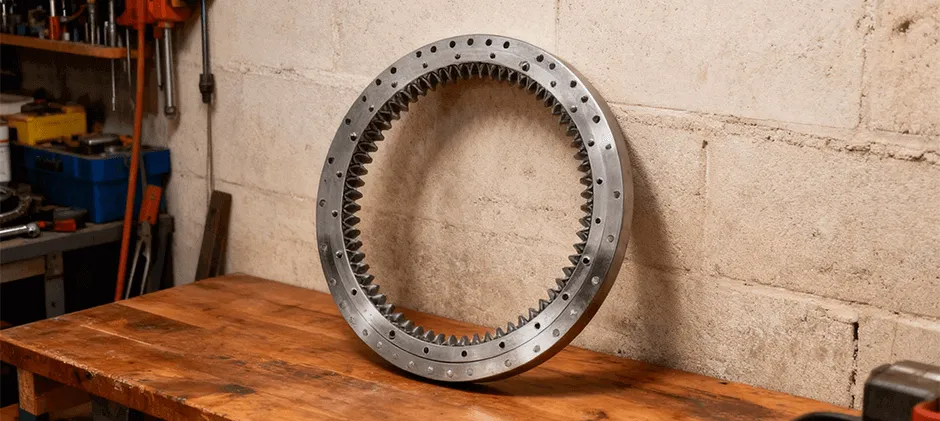
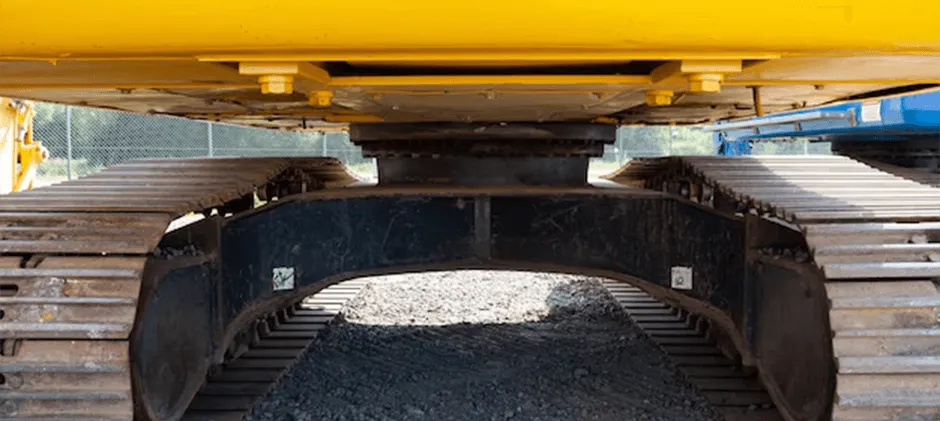
The slew bearing is the critical rotating link between an excavator’s fixed undercarriage and its spinning upper body.
How it works is total mechanical magic. When the operator moves the joystick to swing the machine, hydraulic fluid fires up the swing drive motor. The motor spins the pinion gear, which locks onto the big gear on the slew bearing’s inner ring. As the pinion turns, it forces the inner ring (and the whole upper body attached to it) to spin around the stationary outer ring.
But the slew bearing does way more than just let the machine rotate. It’s a total load-carrying workhorse. It handles three types of forces all at the same time:
Slew bearings are built specifically to handle all these forces together. They keep the machine stable and the movement smooth. Without one, an excavator would just be a fixed digging tool that can’t turn at all.
Slew bearings work under crazy high stress. And on a rough construction site, a bunch of things can make them wear out and eventually break down. Knowing what causes this is the first step to preventing it.
When the seals get worn or damaged, gritty stuff like dirt, sand, and water can get into the raceways. Once inside, this gunk mixes with the grease and turns into a grinding paste. This paste tears up the smooth surfaces of the rolling elements and raceways in no time.
A slew bearing can fail if it doesn’t have enough grease—or if you use the wrong kind. Too little grease means metal rubs directly against metal. This creates tons of heat and makes the metal surfaces flake off—a problem we call spalling. Using grease that isn’t made for heavy-duty pressure is just as bad. It won’t form a good enough protective layer.
Every excavator has a lift chart for a reason. Lifting stuff heavier than the machine’s rated limit on a regular basis, or slamming the bucket into the ground hard, or dropping heavy loads—all of these hit the slew bearing with massive stress. This can create tiny dents in the raceways (we call this brinelling), and these dents turn into cracks and spalling later on.
The bolts holding the slew bearing to the upper and lower frames will stretch and loosen over time—all that vibration and constant load changes are to blame. If you don’t check these bolts regularly and tighten them to the manufacturer’s specs, the bearing will shift a tiny bit. This misalignment shoves the machine’s entire weight onto one small spot of the bearing, leading to quick, localized wear and a total breakdown before long.
The number one reason we see slew bearings fail early isn’t a bad part—it’s skipping regular greasing and bolt torque checks.
A slew bearing that’s going bad will almost always give you warning signs before it totally breaks down. Learning to spot these signs when you do your daily walk-around checks can save you from a sudden breakdown on the job site.
How long your excavator’s slew bearing lasts depends directly on how well you maintain it. Taking care of it proactively is way cheaper and less time-consuming than replacing it after it breaks. Follow these simple best practices to make this key part last as long as possible.
The slew bearing is the quiet workhorse that lets your machine spin smoothly and position precisely— it’s what makes heavy-duty construction and digging jobs doable. If you understand how slew bearings work, what causes them to wear out early, and how to take care of them, you’ll keep your machine running at its best and keep your operators safe. And if a slew bearing does go bad? Replace it as soon as you can. Otherwise, your excavator won’t work right. Luckily, at MechLink, you can find good-quality, affordable excavator replacement parts easily.