2026-09-04
Changing a spark plug sounds simple, but one wrong tool can turn it into a headache. If the socket is too big, it slips and rounds the hex. If it’s too thick, it may not fit down into the plug well. This guide helps off-road machine owners (ATVs, UTVs, skid steers, compact loaders, small engines, generators, etc.) pick the right socket and use it safely.
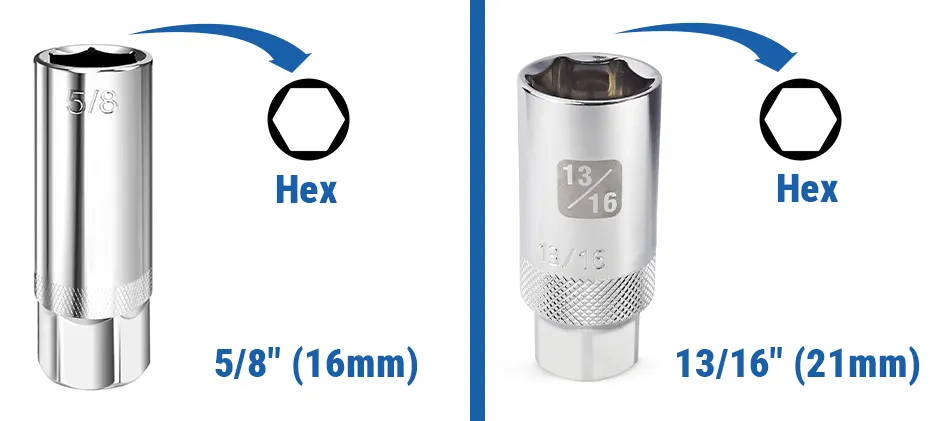
Most spark plugs use one of two socket sizes:
There are also a few other sizes you may run into:
Important: The “socket size” here means the hex size of the spark plug, not the thread size.
A Special Case: “Some BMW engines… must be removed with a thin-wall 12-point 14mm socket.”
This is a good reminder that some engines have special requirements. In tight plug wells, a normal socket may be too thick to slide over the plug. In that case, you may need:
You don’t need to memorize exceptions. Just remember: if the socket won’t fit down into the hole, don’t force it—get the correct thin-wall socket.
Don’t guess. Spark plug hex sizes can vary even between similar engines. Use one of these quick methods so you get the right tool before you start.
Look in the maintenance section for the spark plug information. Many manuals list:
If your manual lists only the plug part number, you can still use that part number to find the plug’s hex size.
If you already bought a replacement plug, check:
Look for a spec called “Hex Size.” That hex size tells you the socket size you need.
Search using your machine details and the exact phrase. Example:
Good results often come from:
Tip: If you see different answers online, trust the spark plug part number first. Then confirm the hex size for that exact plug.
A socket is not just a deep socket. It usually has one helpful feature inside:
This does two jobs:
This matters because spark plugs are fragile. A small crack can cause misfires later.
Extra tip for off-road owners: If your machine runs in mud, dust, or water, a plug well can be dirty. A spark plug socket helps you remove and install the plug with more control.
Yes, sometimes you can. Some experienced mechanics prefer a normal deep socket. A common method is:
This can work well, but it has risks—especially if you’re new.
If you’re not doing this all the time, a real spark plug socket is usually the safest choice. It’s cheap, and it prevents a lot of mistakes.
Small but important tip: Always start threading the new spark plug by hand first (using just your fingers and an extension). If it doesn’t screw in easily, stop and try again. This helps avoid cross-threading.
Changing a spark plug goes smoothly when you know the correct socket size—most commonly 5/8″ (16mm) or 13/16″ (21mm)—and when you use the right tool. A regular deep socket can work, but a spark plug socket makes the job easier and reduces the chance of damaging the plug.
Regular maintenance helps your off-road equipment start more easily, idle smoothly, and run more reliably. If you’re due for new plugs, you can choose a quality replacement that matches your engine’s specs from MechLink’ spark plug selection.