
2026-11-18
A Craftsman snowblower that won't start on a freezing morning can bring your snow-clearing routine to a halt. In most cases, the engine fails to fire because of one of three reasons: no fresh fuel, no spark, or no airflow. This guide walks you through a systematic diagnosis so you can get your machine running again.
All small engines require the correct mixture of air, fuel, and spark to ignite and run. Missing any one of these elements stops the engine from starting. Often, the snowblower has been sitting unused all summer. Fuel that goes stale breaks down and forms a sticky varnish, which clogs the small passages inside the fuel system.
Before taking anything apart, check the simple items first. A disconnected wire, an empty tank, or an incorrect switch position can mimic a major mechanical failure. This article is organized as follows: verify external controls, inspect the spark plug, test the ignition system, and then address any carburetor blockage.
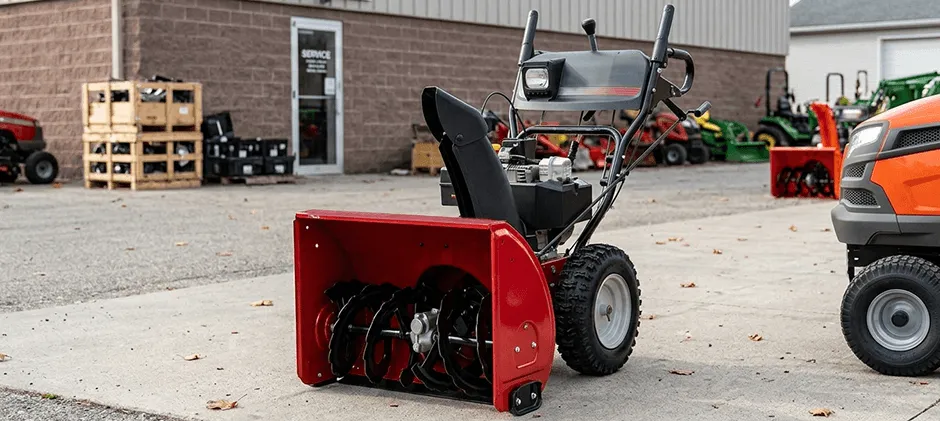
Snow thrower engines rely on specific startup settings. Check these controls on your machine before reaching for tools.
If these settings are correct and the engine still cranks without starting, move on to the mechanical components.
Determine whether fuel actually reaches the combustion chamber. Remove the gas cap and look inside the tank. Confirm there is enough clean, fresh gasoline. Fuel can degrade within 30 days, especially if it contains ethanol. Ethanol attracts moisture from the air, causing water to collect at the bottom of the tank.
If the fuel is fresh, examine the spark plug next. The spark plug's appearance offers clues about internal engine conditions.
Inspect the spark plug tip.
When the spark plug is wet with fuel, or you want to rule out electrical faults, test for spark. The ignition coil produces high voltage that travels along the wire and jumps the gap at the spark plug tip. Follow these steps.
Never hold the metal threads of the spark plug during this test. Grip only the thick rubber boot to avoid an electric shock.
If a spark appears, the electrical system is working. If no spark is visible, the old plug may be fouled with carbon or cracked. Repeat the test with a new spark plug. If a new plug still produces no spark, the ignition coil is likely faulty and should be replaced.
A dry spark plug indicates a blocked fuel system, and a dirty carburetor is the usual suspect. When old fuel evaporates inside the carburetor, it leaves behind crusty deposits. This residue clogs the main jet, a small brass tube that sprays fuel into the engine.
Remove the plastic engine cover and any metal heat shields surrounding the engine. The carburetor is bolted to the side of the engine block. Use pliers to slide the metal clamp back on the black rubber fuel hose. Pinch the fuel line to prevent spills, then pull the hose off the carburetor fitting.
At the bottom of the carburetor is a metal cup called the float bowl. Use a wrench to remove the single bolt holding it in place. Keep a rag nearby because old fuel will drain out. Inspect the inside of the bowl. White crust, rust, or green slimy residue confirms a blockage.
The bolt you removed from the bowl bottom may also serve as the main jet. Examine it closely—it has small holes along the sides and through the center. Spray aerosol carburetor cleaner to dissolve the varnish. Run a thin wire through the small holes to ensure they are fully open.
Spray cleaner on other exposed carburetor parts and verify that the plastic float moves freely. Once everything is clean and dry, tighten the bowl back into place. Reattach the fuel line and release the pinch on the hose.
Fill the tank with fresh, ethanol-free gasoline. Press the primer bulb a few times, set the choke, and pull the starter rope. With a clean fuel system and good spark, the engine should start promptly.
Diagnosing a Craftsman snowblower that won't start begins with basic external checks and then moves through the fuel and electrical systems. These steps resolve most no-start conditions. Find reliable replacement parts for your Craftsman snowblower at MechLink.
Buying Used Excavators in the Middle East: A Practical Sourcing Playbook
2026-11-18
Front-End Loaders in Construction: Core Jobs and Attachments
2026-11-18
New or Used Wheel Loader: A Cost and Risk Comparison
2026-11-17

Boom Lift Types: Reach, Mobility, and Safe Applications
2026-11-17