
2026-11-24
After fuel, tires are one of the biggest line items in running a heavy equipment fleet. Looking after them properly keeps operating costs down, keeps operators safe and keeps machines where they belong — on the job rather than in the yard.
Tire designs and sizes vary enormously, but the principles behind long tire life do not. Four habits cover most of it: correct inflation, the right tire for the application, regular cleaning and a record of how each tire performs.
Nothing matters more than pressure. Run equipment on under-inflated tires and the tread wears out faster while the sidewalls become far more likely to rupture.
The correct pressure for a given machine depends on how it is used, how much load it carries and how fast it travels. As a general rule, choose the lowest inflation pressure that still supports the maximum expected load at the highest speed the machine will reach on site.
There is no universal PSI, because equipment and tires differ so widely. Skid steer tires, for instance, typically run at 45–60 PSI, while forklift tires are usually inflated to 100–120 PSI.
The authoritative figure for your machine is in its service manual, and some tires also carry the recommended pressure on the sidewall. Have operators check pressures weekly; keeping tires at the correct inflation is the simplest way to extend their life and cut downtime.
Specifying the correct tire in the first place is one of the most effective ways to reduce maintenance spending. Three characteristics drive the decision: size, tread pattern and construction.
In most cases, stay with the size the manufacturer specifies. You will find it on the tire sidewall or in the operating manual.
There are situations where going slightly larger pays off. A heavy-duty tire with a larger outer diameter can carry more load and last longer than a smaller equivalent.
Whether that trade makes sense depends entirely on the machine and the job. Fitting oversized tires to a skid steer with a bucket, for example, would lift the bucket too far off the ground to be useful.
Tread patterns are built around particular ground conditions — sand, gravel, dirt and so on. The right choice depends on what your jobsite looks like and how many different surfaces the machine has to handle.
Sometimes the best answer is no tread at all. In industrial warehouses, forklifts commonly run on smooth solid press-on tires.
If the options are not obvious, talk to your tire supplier. They can match a tread design to the work you actually do.
Heavy equipment tires divide into two broad families: pneumatic and solid. Pneumatic tires are air-filled; solid, or airless, tires are molded from a synthetic material such as rubber throughout.
Pneumatic tires cost less and ride much more smoothly, but they demand more attention because punctures and blowouts are a constant risk. Solid tires cannot go flat and generally last longer, which suits punishing applications such as landfill work or excavation.
Most of the time the manufacturer’s recommendation should decide the question. Fitting a tire the machine was not designed for can damage its undercarriage or the wheels themselves.
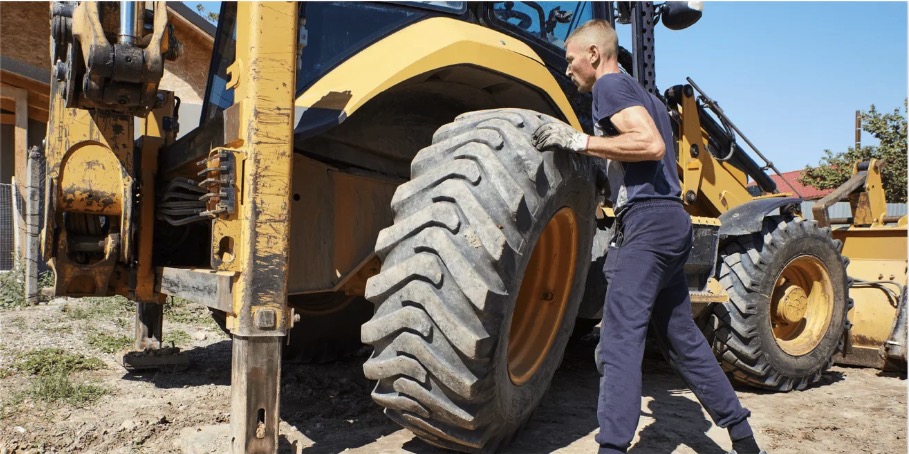
Washing a machine’s tires does more than keep it looking tidy. Clean rubber is easier to inspect, and inspection is how small damage gets caught before it becomes a failure.
A pressure washer or a jet nozzle does the job well. Where rocks or debris are wedged into the tread, work them out with a small file or a pry bar rather than leaving them to work their way deeper into the rubber.
Once the tire is clean, look closely at the tread for cuts and chips picked up during the shift. Also watch for uneven wear and for signs that something has penetrated the tire, such as small bubbles or bumps on the surface.
Make this a routine at the end of every shift. Tires stay in better condition, and the ones due for retreading or replacement become obvious early. After cleaning, covers can protect the rest of the site from the effects of heavy tires — brands such as TireSocks make products designed for exactly that.
A tracking program shows you what your tires actually cost to run. In its simplest form it means recording the hours a tire clocks before it needs retreading or replacement, which you can do by noting the machine’s hour meter each time the work is carried out.
Over time those records reveal which brands and models deliver value and which ones fall short. They can also flag operators whose working style is unusually hard on rubber, giving you a training opportunity rather than a repeat repair bill.
When the time comes to work on the machine, the parts you need are in MechLink’s Online Parts Catalog. OEM parts and fast shipping mean you can get exactly what is required and be back to work. If you need help identifying a part for your equipment, our parts experts can make the process simpler.
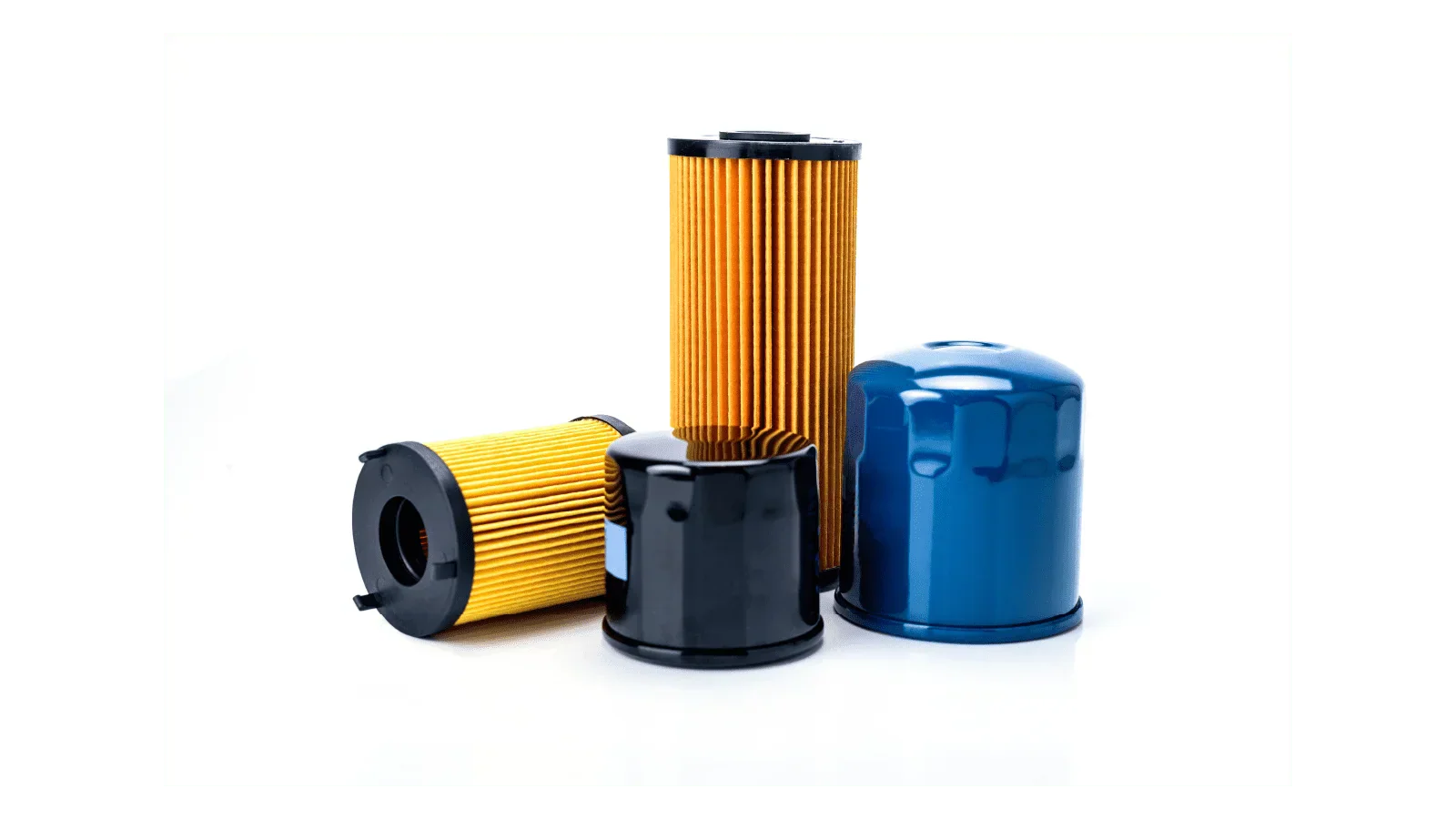
Fuel filter or oil filter? Telling apart two parts that protect very different systems
2026-11-24
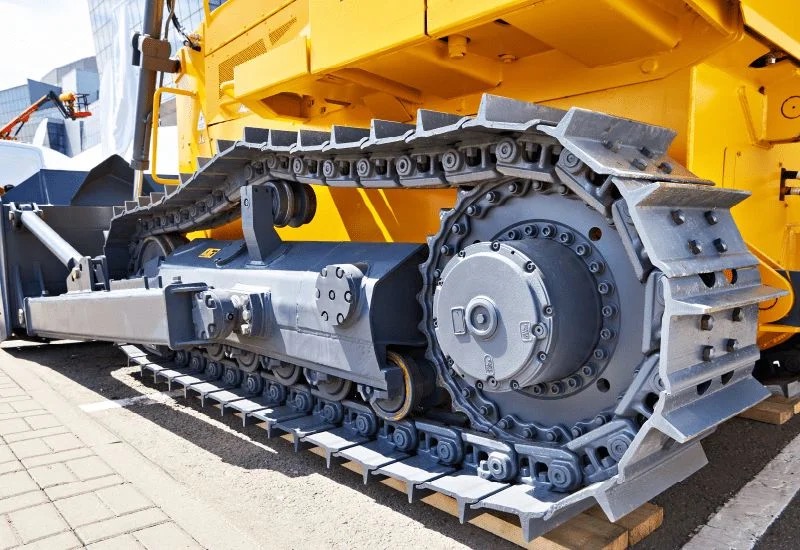
9 Undercarriage Habits That Keep Tracked Machines Running Longer
2026-11-23
Is Your Fuel Filter Clogged? Five Symptoms You Should Not Ignore
2026-11-23

Hydraulic cylinder seals: five parts that decide cylinder performance
2026-11-22