2026-05-19
Many a construction site, farm, and mine oftentimes must confront the necessity of operating machinery ere the break of dawn or amidst the nocturnal hours. Beneath such meager illumination, the headlamps of the machine constitute verily the paramount safeguard. Yet, the mere act of igniting them doth not suffice. To wield the improper beam at the improper juncture is fraught with peril no less grave than neglecting illumination altogether, thereby imperiling both operator, ground attendants, and precious apparatus. To apprehend the fundamental divergence between high beam and low beam serves not solely the observance of regulation; of greater import it is, to amplify visibility to its utmost and assure the sanctity of safety. This present compendium shall expound in detail the several functions of each beam, and bequeath unto the reader perspicuous and pragmatic ordinances for their application within the off-road dominion.
Although the high beam and the low beam are both installed inside the same headlamp component, they are actually two kinds of tools utterly not the same, being designed for completely different purposes. One should not merely imagine them as “brighter” and “darker,” but rather one ought to regard them as the spotlight and the floodlight.
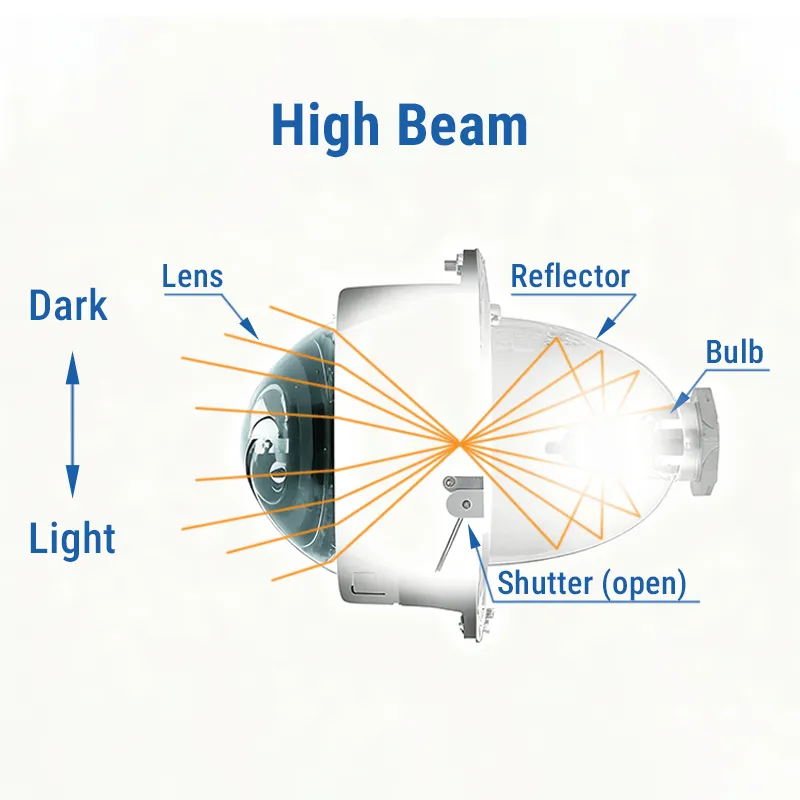
High beams, sometimes called “main beams” or “full beams,” are designed for maximum forward illumination when you are alone in a dark, open area.
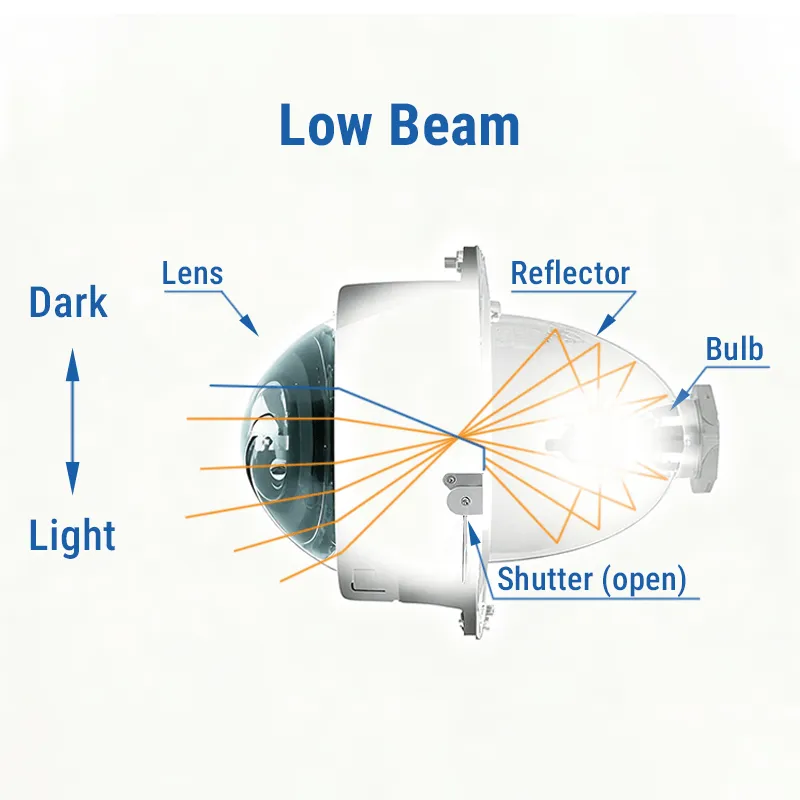
Low beams, also known as “dipped beams,” are your standard, everyday headlights for working in proximity to others or in conditions that require careful, close-range visibility.
The essential distinction between the high beam and the low beam does not solely reside in the mere brightness, but rather in the peculiar configuration and orientation of the luminous stream. Though both emanate from the selfsame bulb within the headlamp, it is the assemblage of the headlamp itself that performs the shaping of the ray, thus begetting two utterly divergent functions.
In the most elementary parlance:
This is the most critical difference.
Each beam is a tool for a specific situation.
They illuminate completely different zones.
This is the most important safety consideration.
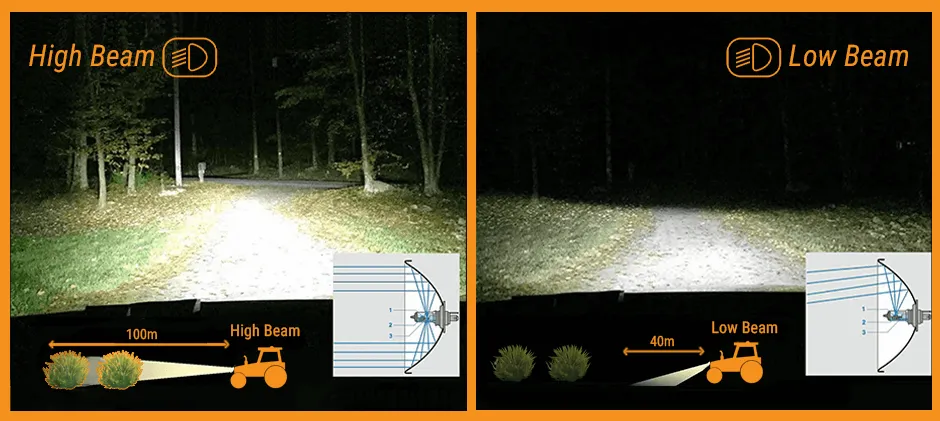
| Feature | High Beam | Low Beam |
| Beam Angle | Aimed straight ahead, parallel to the ground. | Angled downward with a sharp upper cutoff line. |
| Primary Purpose | Maximum long-distance visibility in open areas. | Safe, close-range illumination without blinding others. |
| Illumination Range | 350-500+ feet (100-150+ meters) | 150-200 feet (45-60 meters) |
| Intensity & Pattern | Highly intense, focused central hotspot. | Less intense, wider, and evenly distributed pattern. |
| Best Use Case | Traveling alone on dark rural roads, inspecting distant areas. | Working near other machines/personnel; dusty/foggy conditions. |
| Effect on Others | Causes severe, dangerous glare; temporarily blinds them. | Minimizes glare, allowing others to see and work safely. |
Understanding these differences is key to using your machine’s entire light system correctly and safely. Now, let’s look at the specific on-site situations where you should use each one.
Knowing the technical differences is one thing; applying them on a dynamic job site is another. Here are the clear, practical rules for your off-road equipment.
For tasks requiring intense, specific area lighting without affecting others, a dedicated LED work light is often a better solution than relying on your main travel headlights.
Beyond knowing when to switch between high and low beams, maintaining your lighting system properly is equally crucial to ensure optimal performance.
Proper lighting management isn’t just a technical practice—it’s part of professional worksite safety culture. Operators who understand and apply beam control effectively not only protect themselves but also significantly improve overall productivity.
To comprehend and to employ the high beam and the low beam is a fundamental skill belonging to any professional operator. This simple habit is exerting enormous influence upon the entirety of the safety and efficiency of the operation. Under no means should your safety be put into jeopardy because of such. The aftermarket accessories of high quality are providing an economical and efficient method, which can ensure that your illuminating system remains in perfect working condition. MechLink possesses a great quantity of spare parts stock compatible with numerous brands of heavy-duty equipment, by which you may obtain, at an affordable price, the high-quality products you are in need of, thereby ensuring your machine is both safe and efficient.