2026-07-02
A forklift hydraulic fluid leak is never “just a mess.” It can turn into lost lift power, unsafe handling, damaged components, and unplanned downtime fast. In this guide, we’ll walk through what we should do the moment we spot a leak, how to inspect the system safely, and the most common leak sources on off-road/material-handling forklifts—so we can fix the root cause instead of topping off fluid and hoping for the best.
Forklifts rely on hydraulic pressure for the functions that keep work moving: lifting, tilting, and often steering. When fluid escapes, don’t just lose oil—you should lose pressure stability. That creates risks in four areas:
A small hydraulic fluid leak can cause:
Even off-road/material-handling operations often have internal rules for spills and cleanup. Leaks can also damage floors and create ongoing housekeeping costs.
Transitioning from “why it matters” to “what you do next,” the goal is simple: make it safe, find the source, fix it correctly, and prevent a repeat.
This is the main playbook you can follow on-site. It’s written for owners, supervisors, and techs who need a practical process—not guesswork. A key part of that process is minimizing downtime, which depends on having quick access to the correct forklift parts—whether it’s a simple seal, a new hose, or a hydraulic fitting—to complete the repair efficiently and get your equipment back to work.
If you see active drips, wet hoses, or a puddle:
Why you do this: continuing to operate can pull air into the system, drop pressure under load, and spread oil across the work zone.
Tip: If the forklift is leaking near the mast, check for fluid running down channels and dripping at a different point than the real source. Leaks often “travel.”
Hydraulic fluid can be hot, and hydraulic systems can stay pressurized. Before touching anything:
Safety note: High-pressure fluid can penetrate skin through tiny pinhole leaks.
Forklifts may have other fluids, so you should verify:
If you’re not sure, don’t mix fluids—identify first.
With the forklift secured:
If fluid is contaminated, fixing the external leak alone may not restore reliable operation—contamination can keep damaging seals and valves.
Leaks are hard to trace on a dirty machine. A quick clean helps:
Once the area is clean, even a small seep becomes visible.
you can find leaks more quickly by following the “most common” path:
Look for cracks, abrasion, bulges, wet spots, and rub points.
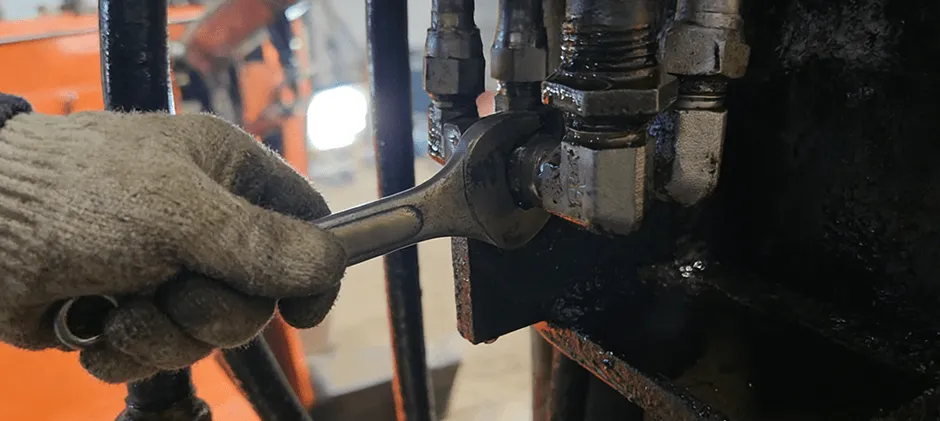
Check for looseness, damaged flare faces, and seepage rings around threads.
Wetness around spool ends, plugs, or valve block joints can indicate seal failure.
A loose filter, damaged O-ring, or cracked housing can leak under flow.
Look for corrosion, dents, and vibration wear where clamps are missing.
Some leaks appear only under pressure and movement. If your procedure and site rules allow:
If the leak rate increases under load, that’s a strong clue for a pressurized circuit leak (hose/fitting/valve/cylinder seal).
Temporary measures may move the forklift to a service spot, but they should not become the normal operation. For a dependable fix:
If the leak points to a cylinder, sourcing the correct replacement or rebuild parts matters. This is where having a focused parts catalog helps—see hydraulic cylinder for forklift and off-road equipment cylinder options and related components.
Once you usually find leaks more quickly by following the “most common” path: fix the leak:
And if multiple components show wetness, we should assume the system has been running hot or contaminated—and schedule a broader check instead of chasing leaks one-by-one.
For broader system service items (pumps, valves, hoses, connectors), browsing a complete hydraulic category can save time—see hydraulic & pneumatic parts.
Now that we’ve covered what to do, let’s pin down why it happened. Most forklift hydraulic fluid leak cases fall into these root causes:
Forklift hoses flex and vibrate constantly, and they often rub against mast structures or guards. Common signs:
Prevention: correct routing, proper clamps, and replacing hoses before they fail.
Leaks at fittings are often caused by:
Field reality: “tightening until it stops leaking” can work once, then fail harder later. Correct torque and the correct sealing method matter.
Cylinders are frequent leak points because seals live in a hard environment:
What we might see:
If you’re chasing recurring leaks at the same cylinder, you should inspect the rod surface—new seals won’t survive on a damaged rod.
Valve blocks can leak at:
These leaks may be slow at idle but worsen when functions are activated.
A restricted filter can increase differential pressure and stress seals and housings. Leaks show up around:
Good practice: replace filters on schedule and use the correct spec so flow isn’t restricted.
Contamination is a leak multiplier:
Common contamination sources:
In off-road/material handling zones, impacts happen. A small dent can become a crack, especially when combined with vibration.
| What you notice | Likely source | What you check first | Typical fix |
| Puddle under the mast area | Lift/tilt cylinder seals, hose near mast | Clean + inspect rods/glands + hose rub points | Reseal/rebuild cylinder or replace hose |
| Oil on cylinder rod | Rod seal/wiper, rod damage | Check the rod for pitting/scoring | Seal kit or cylinder repair/replace |
| Wet fitting, slow seep | Loose-fitting or damaged sealing face | Correct fitting type + torque + sealing surface | Retorque correctly or replace the fitting |
| Pump whine + low level | Air ingestion from a leak, low fluid | Check the suction side, hoses, and reservoir level | Fix leak + refill + recheck |
| Oil around the valve body | Spool end seals or plugs | Look for wetness lines after cleaning | Reseal valve area / replace seals |
| Frequent top-offs, no obvious puddle | Small pinhole spray, hidden drip path | Inspect under load; check hoses for misting | Replace the hose/line |
A forklift hydraulic fluid leak can quickly become a safety risk, a performance issue, and a costly downtime event. Our best move is to stop operation, contain the spill, depressurize, then inspect hoses, fittings, cylinders, valves, and filters in a clean, logical order. Fixing the root cause—and replacing worn parts on time—prevents repeat leaks. As an aftermarket parts supplier, MechLink offers high-quality products at affordable prices, a vast inventory, and wide compatibility across many heavy equipment brands.