2026-05-24
A clogged Diesel Particulate Filter (DPF) can make your off-road equipment sluggish, cutting power and causing costly downtime. This guide explains how your DPF system works, what warning signs to watch for, and clear steps to clean it safely to make sure your equipment stays reliable on every job.
The DPF captures tiny soot particles from diesel exhaust, stopping them from entering the air.
As soot collects inside the filter, it is burned off during regeneration, leaving behind ash. This buildup blocks airflow and increases pressure inside the exhaust system. When backpressure gets too high, your engine struggles — it may lose power, use more fuel, or even shut down.
That’s why regular DPF cleaning isn’t just about meeting emission rules — it’s an essential step to protect your engine, improve performance, and reduce breakdowns.
Most modern diesel machines can clean the DPF automatically through a process called regeneration.
Regeneration burns away the trapped soot by raising exhaust temperatures to very high levels.
There are three types of regeneration to understand:
Passive regeneration happens naturally while you work — usually when your machine is under a heavy load or running for a long time at high speed.
When exhaust temperatures reach around 350°C / 660°F, the soot inside the filter burns away on its own.
You won’t notice this process happening. It’s an automatic part of your machine’s normal operation when it’s being worked hard enough.
If the exhaust doesn’t get hot enough for passive cleaning, the engine’s computer (ECU) will start active regeneration.
During active regeneration, a small amount of extra fuel is injected into the exhaust system just before the Diesel Oxidation Catalyst (DOC), which then rapidly oxidizes the fuel, increasing the
temperature to about 600°C / 1,100°F to burn off the soot.
You might see a warning light or notice changes such as a stronger exhaust smell, louder cooling fans, or a slight change in engine noise during this process.
If the filter becomes too full, manual regeneration is needed. This is when you — the operator — must start the cleaning yourself.
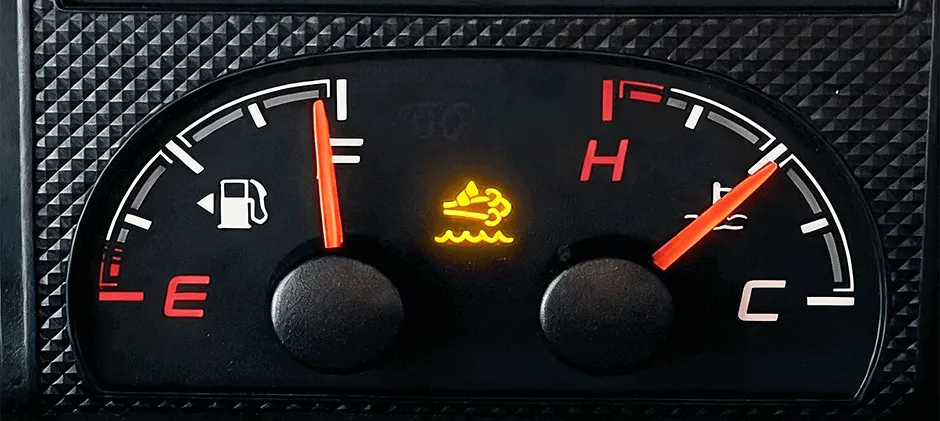
You’ll see a DPF warning light on the dashboard telling you it’s time.
To fix it, park the machine safely and start the regeneration cycle. The engine runs at high idle for about 20–40 minutes to burn the soot completely.
This manual process helps when automatic systems can no longer clear the filter on their own.
Your machine gives clear warnings before a serious DPF problem.
Here are the main signs to watch for:
“A forced regeneration can clear soot buildup. But if warning lights keep returning, the filter likely needs a professional cleaning. Don’t wait until it causes damage.”
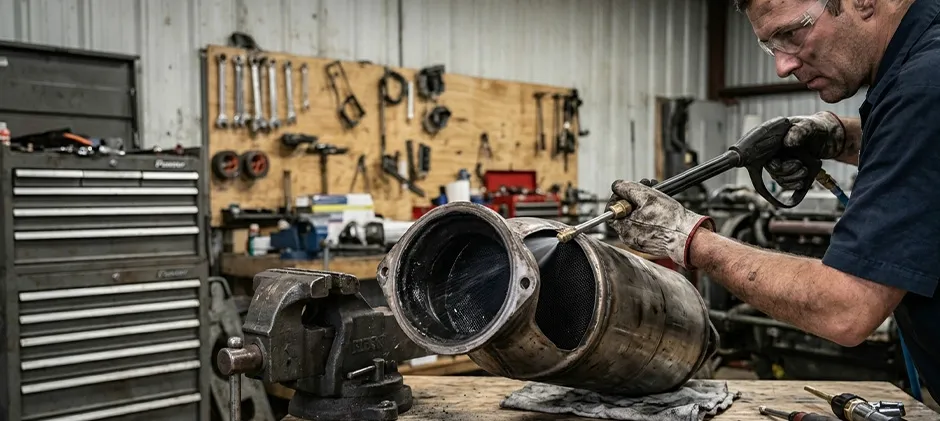
If regeneration can’t clean the DPF anymore, there are two reliable ways to restore it.
This is the first cleaning step when the DPF warning light appears.
A forced regeneration can often remove moderate soot buildup and restore normal operation.
The full regen usually takes 20–40 minutes. Always check your operator’s manual for specific steps for your equipment.
Even after many regenerations, ash remains inside the DPF.
After about 3,000–5,000 operating hours, the filter needs professional cleaning to remove this buildup completely.
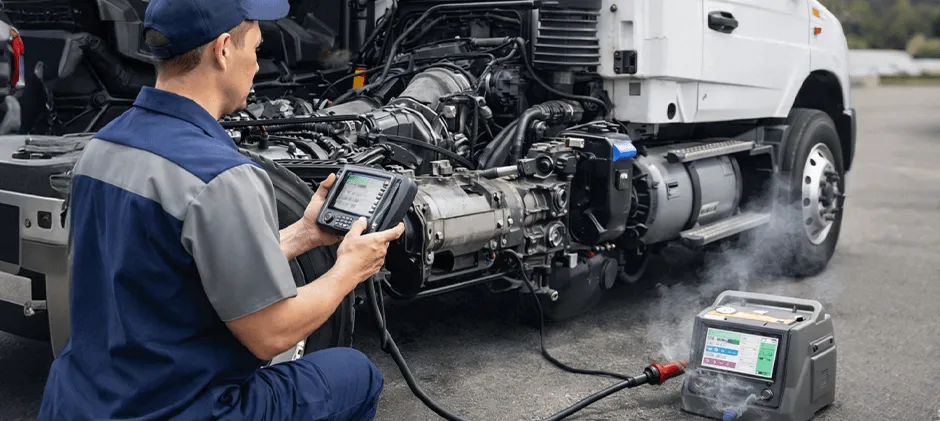
Technicians use safe, specialized equipment for cleaning:
After this service, your DPF is restored to near-new performance and ready to work again. Professionals often inspect the Diesel Oxidation Catalyst (DOC) at the same time to ensure both parts are clean and effective.
Regular DPF care prevents power loss, poor fuel economy, and unplanned downtime. If your DPF is beyond cleaning or damaged, replacing it with a quality component is the safest option.
Whether you need a replacement DPF filter or sensors, MechLink provides durable, tested parts to keep your off-road equipment back on the job — running clean and strong.