
2026-11-21
Hydraulic oil is designed to stay inside a sealed circuit. When it doesn’t, the leak is named for where the fluid ends up. An internal leak keeps the oil inside the machine but lets it slip from a high-pressure zone to a low-pressure one through a worn or failed part. An external leak lets fluid escape the hydraulic system entirely, which is the version you are most likely to see on the ground.
Both waste money, and both get worse when ignored. What separates them is which components are involved and how you go about tracking them down.
Internal leaks are a wear problem. Something inside the system has changed shape, lost tension, or stopped fitting as tightly as the design intended, so pressurized oil finds a shortcut. The usual causes on heavy equipment:
Every one of these ends the same way: high-pressure fluid bypasses into the low-pressure side and the circuit loses authority. Take a tired piston seal. After enough cycles it no longer hugs the barrel, so part of the flow escapes past it, the rod receives less push, and the pump works harder to produce the same movement. No puddle, nothing visibly broken — just a machine that feels weaker than it did last season.
An external leak means fluid has exited the circuit completely, and it almost always traces back to a component that has degraded, been punctured or failed outright. The common causes:
In practice, any damage to hoses, seals, cylinders or fittings opens a route out of the system. Unlike a slow internal bypass, an external leak is a cost problem and a hazard at the same time, which is exactly why it should never be postponed.
A steady external leak turns oil into a consumable and pushes your operating costs up. Even a minor seep matters, because it is an open door for dirt and moisture — and contaminated fluid damages the system from the inside.
Contaminants do not stay where they enter. They score other seals and fittings around the circuit, which produces fresh leaks and part failures far from the original defect.
On any site, spilled oil is a safety issue before it is a maintenance issue. Indoors, a film of fluid on the floor is a slip waiting to happen. The leak itself is the bigger danger: hydraulic systems hold fluid at thousands of pounds of pressure, and a high-pressure external jet can pass through clothing, skin and even bone.
Like most neglected maintenance items, a leak can turn catastrophic. Once the machine is down, servicing can take days or weeks, and every one of those days inflates operating costs.
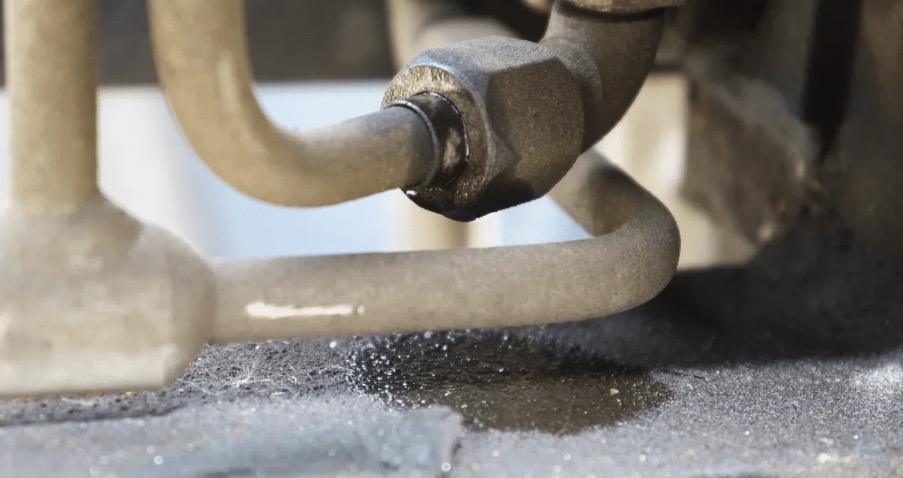
Hydraulic leaks are usually easy to notice and much harder to pinpoint. Six signals are worth investigating:
External leaks are the straightforward ones. Fluid accumulates somewhere on or around the machine, and because oil is leaving the system, the reservoir level falls. If you find yourself topping off constantly, assume an external leak until you have proved otherwise.
Internal leaks leave no puddle, so performance becomes your instrument. A skid steer with a leaking cylinder may suddenly struggle to pick up and carry a heavy load. Cylinder drift is another telltale: a bucket that creeps downward under load usually points to a leaking piston seal.
Prevention is a discipline rather than a single repair. Operators should check fluid levels on a fixed schedule, and hydraulic fluid filters should be replaced on time instead of when it becomes convenient.
Clean oil earns that emphasis because contamination ranks among the leading causes of leaks. Topping off keeps a machine running but does nothing about the particles that accumulate in normal service. Draining the system and refilling with fresh oil at the interval given in your maintenance manual is part of owning heavy equipment, not an optional extra.
A leak caught early is inexpensive. One left alone is not. If you would rather spend the day working than wrenching, our parts experts can help you source the OEM and aftermarket seals, hoses, filters and cylinders that put the machine back on track.
Excavator Questions, Answered: Size, Cost, Attachments and More
2026-11-21
XCMG or Liugong? Choosing a 5-Tonne Wheel Loader That Survives a UAE Summer
2026-11-21
Piling Machines Explained: Types, Applications, and Selection Factors
2026-11-20
Wheel Loader or Backhoe Loader? Match the Machine to the Job
2026-11-20