Having an off-road machine with a snow blade is a great start. But the real skill is how you plow. Good plowing means you clear snow faster, use less fuel, and avoid breaking things or tearing up your property.
This guide explains five simple plowing patterns that many pros use. Learn them once, and your winter jobs will feel much easier.
How to Clear Areas Near Buildings?
Snow near garage doors, sheds, and walls is hard to handle. If you push snow into a building, you can damage the door, siding, or trim—and you can trap snow in a spot that’s hard to remove.
Snow Blade Method 1: The Back-Dragging Technique
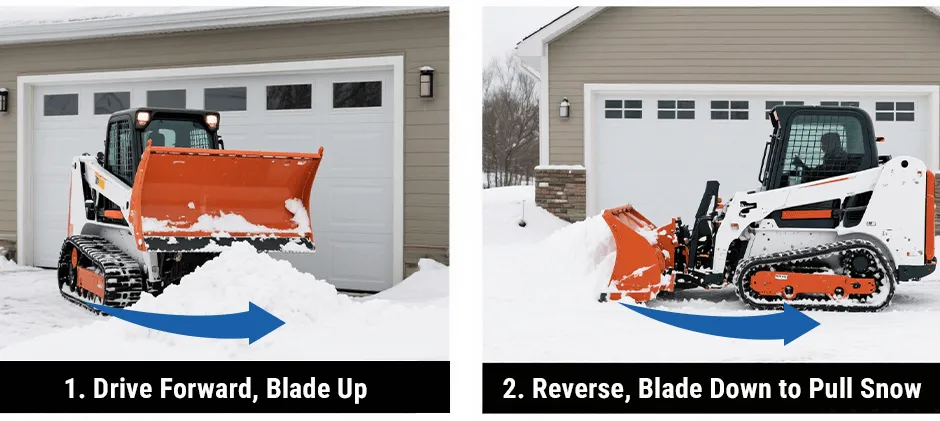
Back-dragging is the safest way to pull snow away from a building. It helps you get close without hitting anything.
- Approach: Raise the blade. Drive forward until the blade is just over the snow you want to move, close to the door or wall.
- Lower and Drag: Lower the blade to the ground.
- Reverse: Back up slowly. The blade will pull the snow away from the building.
- Repeat: Do this a few times until you have a clear space (a buffer). Then you can push the snow forward to your main pile.
What’s the Best Way to Start a Long Driveway?
For long driveways or lanes, a smart start saves a lot of time. The easiest method is to make a clear path down the middle first. This gives you room to work and helps you avoid plowing the same snow again and again.
Snow Blade Method 2: Opening the Path
This first “center pass” is your baseline.
- Angle the Blade: Angle your snow blade so snow rolls to one side (usually toward where you want your snow pile).
- First Pass: Drive straight down the middle from one end to the other.
- Work Outwards: After your first center pass, move to one of the uncleared sides. Overlap slightly with your cleared path and push the snow directly across the driveway to the opposite edge.
Continue making passes, always pushing snow from the un-cleared area to the final edge, until the entire driveway is clear.
How to Efficiently Move Large Amounts of Snow?
Big open areas—like lots, wide yards, or long straight lanes—need a method that keeps snow under control. If snow keeps spilling off the side, you waste time. A simple pro method is windrowing.
Snow Blade Method 3: Windrowing for Efficiency
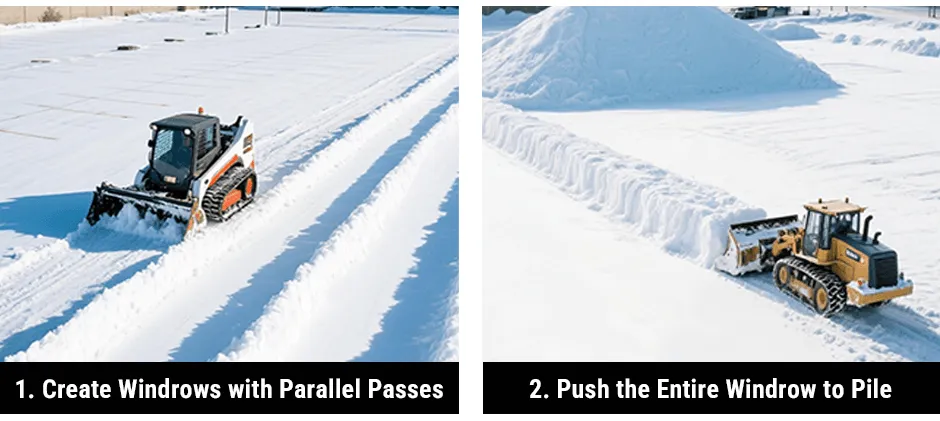
Windrowing means pushing snow into long, neat rows. Then you move the rows to a final pile.
- Set Your Angle: Keep the blade angled the same way for several passes.
- Create Rows: Make one pass and push a line of snow to the side (this is the windrow). On the next pass, drive next to it and push more snow into that same row.
- Consolidate: Keep building the row. When it gets too big to push easily, change direction and push the whole row to your storage pile.
Where Should You Put All the Snow?
Snow piles can cause problems later. Bad piles can block parking, block views at road exits, or melt and refreeze where you don’t want ice. Plan your pile spots early, especially if you get many storms.
Snow Blade Method 4: Stacking Snow Piles High
Try to build piles tall, not wide. Tall piles save space.
“Plow high, not wide. Space is your most valuable asset during a long winter.”
To stack higher:
- Push snow toward the pile.
- When you reach the bottom of the pile, start lifting your snow blade.
- The rising blade helps push new snow up onto the top of the pile instead of spreading it out.
How to Avoid Damaging Your Lawn?
A careful operator protects the ground. Lawn damage and scraped pavers are expensive and annoying to fix. These simple steps help prevent that.
Snow Blade Method 5: Protecting the Ground Surface
- Use Plow Markers: Put tall reflective markers along driveway edges and walkways before winter. They help you see boundaries under snow.
- Adjust Your Skid Shoes: Set skid shoes a little lower than the cutting edge so the blade “floats” and doesn’t dig into gravel, turf, or uneven spots. This is a crucial adjustment, and knowing your snow plow replacement parts is key to keeping your equipment in top shape.
- Consider a Polyurethane Edge: For pavers or decorative concrete, a rubber/poly edge is gentler than steel.
- Know Your Terrain: Watch out for curbs, rocks, drain covers, sprinkler heads, and uneven pavement.
- Slow Down: Most damage happens when operators go too fast. A steady speed gives you time to react.
Final Thoughts
Mastering these five patterns will transform you from a simple machine owner into a confident and efficient operator. Of course, the effectiveness of these techniques depends on the quality of your equipment. A well-built, reliable snow blade from MechLink ensures you have the power and precision to handle any storm. Explore our selection and other essential snow equipment to prepare for the season ahead.