
2026-10-31
Construction, mining, and other industries rely on excavators for heavy work. Suitable excavator sizes can greatly increase productivity and control costs. But, faced with numerous options, how do you choose the excavator and model that best suits you? This guide will take you through the different types of excavators, their size classes, and the key factors to consider. Help you choose the machine that best suits you.
Before delving into excavator sizes, it is helpful to know the different machine types available, as each is designed for a specific task and environment.
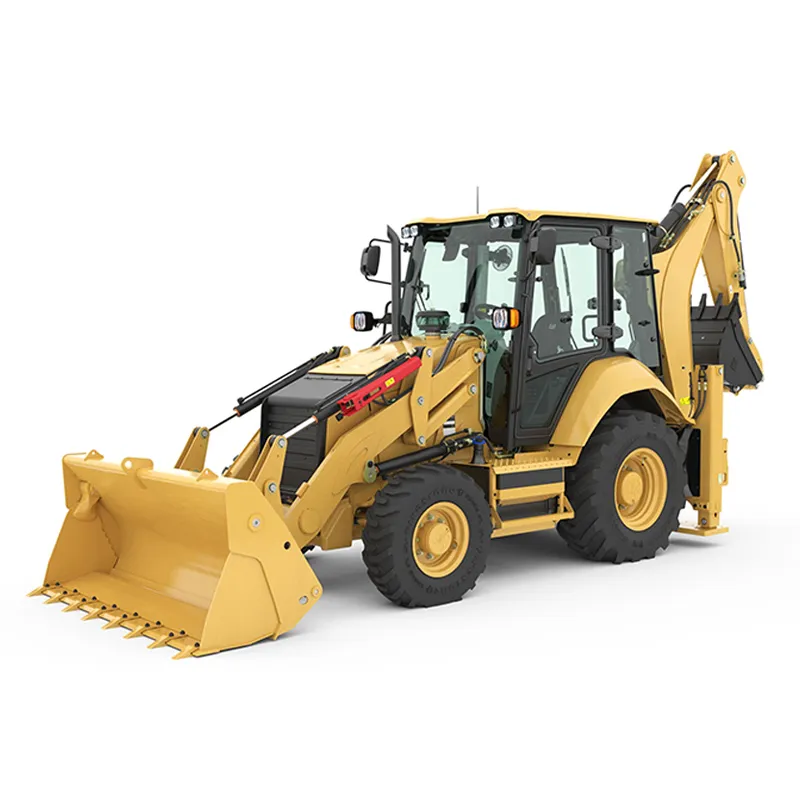
Often confused with a standard excavator. Backhoe is equipped with a loading bucket at the front and an excavating arm at the rear. Although the angle of the backhoe arm (usually around 200 degrees) is limited, its dual attachments allow it to dig, push, level, and move material, making it flexible in a variety of tasks.
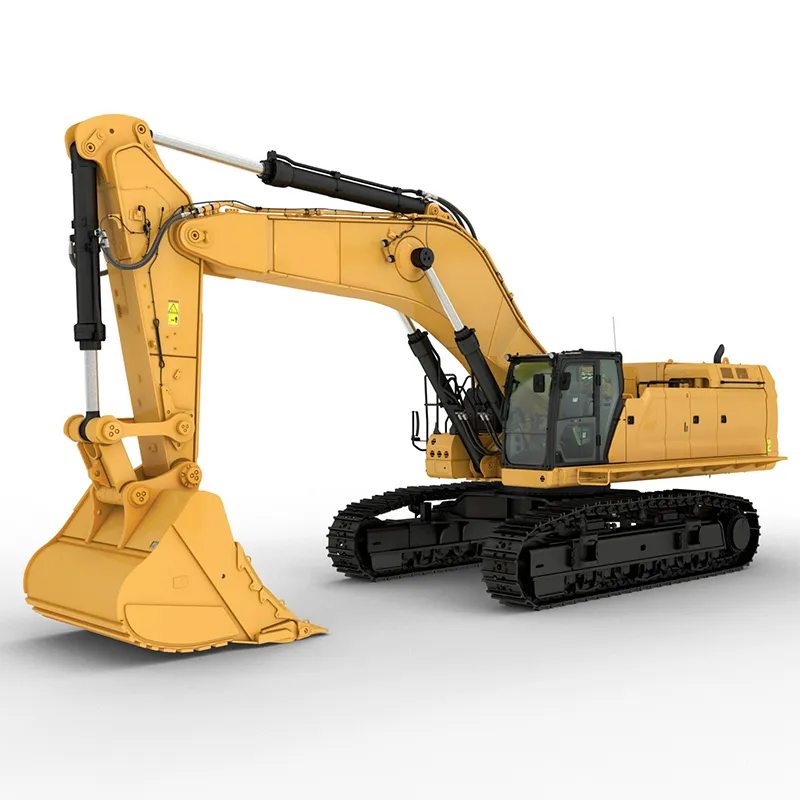
These are also called tracked, the most common type you see at work sites. Based on the tracked undercarriage, they have excellent stability and traction on soft, uneven, or sloping terrain, making it ideal for general construction works. They have the ability of 360-degree rotation, allowing for efficient digging and placement of materials without moving.
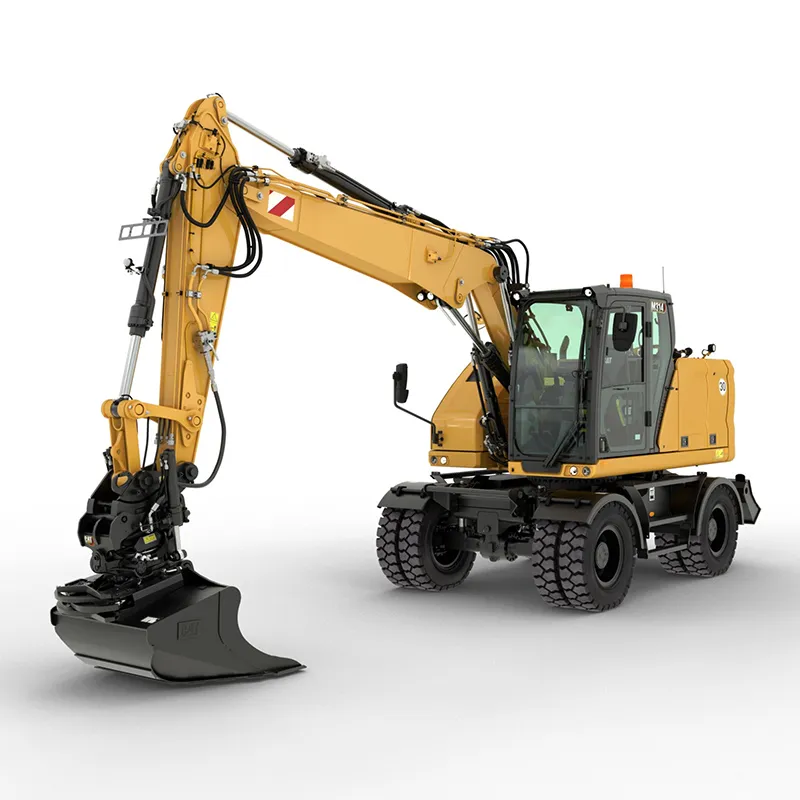
Such excavators function like standard excavators, but move on wheels, not tracks. They are faster and more flexible on hard, flat pavements such as concrete or asphalt. Although they perform poorly on rough surfaces, people can drive them without a trailer, which saves time and transportation costs. They are a common choice for roadworks or urban projects.
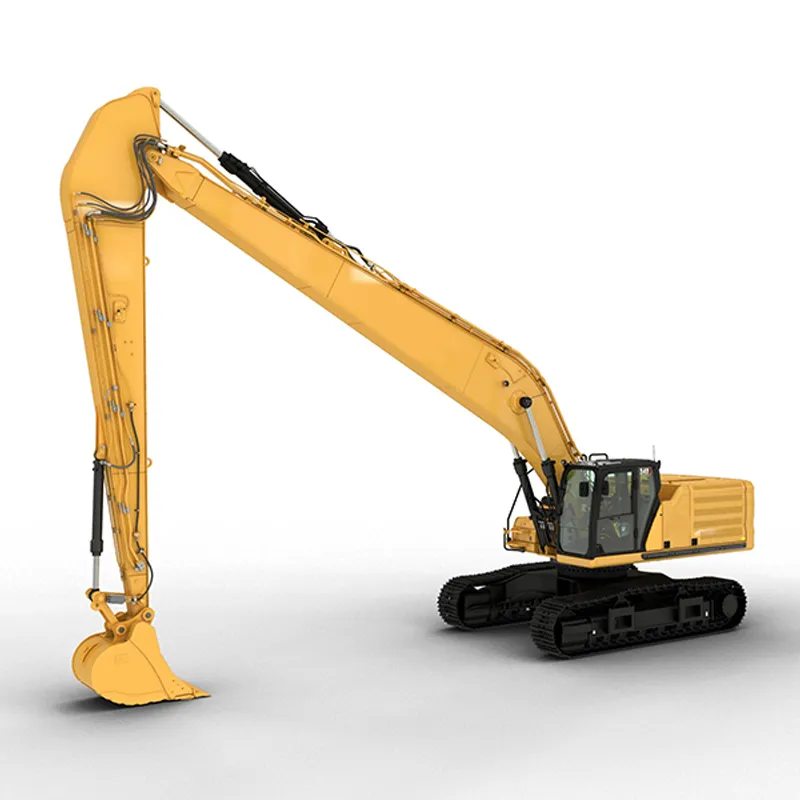
As the name implies, these machines are equipped with an extended boom and a boom. This improvement allowed them to work in hard-to-access areas, such as deep foundation pit excavation, cross-barrier removal projects, or dredging canals, with some models operating up to 100 feet.
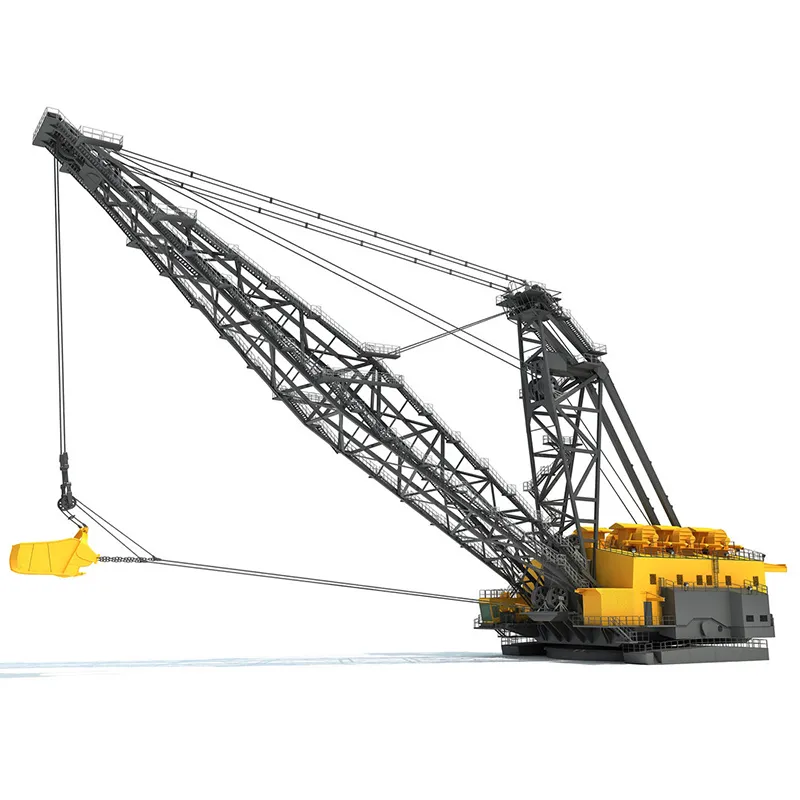
These are massive, heavy-duty machines typically used for large-scale civil engineering projects like strip mining or harbor construction. Instead of a conventional boom and bucket setup, a dragline uses a bucket system suspended by a series of wire ropes and chains. Due to their immense size, workers usually assemble them on-site.
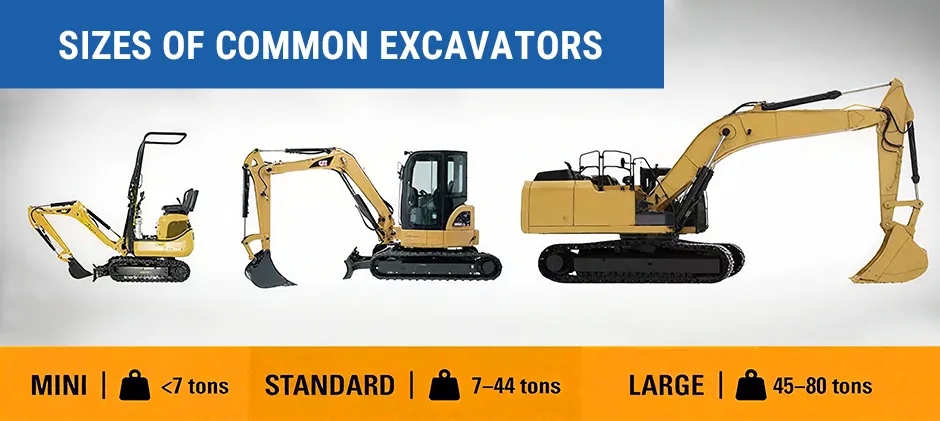
The classification of excavator sizes is primarily based on working weight, as it is directly related to power, force, and lifting capacity. We can classify them into three main categories.
| Excavator Class | Operating Weight (Metric Tons) | Operating Weight (Pounds) | Common Applications |
| Mini | Less than 7 tons | Less than ~15,400 lbs | Landscaping, indoor work, tight spaces |
| Standard | 7 – 45 tons | ~15,400 – 99,200 lbs | General construction, versatile tasks |
| Large | More than 45 tons | More than ~99,200 lbs | Mass excavation, quarrying, heavy demolition |
These compact machines typically weigh less than 7 metric tons (about 15,400 pounds). Its small size makes it ideal for working in tight spaces, such as residential landscaping, indoor demolition, or crowded public areas. Mini excavators typically have a zero or near-zero tail swing, meaning they do not rotate too far beyond the track. So, work safely near walls and other obstacles. They are fuel-efficient, easy to transport, and exert less pressure on the ground, thus avoiding damage to the finished surface.
With a weight between 7 and 45 metric tons (about 15,400 and 99,200 pounds). The standard excavator has a major position in the construction industry. This type has strong power for a wide range of commercial and residential construction projects. Many standard excavators support a wide range of hydraulic appliances, greatly expanding their function on the job site.
Any weighing more than 45 metric tons (99,200 lb) belongs to a large excavator. These machines meet the needs of heavy-duty operations, such as large commercial buildings, large-scale demolitions, quarrying, and other projects. Though large power and volume are bad for transport and storage, they are essential in large-scale operations.
You need a proper machine to do your job efficiently. Large sizes can lead to unnecessary costs. On the other hand, an excavator that is too small cannot lift heavy objects. Let’s analyze the key factors that need to be considered.
The first question to ask is: how deep do you need to dig? Whether you are digging foundations, laying pipes or digging drains, the machine must be able to reach the required depth. Always check the maximum dig depth specifications. If your project continues to require deep digging, a standard or large excavator, or even a long-arm model, is required.
Except for digging, they are also used to hoist and place heavy objects. The lifting capacity depends on the weight of the excavator, the counterweight, the boom, and the stick position. Usually, the load should not exceed 75% of the maximum lifting capacity to ensure stability. Be sure to consult the lifting charts provided by the manufacturer. If heavy lifting is frequent, heavier machines with larger counterweights must be selected.
Budgeting is an important factor. A small excavator may seem like a good deal, but if it’s underpowered and can’t get the job done on time, it could lead to higher labor and fuel costs. Conversely, large excavators require a lot of investment. Fuel and maintenance costs are higher. Our goal is to find the good fit for your typical project.
Site layout: For urban sites or projects with many obstacles, small excavator sizes with a small turning tail and zero tail swing are often the only option. Open land is more suitable for standard or large excavators, which can move more materials faster.
Site terrain: The ground determines the type of undercarriage. Tracked excavators perform better on soft soil, muddy, or uneven ground. Wheeled excavators are fit for hard surfaces. What’s more, ground damage is to be noted. Very heavy excavators can easily break the pavement, which is unacceptable on completed roads.
Large excavators will be equipped with heavier counterweights to balance their greater digging and lifting forces. Some models offer removable weights. Although adding functions can also affect transport. Counterweights that are not enough pose a major safety hazard.
In cubic yards or meters, a larger bucket capacity has higher efficiency. However, the bucket size must match the power and stability of the machine. Installing an oversized bucket on a small excavator can affect its balance. Normally, it is best to prepare several sizes of buckets to suit different materials and tasks.
Thanks to hydraulic attachments, excavators have more functions.
When choosing an excavator, make sure its hydraulic system has enough flow and pressure to drive the accessories you plan to use.
By assessing your typical job needs—from dig depth and lifting capacity to site conditions and accessory needs—you can choose an excavator that will deliver maximum value. MechLink has a large inventory compatible with many heavy equipment brands, offering high-quality, affordable parts to help extend the service life of your equipment.
Nh workmaster 25s complete guide | specs, features & parts
2026-10-31
What is the biggest kubota skid steer? - mechlink blog
2026-10-30
How much does it cost to rent a skid steer in 2026?
2026-10-30
How to select the hydraulic cylinder seal kits by size?
2026-10-29