
2026-10-06
A blower motor is an electric motor that heats, cools, and circulates air by driving a fan or blower. It ensures air circulation in the cockpit and provides a comfortable operating environment for the driver. The blower motor might be small, but it plays a big role in keeping your machine—and you—comfortable. Whether you are in winter or summer, the blower motor is heating and cooling your cab and always providing you with fresh air.
In this article, we will introduce the function, working principle, classification, and application scenarios of the blower motor in detail. Finally, we also prepared some basic blower motor maintenance tips and problem answers for you to help you fully understand this key component.
In simple terms, the blower motor is the electric motor that powers the main fan inside your machine’s HVAC (Heating, Ventilation, and Air Conditioning) unit. It is the heart of the climate control system, responsible for pushing air through the vents and into the cab.
It is important to distinguish the cab’s blower motor from the engine’s cooling fan motor. The latter is a much larger fan located near the radiator, and its job is to cool the engine itself, not the operator. The blower motor is entirely dedicated to the climate inside the cab.
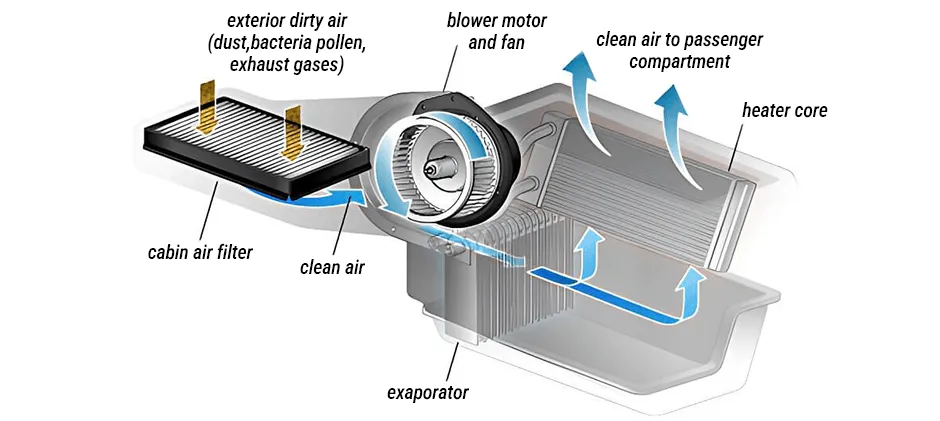
The operation of the blower motor is a straightforward process. When you adjust the fan speed on your control panel, a simple chain of events occurs:
In short, the blower motor turns your fan speed setting into real airflow—powering comfort by pushing heated or cooled air exactly where you need it.
The blower motor is more than just a motor; it’s part of an assembly with several key components working together.
While commonly referred to as a “blower motor,” the actual fan design varies across a few engineering types—each with its own airflow and pressure characteristics. In heavy equipment HVAC systems, one type is overwhelmingly dominant.
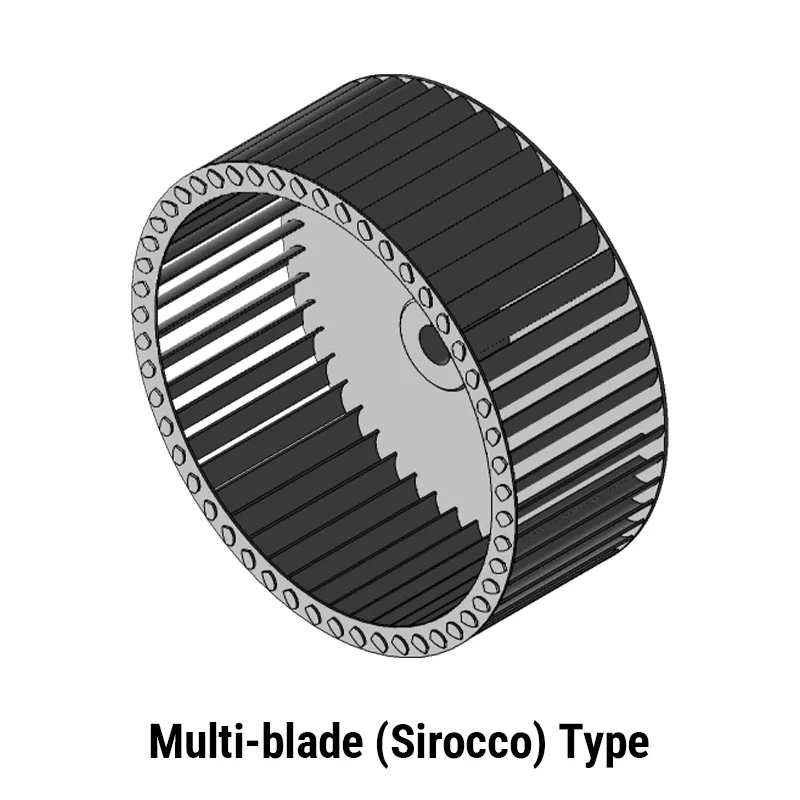
This is the most common type in heavy equipment. The familiar “squirrel cage” fan is a centrifugal blower, which works by spinning a fan (impeller) that throws air outward using centrifugal force. This increases air speed and pressure, making it effective at pushing air through ducts, filters, and heat exchangers.
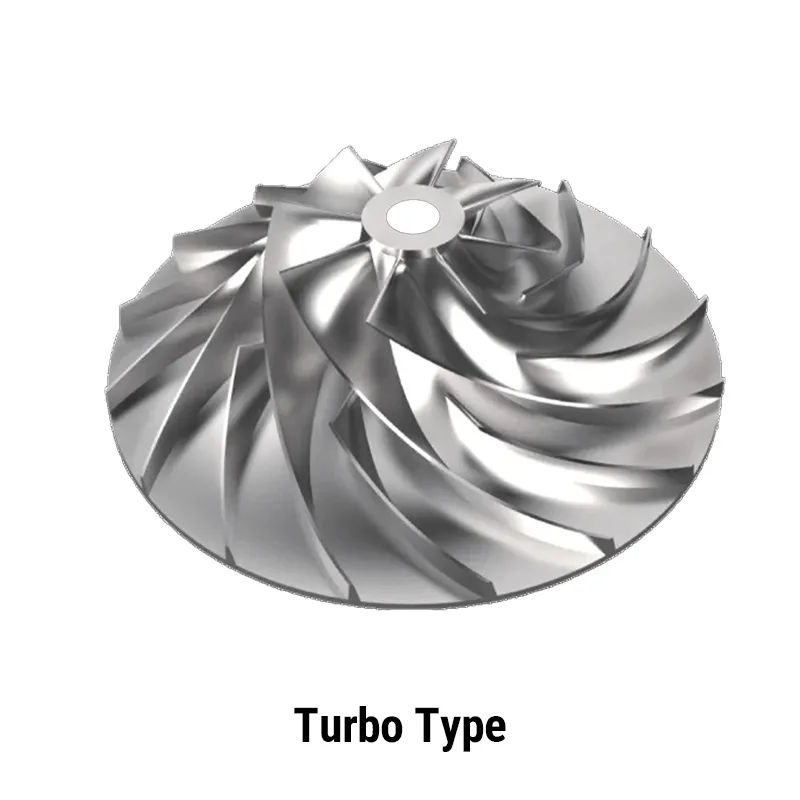
Resembling a propeller, an axial blower pushes air parallel to its shaft. It’s efficient at moving large volumes of air in open spaces, but can’t generate much pressure and tends to be noisy. While not used for cab HVAC, small axial fans may cool control modules or hydraulic oil systems.
Although there are several designs, the most commonly used replacement blower motor in off-road equipment is the centrifugal (Sirocco type) blower motor.
A failing blower motor rarely dies without warning. Learning to spot these signs can help you diagnose the problem before you’re left without air.
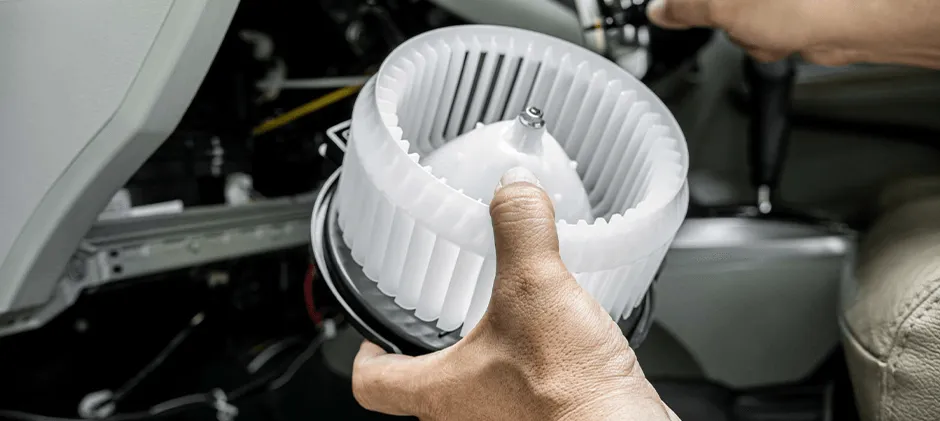
You can significantly extend the life of your blower motor with a few simple maintenance steps:
Regular maintenance, like changing filters and keeping the intake clean, goes a long way in keeping your blower motor running smoothly and avoiding bigger issues down the road.
A: This is the classic sign of a failed blower motor resistor. The resistor controls the lower speeds, and the high-speed setting is wired to bypass it. Replacing the resistor, not the motor, will fix this problem.
A: If the noise is a rattle, it’s likely caused by debris that can be cleaned out. However, if the noise is a high-pitched squeal, the internal bearings are worn out, and the entire motor assembly needs to be replaced.
A: It can be. A motor that produces a burning smell is a fire hazard and should be shut off immediately. Furthermore, a non-functioning motor means you cannot defrost your windshield, which is a serious safety issue in cold or humid weather.
The blower motor is a small but mighty component in the complex ecosystem of your heavy machinery. It is the key to operator comfort, focus, and safety in all weather conditions. By understanding how it works and learning to recognize the common signs of failure, you can perform quick diagnostics and prevent a minor annoyance from becoming a major problem. A proactive approach to maintenance and replacement ensures your cab remains a productive and safe workspace, no matter the conditions outside.
If you’ve identified a failing blower motor or resistor in your equipment, MechLink has the high-quality, affordable replacement you need. We carry a vast inventory of parts for top heavy equipment brands like Caterpillar, Komatsu, John Deere, and more. Don’t sweat through another shift or shiver through a cold morning. Find the right part at MechLink and get your climate control system running like new.
What are fire rings in diesel engine cylinder heads?
2026-10-06
How much does the blower motor replacement cost in 2026?
2026-10-05
How much does the fuel filter replacement cost in 2026?
2026-10-05
A/c evaporator replacement - ls it worth it?
2026-10-04