
2026-11-13
Awarded a package in Dubai, Doha or Riyadh with a mobilisation date that is already tight? The machines you commit to in the first weeks of a project will shape your output, your maintenance bill and the amount of working capital you keep free for the next tender. In a region where infrastructure and real estate programmes move quickly, that decision deserves a process rather than a hunch.

This playbook sets that process out for buyers of used construction equipment in the Middle East: sizing the budget, reading a machine's history, choosing a channel, inspecting what matters, funding the purchase and building a fleet rather than a collection of one-off buys.
A new machine brings a warranty and predictability, but it also brings a lead time and a capital commitment that are hard to justify when the contract in hand runs for eighteen months. A well-chosen used unit can cover most of that working life for a fraction of the outlay, and it can be on site while a factory order is still in the production queue.
The case is strongest when three conditions hold:
Where any of the three is missing, the saving on the purchase price is quietly consumed by idle days, air freight for a single component, or a subcontractor hired to fill the gap. Used equipment pays when it is bought as an asset with a service life, not as a bargain.
The operating envelope in the Gulf narrows the field of machines that will actually last. Four pressures repeat on almost every project:
Ignore these and a machine that looks clean in a photograph can still be the wrong purchase. The right unit is not simply one that meets a generic technical standard; it is one that has been specified, cooled, filtered and maintained for this climate.
Inexperienced buyers compare quotations. Buyers who do this repeatedly compare total cost over the period they will actually hold the machine. The purchase figure is only the first line of that calculation:
Two habits keep the number honest. Add your re-commissioning estimate before you rank offers, because two machines at the same price are rarely at the same cost. Then decide in advance what you will not spend: a unit that needs a major component in its first year usually ends up dearer than the slightly more expensive machine that does not.
Hours record use; age records how a machine has deteriorated even while standing. Neither is sufficient on its own, and a low reading is the easiest thing in the world to be reassured by.
A six-year-old loader showing 9,000 hours against a documented service schedule can be the better asset than a three-year-old unit at 4,000 hours that has run on questionable oil and been repaired informally. In this region, one question separates the two quickly: what has been replaced, and can I see the invoice?
Most procurement failures are channel failures. Each route to market carries a different balance of price, traceability and risk:
None of these is universally correct. A machine that is critical to a programme justifies the premium of a traceable channel; a common, easily repaired unit can safely be bought where the price is sharpest, because the downside is measurable.

Every used machine has faults. The purpose of inspection is to separate faults you can price from faults that will define the ownership experience. Work through five groups:
If you cannot be on site yourself, appoint an independent inspector and make the report a condition of the deal rather than a formality. Photographs document appearance; only an inspection documents condition.
Import and emissions rules differ between Gulf markets and change more often than buyers expect. Confirm in writing, before payment, that the machine meets the emissions standard accepted at your port, whether any retrofit is required for your site or your client's specification, what registration documents are needed, and whether the paperwork supports legal use on a project. Equipment that fails at the border can sit in storage accruing charges that no discount on the purchase price will recover.
A machine you intend to run for a decade and a machine you will trade in after one project should not be financed the same way. Cash suits units you will keep, and it also buys negotiating room; leasing and instalment structures, including Sharia-compliant lease-to-own arrangements where relevant, preserve liquidity during mobilisation but add a financing cost that has to be recovered in the rates you charge.
Three questions shape the decision. How long is the work actually secured, as opposed to how long you hope it will run? Who carries the residual risk if the machine is worth less than expected at the end of the term? And does the structure leave you able to maintain the machine properly, or has servicing been squeezed to protect the monthly payment? The most common mistake is not choosing the wrong lender; it is borrowing against a contract that has not yet been signed.
Procurement decided one machine at a time produces a yard full of unrelated brands, each with its own filter set, diagnostic tool and operator training requirement. Contractors who buy well tend to standardise:
The right mix depends on your business model rather than on the market's latest fashion:
Urgency, a sharp price or thin availability will bend anyone's judgement. These are the errors that show up most often:

MechLink equipment listings exist to make the earlier steps faster. The platform connects contractors, equipment traders and rental companies in the Middle East with a global network of used machinery sellers, and it is built for buyers who need to compare machines across borders without losing the detail that decides a purchase.
Loaders, excavators, pavers, cranes: the catalogue gives regional buyers a direct line to machines from sellers whose details have been checked, and to listings that answer the questions raised in this guide before you ever pick up the phone.
Before opening a single listing, write down the duty cycle, the site constraints, the holding period and the budget ceiling. Those four lines will eliminate most of the market for you and make the remaining shortlist genuinely comparable. A sound used machine is rarely the cheapest one available; it is the one whose history, support network and physical condition match the work in front of you — and the projects that depend on it will run on that match, not on the discount.
MechLink — your global connection to trusted construction equipment.

Before You Buy Used Heavy Equipment: A Ten-Point Inspection Checklist
2026-11-13
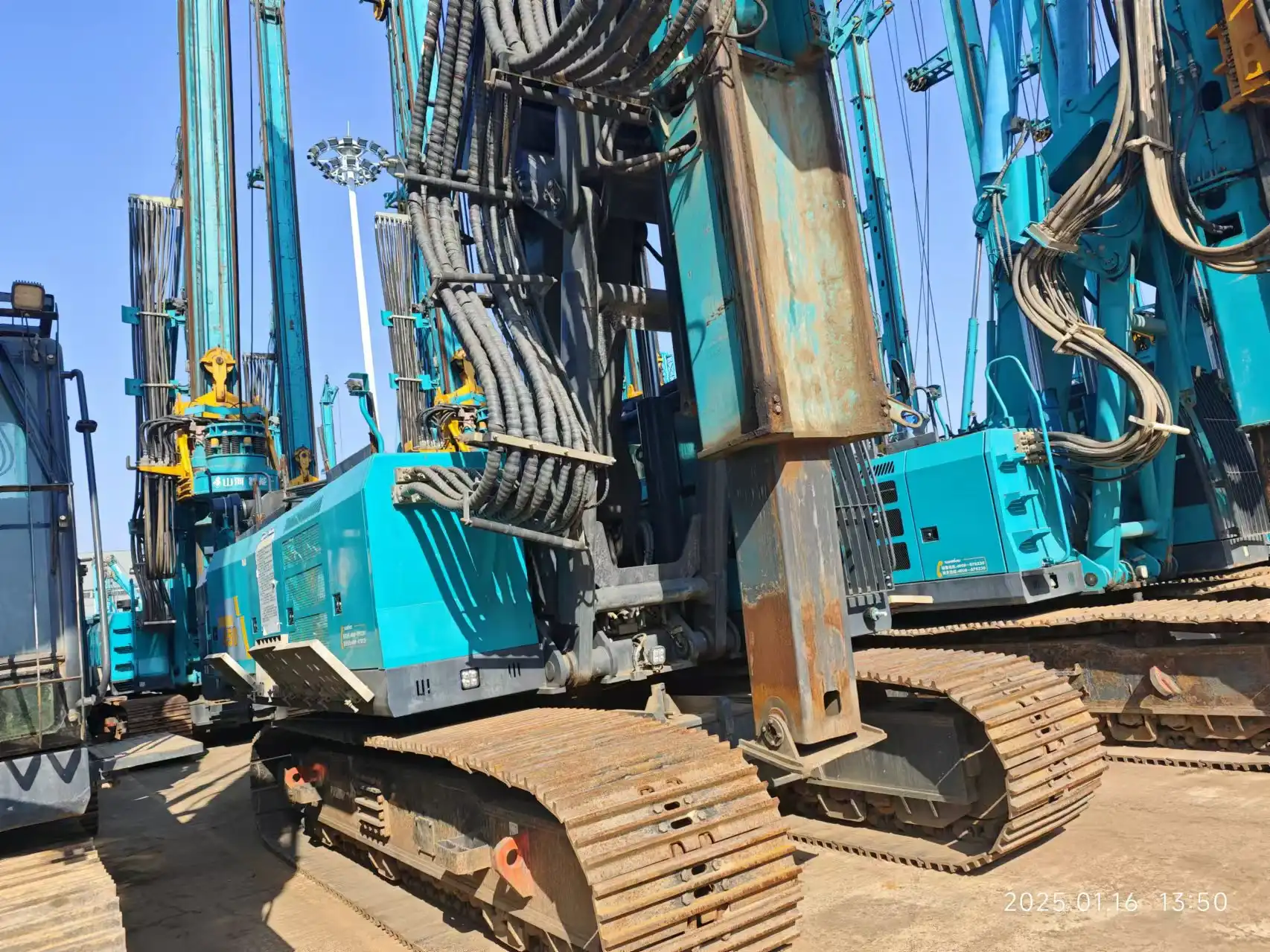
Piledriver, Piling Rig or Rotary Drill? Telling the Piling Machine Family Apart
2026-11-12

Heat, Rock and Uptime: Specifying a Caterpillar Excavator for Middle East Work
2026-11-12

Loader Classes Explained: Matching Machine Type to Material, Space and Cycle
2026-11-12