2026-05-09
When choosing between the Kubota BX2680 and BX2380, property owners often find themselves torn—two sub‑compact tractors that look nearly identical, share most components, but come with subtle differences that can affect long‑term productivity. In this guide, we’ll break down real‑world performance, key specifications, and ownership insights so you’ll know exactly which model better fits your off‑road machinery needs.
For small farms, landscaping crews, and heavy‑duty homeowners, a sub‑compact tractor means flexibility—mowing, hauling, and snow removal rolled into one. Both the BX2680 and BX2380 are popular in the off‑road machinery segment due to their hydrostatic transmissions, 4WD drivetrains, and diesel reliability.
However, a few horsepower and PTO differences can determine whether you effortlessly run a snow blower or bog down in wet terrain. Many users also weigh cost versus future capability, asking: Is the extra 3 HP really worth the higher price tag?
Our side‑by‑side review directly addresses those concerns so you can make a purchase that maximizes performance and lifetime value.
| Specification | BX2380 | BX2680 | Comment |
| Engine Type | 3‑cyl. liquid‑cooled diesel (D902) | 3‑cyl. diesel (D1105) | BX2680 has a slightly larger displacement engine |
| Gross HP | 21.6 HP | 24.8 HP | 3.2 HP advantage for BX2680 |
| PTO HP | 17.7 HP | 19.2 HP | Slightly higher PTO allows larger implements |
| Transmission | Hydrostatic (HST, 2F/2R) | Hydrostatic (HST, 2F/2R) | Equal ease of use |
| Hydraulic Flow | 6.2 GPM | 6.2 GPM | No difference |
| Lift Capacity | 680 lbs | 680 lbs | Equal-rated lift |
| Loader Lift (LA344) | ~739 lbs (Rigid bucket) | ~739 lbs (Rigid bucket) | Practically identical |
| Operator Platform | ROPS open station | ROPS open station | Both comfortable and safe |
| Tire Options | Turf / Industrial / Goodyear R14 | Turf / Industrial / Goodyear R14 | Equal versatility |
At first glance, the differences look marginal—and that’s what makes choosing between them a true owner’s dilemma.
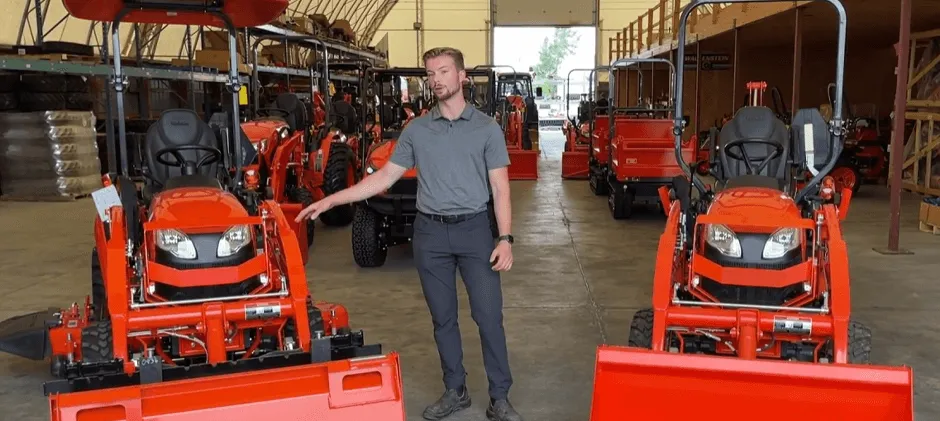
Forum users and field owners agree: while both machines can mow, grade, and blow snow effectively, the BX2680’s additional horsepower offers more headroom when running heavy PTO implements. You may not need the extra PTO power now, but you might down the road.
The 2680 powers rear snow blowers and tillers more confidently, especially when working in dense or frozen soil. For pure mowing and landscaping, the BX2380 rarely feels underpowered. But if your off‑road applications involve PTO‑driven attachments like post‑hole diggers or rear rotary mowers, those 2 extra horsepower at the shaft translate into smoother operation and less strain.
Dealers typically list the BX2380 at around $19,570, while the BX2680 stretches closer to $16,900. The ~$2,200–$2,600 difference can feel steep for 3 HP, especially for first‑time buyers.
However, resale value often favors the BX2680. More horsepower attracts buyers in secondary markets, and the broader engine used in other Kubota machines ensures steady parts availability. For owners planning to keep their tractor beyond a decade, this investment yields peace of mind.
Both models share Kubota’s 3‑cylinder diesel heritage—smooth starts, steady torque, and long maintenance intervals. The BX2680’s D1105 engine is slightly stronger under sustained load but requires equal upkeep intervals.
Routine service—filters, injectors, and pumps—is similar across both, and replacements are easily sourced from specialized aftermarket suppliers such as Kubota tractor parts at MechLink, where compatible filters, injectors, or couplers are stocked for Kubota BX‑series engines like the D902 and D1105. That makes ongoing ownership easier and more cost‑effective, especially for off‑road operators who cannot afford downtime.
Both units accept Swift‑Tach loaders, mid‑mount mower decks, and front hitches for snowblowers or blades. The BX2680 adds a “Swift‑Connect Backhoe” option for quick tool-free changeover between digging and 3‑point implements—an advantage for construction, trenching, or fencing projects in rough terrain.
Both support Category I linkages, but the 2680’s PTO output helps drive heavier implements without over‑revving, saving fuel and wear over time.
From an ergonomic standpoint, both tractors feature:
During long off‑road sessions—grading, snow clearing, or brush‑cutting—this design significantly reduces fatigue. Optional heated cabs and LED work lights make both practical four‑season workhorses.
Owners on forums consistently note that the BX2380 handles 1–3 acre properties efficiently for mowing, and can push snow or move light dirt piles without struggle.
Those who switched to the BX2680 often did so after realizing the extra PTO power allowed for large snow blowers or brush cutters.
It’s not that the BX2380 can’t do the job—it’s that the BX2680 simply gives you more operating margin when terrain, load, or conditions worsen.
| Feature | BX2380 | BX2680 |
| Pros | Lower price; efficient fuel use; same hydraulic capacity; great for mowing and light loader work | More engine and PTO HP; supports larger PTO implements; better resale value |
| Cons | Slightly less power for PTO tasks; may hit limits with heavy snow blowers | Higher purchase price; marginal fuel cost increase |
| Ideal For | Homeowners or light‑duty users on smaller properties | Off‑road users needing full versatility and power headroom |
In essence, the BX2380 excels for general maintenance and yard duties, while the BX2680 becomes the preferred off‑road solution for property owners who demand consistent load power.
Both the BX2380 and BX2680 embody the sub‑compact versatility that off‑road specialists rely on. The real decision lies in how you use your machine: light yard duty or full utility performance. With either, maintaining top performance is straightforward through affordable aftermarket solutions. Keep your BX running strong with reliable Kubota tractor parts — high‑quality components, competitive pricing, and wide model compatibility from MechLink ensure your equipment stays ready for any challenge.