2026-11-07
Picking the right skid steer tire is a critical step for your equipment’s efficiency. The right skid steer tires can improve traction, stability, and ride comfort, while the wrong ones can cause downtime, fast wear, and lost productivity.
This guide will explain the main tire construction types and tread patterns to help you pick the fully suitable tire for your needs. Also, we will cover traction boosters to increase your efficiency. Learn now!
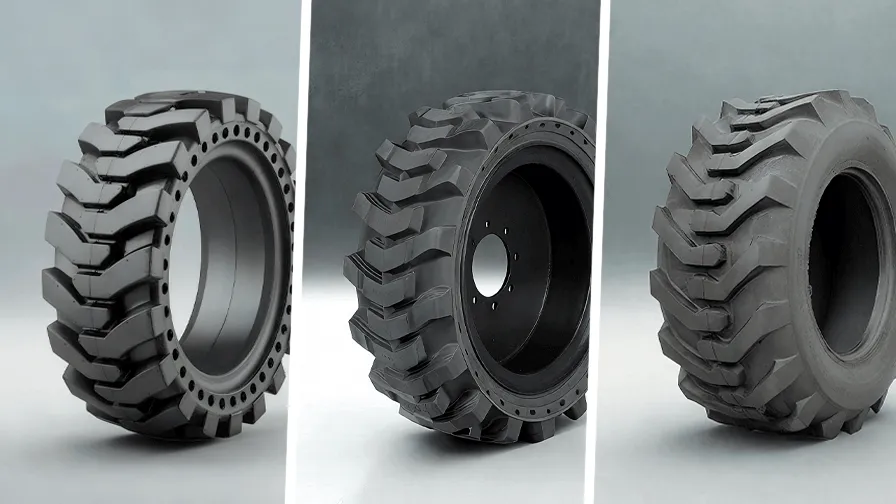
The first thing to decide is how your tire is built. Tire construction affects comfort, durability, and maintenance.
These are the classic air-filled tires, similar to car tires. They use compressed air to carry weight and soften the ride.
Best For: Landscaping, agriculture, and general dirt work.
Solid tires are made entirely of rubber — no air inside. They’re designed for harsh environments where flats can’t be tolerated.
Best For: Demolition, scrap yards, recycling, pavement, and waste handling.
Foam-filled tires start as pneumatics, then are filled with a polymer foam that hardens. The result: puncture-proof like solids, smoother like pneumatics.
Best For: Rental fleets and mixed-use construction sites.
Example: MechLink’ Foam Filled Tire Wheel Assembly 7025047 makes getting ready-to-run foam-filled tires simple and convenient.
| Feature | Pneumatic Tires | Solid Tires | Foam-Filled Tires |
| Puncture Resistance | Low | Extreme | Extreme |
| Operator Comfort | Very High | Low | Medium |
| Tire Lifespan | Standard | Longest (3–4×) | Long (2–3×) |
| Upfront Cost | Low | High | Very High |
| Maintenance | Regular (Check PSI) | None | None |
| Best For | Landscaping, Agriculture | Demolition, Scrap, Pavement | Rental, Mixed Construction |
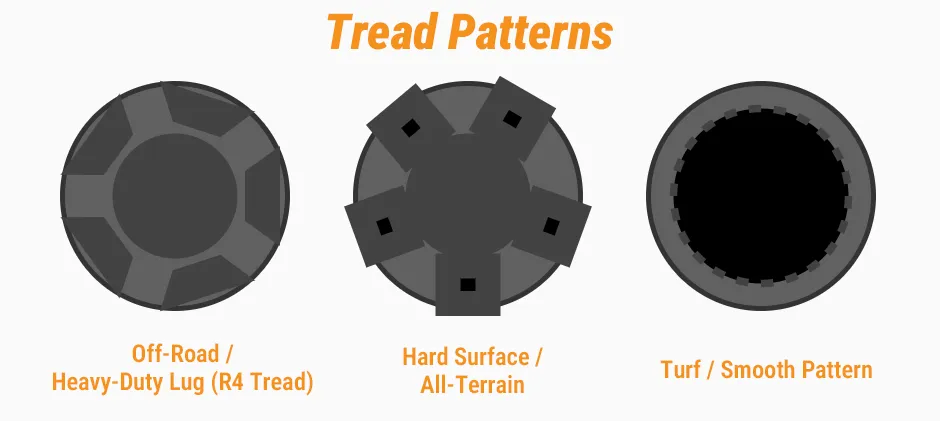
Once the tire type is set, pick a tread pattern that matches your main job surface.
The most aggressive tread with deep lugs for mud, dirt, gravel, and snow.
Example: 315/55D20 8‑Bolt R4 Tread Tire — a perfect all-terrain workhorse.
Best For: Construction, agriculture, and soft surfaces.
Shallower tread blocks offer a smoother ride and longer wear on pavement and concrete.
Best For: Contractors who work mainly on hard surfaces but still need limited off-road traction.
Minimal tread to avoid damaging grass or delicate surfaces.
Example: Lawn Mower Tire 15×6.00‑6 — gentle on lawns, golf courses, and sports fields.
Best For: Landscaping and turf maintenance.
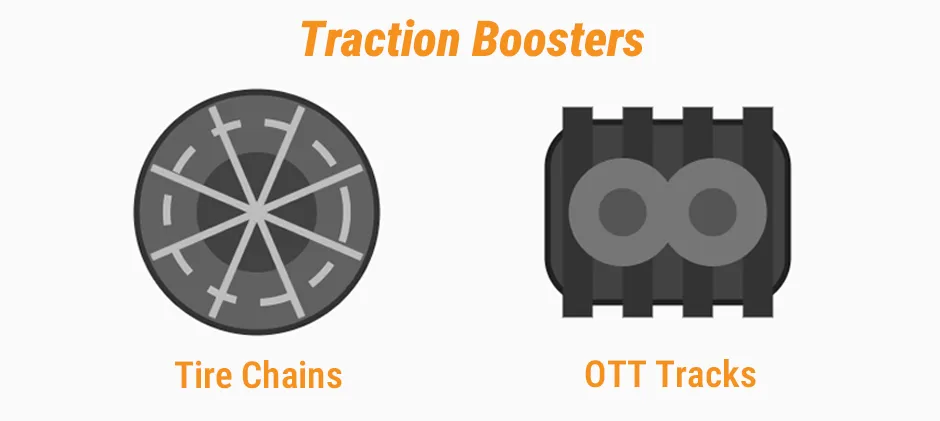
If you often face rough or slippery ground, upgrade traction with these add-ons:
Example: 12×16.5 skid steer tire chains for standard tire sizes.
Ready to decide? Follow these four easy steps:
You think about where you spend eighty percent of your time: is it muddy ground, concrete, or turf?
This one can help you to find out what kind of performance you really need.
Use the chart above to balance puncture resistance, comfort, and cost.
Example: 12‑16.5 Skid Steer Tire
Example: 12‑16.5/10PR Tire 1271437GT for Genie Lifts — fits many skid steers and offers robust ply strength.
Once you know your construction type, tread, and size, shop confidently.
Explore MechLink.com to find:
Getting the right tires is only the start. Proper care keeps your skid steer running smoothly.
Maintain Correct Tire Pressure
For pneumatic tires, checking skid steer tire PSI is essential:
Always follow the manufacturer’s PSI recommendation.
You can save time and effort with:
Follow this guide to choose the right skid steer tire for your specific needs. Browse our collection of wheels & tires and accessories at MechLink. We supply durable, high-quality heavy equipment parts designed for cost-effective solutions.
Can’t find what you need? Contact our experts, and we’ll help you within 24 business hours