
2026-07-14
When operating the machine, the Oil Pressure Warning Light suddenly comes on. You stop to check the oil dipstick and find the oil level is low, and the engine is still hot. Can you add oil right away? The answer is yes, but there are some important points to consider.
Usually, it’s OK to add a little oil to a warm engine. If you turn off the machine for a few minutes and the dipstick shows low oil, topping it up is fine. The oil crankcase is not under pressure like the radiator. So when you open the oil cap, you won’t get burned by hot fluid spraying out—unlike the coolant tank. But warm is not the same as overheated. If your temperature gauge is in the red, do NOT add any oil. Let the machine cool down completely first, then find the problem. For normal small top‑ups on a warm engine, you just need to be careful with safety and get an accurate oil level reading.
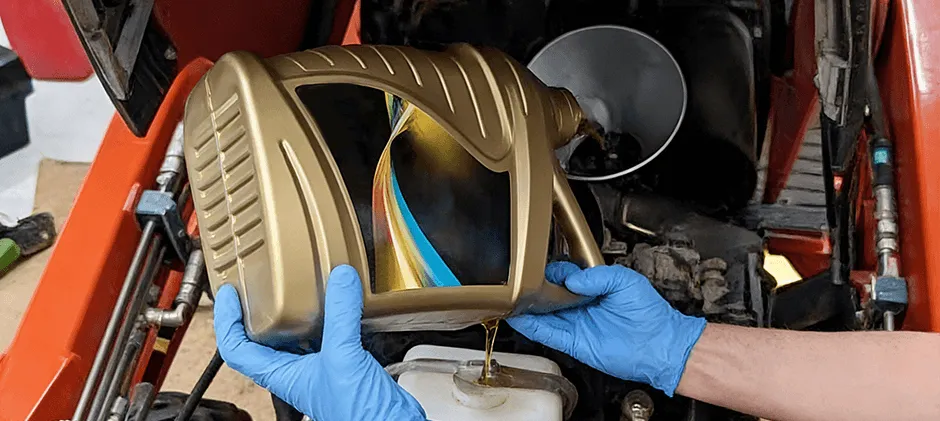
Topping off oil in a warm engine is usually needed, but doing it when the engine’s very hot or overheated is risky. These can hurt you and damage the machine.
Heavy equipment parts like the engine block, exhaust manifold and turbocharger get extremely hot. Touching them by accident causes bad burns. And the engine oil itself is scorching hot too—one small slip while pouring can splash it onto your skin.
Oil expands when hot. It takes more space than when cold. Right after you turn off the engine, much oil is still in the upper engine — cylinder heads and turbo lines. It hasn’t gone back to the oil pan. If you check the dipstick at once, it will show a falsely low level. If you add oil to the Full mark using this wrong reading, you will overfill the engine. Too much oil in the crankcase causes foaming. The oil won’t lubricate properly. Higher pressure inside can also blow out seals and gaskets.
Engines have many hot surfaces. If you spill oil while pouring it into a hot engine, it can drip onto the exhaust manifold or glowing turbocharger. Engine oil is flammable. It can catch fire on a hot surface over hundreds of degrees. This can cause a dangerous engine fire.
This one’s more debated, but it’s still a possible risk, especially if the engine’s really overheated. Thermal shock happens when overheated metal parts cool down fast. Pouring a lot of cool oil into an extremely hot engine could create a huge temperature jump that stresses the engine block or cylinder head metal, and might even crack it. It’s less likely if you’re just topping off a small amount, but it’s still a risk worth avoiding.
We’ve talked about the dangers of working on an overheated engine. But how do you tell a normally hot engine from one that’s overheating and dangerous?
When you see these signs, stop the engine right away and let it cool down completely. Do NOT open the radiator cap or the oil cap. When it’s fully cool, you can start checking for the problem.
To understand these risks, you need to know how heat changes your engine oil. The keyword here is liquid viscosity.
When your engine is cold, oil is thick, like honey. It flows slowly. That’s why starting a cold engine is hard on it. Oil needs a few seconds to move around and protect the parts. When the engine gets hot, oil becomes much thinner — almost like water. Thin oil flows fast through small engine passages, so it can lubricate and cool parts well. This is also why temperature changes your oil reading. Hot, thin oil needs time to drip down from the engine parts into the oil pan. Only then will the dipstick show you the real oil level.
For the most accurate reading and the safest way, the engine should be warm. Not hot, not cold.
This “warm and wait” way is accurate and easy. It keeps you from overfilling the engine, and you don’t have to wait for it to cool completely.
If you have to add oil to a hot engine at work, safety is the most important thing.
No. Never add oil while the engine is running. It’s very dangerous and bad for your engine. The engine has fast-moving parts like belts and fans. Your sleeve, glove, or funnel could get caught and hurt you badly. Inside, parts like the camshaft are spinning just below the oil fill hole. Any oil you pour will splash back at you. Also, oil is moving all through the engine. The dipstick will show a wrong level. Always turn off the engine before you open the oil cap.
Changing cold oil is not good for your engine. The main reason is viscosity.
When oil is cold, it’s thick and drains very slowly. More importantly, all metal particles, soot, and sludge are trapped in the oil. Think of it like muddy water. If you stir it and pour it out, most mud comes out with the water. If you let it sit (cold engine), the mud sinks to the bottom. You only pour out clean water, leaving sludge behind.
Changing oil when it’s cold leaves a lot of dirty oil. This old sludge will quickly contaminate your new oil. Draining oil while it’s warm makes sure contaminants are mixed in the oil and drain out completely, leaving your engine cleaner.
While adding oil to a warm engine is generally fine, the best practice is always to let it cool for a few minutes to get an accurate reading. If you see that your oil gasket or drain plug seal is leaking during an oil change, replace them right away. Good-quality aftermarket parts cost much less than OEM parts but are just as reliable. You can find many engine gaskets and seals made for your machine at MechLink.

Ultimate guide to choosing the best engine oil filter for tractor
2026-09-20
How much does a ford f-150 weigh? 2026 complete guide
2026-09-20
Do diesel engines have spark plugs?
2026-09-19
How to choose the right connecting rod bearing?
2026-09-19