2026-08-31
The exhaust system is hidden at the bottom of the equipment, making it neither visible nor easily overlooked. But the exhaust system is a vital network of components. It affects the performance of the machine, fuel efficiency and compliance with regulatory requirements. Get familiar with exhaust system components and you’ll be better to troubleshoot any issues that arise.
Modern heavy equipment no longer uses just a simple pipe and muffler. Emissions rules like Tier 4 Final have turned today’s exhaust systems into complex after-treatment systems. Let’s follow the exhaust gas from the engine and see which parts it passes through.
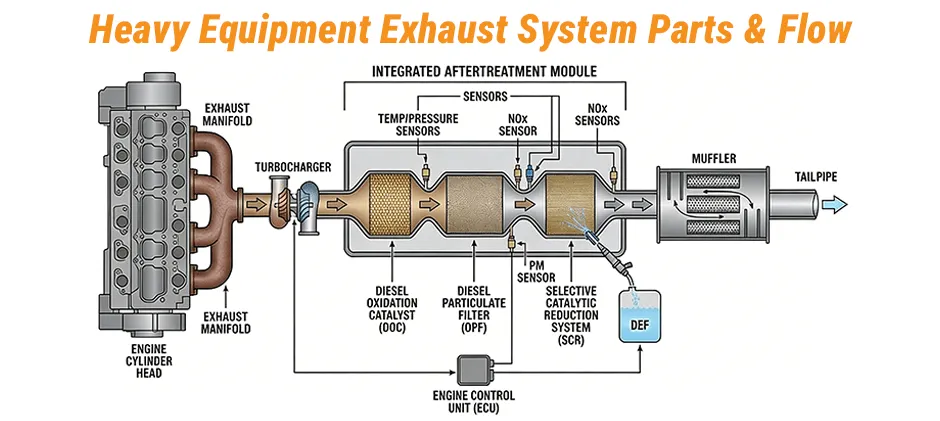
Exhaust begins at the exhaust manifold. It mounts directly to the engine cylinder head and collects the high-temperature exhaust gases from each cylinder into a single exhaust flow.
In the case of a V engine, there will generally be two exhaust manifolds. One on each side of each row of cylinders. Because it is subjected to high temperatures for a long time, it is usually made of heat-resistant materials such as cast iron or stainless steel.
For most diesel engines, the exhaust manifold is directly connected to the turbocharger, rather than to the exhaust pipe. The exhaust gas drives the turbine to rotate, which in turn drives the compressor, pressing more air into the engine. This way, more air is introduced, and more combustion is achieved. So the turbine is a very important core component in both the engine intake system and the exhaust system.
After the exhaust leaves the turbocharger, it enters the most complex part of the system—the integrated aftertreatment module, where the system treats the most harmful emissions.
A modern exhaust system is run by a set of sensors. They send nonstop data to the Engine Control Unit (ECU). Here are the main ones:
After the exhaust gas has been subjected to a post-treatment system “purification”, it finally enters the muffler. A muffler is a noise reduction device. Inside, it is a cavity structure and porous pipes. Cut out the loud noise of the engine and make the sound less harsh.
Then the system releases the treated, quieter exhaust through the tailpipe, completing the exhaust process.
Now that we’ve gone over all these parts, let’s walk through how exhaust gas moves through the whole system step by step.
Almost the entire process runs automatically. Sensors monitor the system’s status in real time, and the ECU controls fuel injection, regeneration and DEF spray volume on its own, keeping the exhaust system running steadily.
A cracked manifold or faulty gasket causes leaks. You’ll usually hear a tick or hiss, which gets louder under load. Besides the noise, leaks before the turbo directly reduce power. What’s more dangerous: exhaust may get into the cab, leading to the risk of carbon monoxide poisoning.
If the machine runs at low temperatures or under light load, the DPF can’t burn soot completely. Common signs: frequent warnings, reduced power (derate mode). In severe cases, the DPF clogs fully and the machine may stop working.
The dashboard often shows warnings like poor DEF quality, low DEF level or SCR fault. If you keep operating, the ECU will limit engine power—even prevent startup in serious cases. Common causes: bad DEF, faulty injectors or broken NOx sensors.
A single faulty temperature or pressure sensor can mess up the whole system. It may cause unnecessary regeneration, incorrect DEF injection, or even immediate derate mode.
Rocks, debris and rough terrain easily dent pipes, break hangers or crack components. A rattle or clunk under the machine usually means a loose or broken hanger—fix it right away.
If you spot any leaks, clogs or loose parts, you might need to replace parts of your exhaust system. The last thing you want is these issues messing with your machine’s emissions. Luckily, buying exhaust system parts on MechLink is super easy.
We’ve got everything from oxygen sensors to catalytic converters and more. Just find the parts you need, double-check they fit your machine, and check out. If you have any questions at all, our friendly customer service team is here.