On a cold morning, heavy equipment simply won’t start. Often, the problem lies with the glow plugs. Glow plugs are important for getting a diesel engine fired up, and you’ll really notice it when the temperature drops. This article breaks down the basics in plain terms: what glow plugs look like, how to tell a good one from a bad one, and how a faulty plug messes with your machine’s performance. By the end, you’ll be able to spot the issue yourself and figure out if it’s time for a replacement.
What Does a Glow Plug Look Like?
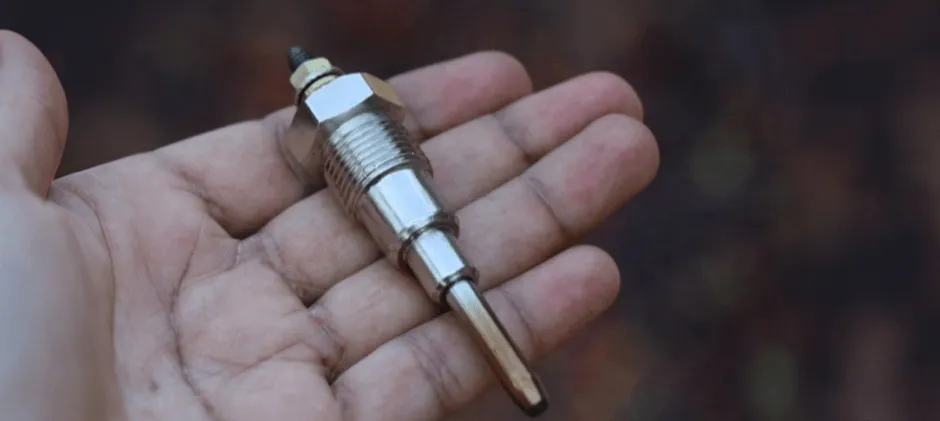
A glow plug is a skinny metal part that looks kinda like a pencil or a long, thin bolt. Here’s the lowdown on its main bits:
- The body: It’s threaded like a screw, so it screws right into the engine tightly and securely.
- The electrical connector: That’s the little piece on top where the wire hooks up to send power through.
- The heating element: This is the real star of the show—it’s the tip of the plug. It heats up red-hot to warm the engine’s combustion chamber.
Usually, glow plugs screw right into the engine’s cylinder head, with their tips sticking into the pre-combustion chamber or right next to the fuel injector nozzle. Some engines skip the individual plugs entirely. Instead, they have a beefier heating unit in the intake manifold—it warms up the air before the engine pulls it into the cylinders.
Glow plugs come in different sizes and shapes, sure. The one for a small compact track loader will be shorter than the one for a giant mining truck or a stationary generator. But no matter what off-road machine you’re talking about, their basic look and job when starting the engine are pretty much the same.
What Does a Bad Glow Plug Look Like?
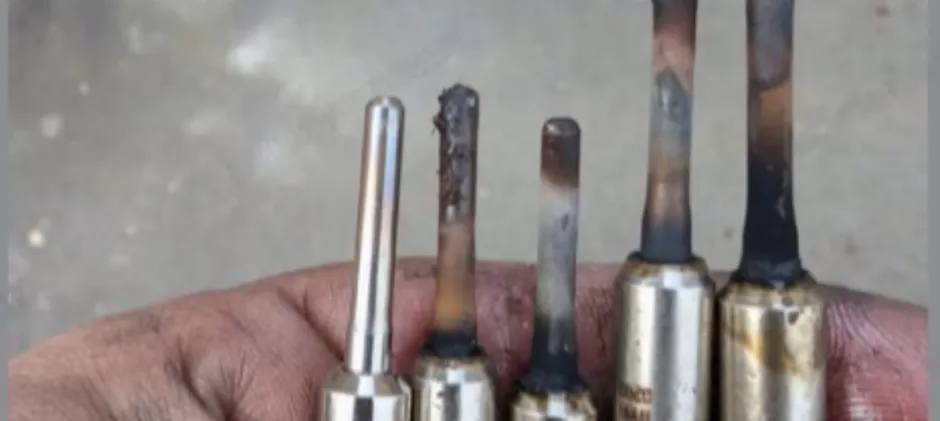
A brand-new glow plug has a clean, shiny metal finish and a smooth, even tip. But a bad one? Here are the most common visual indicators of a bad glow plug:
- Melted, warped, or missing tip: If the tip’s melted, swollen, or broken right off—that plug’s done for. It’s almost always from overheating. Common causes? Wrong fuel injection timing, a leaky or clogged fuel injector, or using a glow plug with the wrong voltage.
- Thick carbon gunk: A slightly dry soot layer is normal. But thick, lumpy or oily carbon deposits are not normal. Severe carbon deposits act as insulation, preventing the preheating plug from heating the air. This symptom can occur with inadequate combustion. It may be due to the preheating plug itself not being hot enough, or some other problem. For example, insufficient compression or injector failure.
- Weird discoloration: A healthy plug tip might have a slight tint from heat. But extreme color changes are a warning. If it’s turned dark blue, black, or the metal is flaking off, it’s been overheated. That kind of heat kills the plug fast.
- Cracked or swollen casing: Check the metal body below the threads. If you see cracks or it looks puffed up, the plug’s broken inside. This can happen from factory defects or from the plug heating up and cooling down too quickly, making the inner parts expand and crack the outer shell.
How a Bad Glow Plug Affects Equipment Performance?
You might not even notice if one or two glow plugs go bad when it’s warm out. But once the temperature drops, or more plugs die, the diesel glow plug failure symptoms become impossible to miss.
- Difficulty starting cold or not starting fire: The glow plug is used to assist diesel ignition during cold starting. If it doesn’t heat up enough, it starts up slowly. Sometimes the engine may not even turn on at all.
- White smoke on startup: That white cloud from the exhaust isn’t steam—it’s unburned diesel fuel. Bad glow plugs can’t heat the cylinders enough to burn the fuel. Instead, the fuel gets vaporized by engine compression, puffing out as a stinky, thick smoke. The smoke clears up once the engine warms up.
- Rough idle and engine shaking: When starting the engine, the engine may shake or make a knocking sound. Because some cylinders do not burn fully. This jitter will disappear when the combustion stabilizes. You can feel it in the cab.
- Hard on your battery and starter: Every time it fails to start for a long time, the battery and starter motor will lose a lot of energy. Much more troublesome and expensive than replacing several glow plugs.
Glow Plug Wear vs. Failure
There is a difference between complete failure and normal wear and tear. Glow plugs that have been in the engine for a long time will certainly not look like brand new ones. Some slight thermal discoloration and a thin layer of dry soot at the top are normal wear and tear. Does not necessarily mean that the spark plug is damaged.
The key difference is performance. A worn glow plug only takes a little longer to reach operating temperature. But still able to reach the temperature functioning. A failed glow plug will not reach the target temperature at all or will have an internal short circuit. If a glow plug appears to have severe carbon deposits or shows early signs of expansion, its performance may have been lost long ago.
When to Replace Glow Plugs?
Don’t wait for your machine to break down. Add glow plug checks to your regular maintenance routine.
- Check by engine hours: Check glow plugs every 1,000–1,500 hours of use. But always check your machine’s service manual first—recommendations can vary by model.
- Do pre-season checks: The best time to service glow plugs is fall, before the cold weather hits. This simple fix will keep your machine starting all winter.
- Don’t mix up with other starting issues: Hard starts and white smoke can also come from a weak battery or faulty fuel injectors. If your battery and starter are in good shape, glow plugs are the next thing to check. You can test them with a multimeter to check resistance or continuity—this tells you if they’re electrically good before you even take them out.
The Bottom Line on Glow Plugs
By learning to spot the visual differences between a healthy glow plug and a faulty one, you can stay on top of maintenance and keep your machine running smoothly. Replace bad plugs early—don’t wait for them to cause more serious issues with your transmission. Make MechLink your one-stop shop for glow plugs and other new parts.