2026-04-30
When we’re buying an off-road machine, repowering a power unit, or keeping a mixed fleet running, the engine choice is rarely about “brand pride.” It’s about uptime: cold starts on site, steady torque under hydraulic load, how painful a fuel-system repair will be, and whether we can get parts fast. This guide breaks down Powerstroke vs Cummins in a way that helps off-road machinery owners choose what fits their work, their maintenance setup, and their downtime risk.
Power Stroke is an engine family name tied to a specific diesel lineup. In many fleets, we see it most often in service trucks, field support vehicles, and site-runner units that live around off-road equipment—fueling, towing implements on-site, moving tools, or supporting crews. That matters because it shapes how we service it: parts channels, diagnostics, and how the engine electronics integrate with the rest of the vehicle.
In practical terms, Power Stroke setups tend to be:
Cummins is an engine manufacturer whose engines show up across industrial and off-road applications—including construction machinery, agricultural equipment, stationary power units, and other heavy-duty systems, depending on the machine and market. For us, as off-road owners, that broader industrial footprint often translates to:
Important note: both names cover multiple generations and emissions eras. There is no single “Powerstroke” spec and no single “Cummins” spec. What we can compare, reliably, are the typical ownership realities: integration style, service approach, and how each tends to behave when it’s the heart of a working machine.
/filters:format(.webp)/filters:quality(50)/news/1773393176308-Powerstroke-vs-Cummins-How-to-Choose-the-Right-One.png)
This is the core Powerstroke vs Cummins section. We’ll keep it focused on off-road realities—heat, dust, idle time, hydraulic loads, and repair planning.
A useful way to frame the difference:
Across many modern generations, Power Stroke is commonly seen as a V8 design, while many widely used Cummins platforms in heavy equipment are inline-six designs (Cummins also makes other configurations, but inline-six is very common in working equipment).
For off-road service, layout affects:
Inline-six packaging can sometimes simplify access along one side of the engine. V8 packaging can be compact front-to-back but more crowded around the center valley and rear areas, depending on the installation. The takeaway: we should judge the machine’s engine bay, not just the engine family.
Off-road machines don’t care about 0–60. They care about:
Both engine families can deliver strong torque, but the more important factor is how the engine is calibrated and matched to the machine’s hydraulic demand.
1. Is the engine spending most of the day in a narrow RPM band?
If yes, we want stable torque and strong cooling capacity in that band.
2. Is the machine seeing fast load spikes?
If yes, we care about response (airflow control, fueling control, turbo control).
3. Do we idle a lot between bursts?
If yes, we care about soot management, regen behavior (if equipped), and keeping temps consistent.
Modern diesel engines—regardless of badge—use sensors, control modules, and often aftertreatment. The difference is usually how integrated those controls are with the host platform.
Either way, on off-road equipment, electronics live a hard life:
So our “difference” decision becomes a support decision: Do we have the diagnostic coverage and electrical discipline to keep a modern electronic diesel happy?
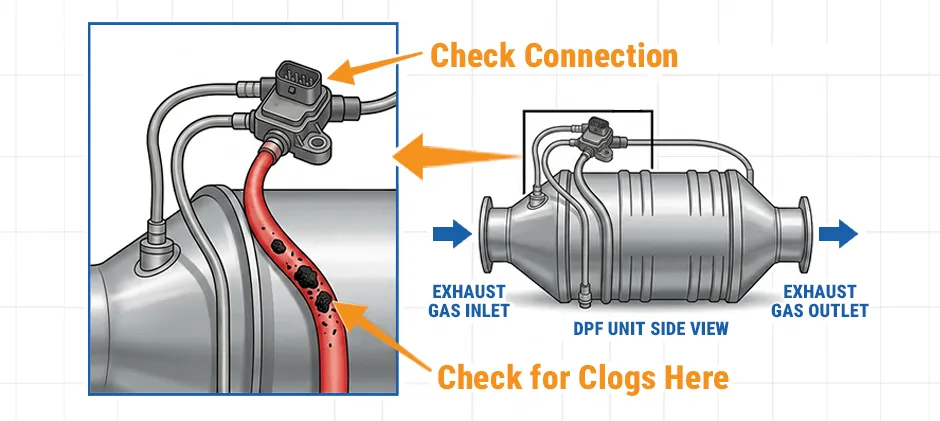
We won’t pin this to any single model year, because requirements vary by region and machine class. But in general, newer diesel systems may include:
In off-road work, aftertreatment issues often show up when:
This affects Powerstroke vs Cummins only in the sense that we must match the engine’s emissions era to our duty cycle. A machine that idles all day doing short bursts may need different operating habits than a machine that works hard continuously.
For off-road owners, downtime costs more than the part. We care about:
Cummins’ broad industrial footprint can help here, but the real-world result still depends on:
| Decision factor Power Stroke Cummins | ||
| Typical role in off-road operations | Often, field support vehicles/site logistics | Often, the main power plant is in the equipment and power units |
| Integration style | Tight integration with the host platform | Often used across varied industrial platforms |
| Diagnostics | Efficient with the correct tools | Can be straightforward in industrial setups; depends on the machine |
| Service access | Depends heavily on chassis packaging | Depends heavily on machine packaging |
| Downtime risk drivers | Electronics + platform-specific parts channels | Parts sourcing can be broad; the exact model still matters |
| Best fit when… | We have strong parts service support | We run mixed equipment and want engine-as-a-component support |
This is the part that should actually change our buying decision. We’ll keep it practical, with steps we can apply before we sign or before we tear into a repower.
Ask these questions first:
Production assets need the simplest downtime path.
If yes, we value field serviceability and predictable parts sourcing.
That affects heat management, soot management, and maintenance intervals.
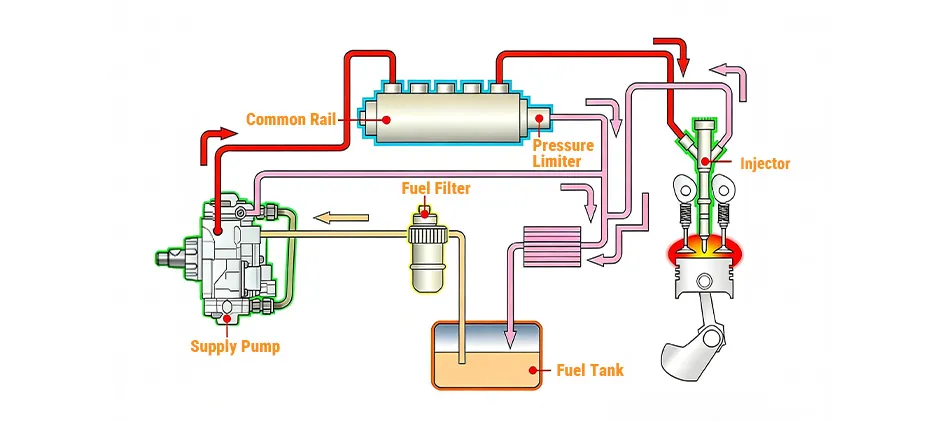
Modern fuel systems reward clean fuel and consistent filtration.
If we skip this step, the Powerstroke vs Cummins choice turns into guesswork.
On off-road machines, engines often “fail” because the systems around them are weak.
We check:
If the engine is feeding a hydraulic pump, the most expensive mistakes come from mismatching the system:
From the FridayParts category page: hydraulic pumps convert engine mechanical energy into hydraulic energy, and hydraulic motors convert that hydraulic energy back into motion (wheels, conveyors, drives). In modern heavy-duty machines, efficiency affects productivity, fuel use, and control precision.
When we’re troubleshooting “low power,” we often find the issue is hydraulic efficiency, not the engine. If we need replacement pumps, motors, or repair components (like seal kits), FridayParts carries hydraulic pumps and motors (gear, piston, tandem; gear, piston, gerotor) plus accessories and repair kits, with units tested for flow, torque output, and pressure tolerance. For Cummins-powered equipment where we’re planning a full refresh, this is a useful place to start: Cummins parts.
Instead of chasing “best engine,” pick the profile that matches how we operate.
Choose the option that gives us:
This profile often favors engines and installations that are less dependent on specialized tooling in our specific region.
If we run near strong support and can control maintenance tightly, an integrated package can be efficient. The key is discipline:
If we manage multiple machine types and want repeatable service routines, we lean toward platforms where:
Whether we land on Powerstroke vs Cummins, we should treat wear items as scheduled costs, not surprises:
If we’re already pulling a machine in for an engine-related job, it’s smart to bundle hydraulic repairs that restore real work output—especially pumps, motors, and seal kits. FridayParts is an aftermarket parts supplier known for high-quality products at affordable prices, a vast inventory, and wide compatibility across many heavy equipment brands. That combination helps when we’re trying to shorten downtime windows: Cummins parts.
In Powerstroke vs Cummins, the best answer is the one that matches our site conditions: fuel quality, duty cycle, diagnostic access, and parts lead time. We don’t win by picking a name—we win by cutting downtime. If we’re refreshing a Cummins-powered machine, don’t ignore the hydraulic side of performance. FridayParts offers aftermarket hydraulic pumps, motors, and repair parts with strong value, broad compatibility, and a large inventory—helpful when we need reliable parts fast and want high-level performance without expensive cost.