2026-08-14
DTC P0523 indicates that your equipment’s engine oil pressure sensor is operating abnormally. Here are the common symptoms and possible causes of this fault code, as well as how to check and resolve it.
Diagnostic Trouble Code P0523 just means the engine oil pressure sensor/switch “A” circuit is reading too high. Plain and simple, your machine’s “brain”—either the Powertrain Control Module (PCM) or Engine Control Module (ECM)—is getting a voltage signal from the oil pressure sensor that’s way above the normal max limit.
The oil pressure sensor’s job is to turn actual oil pressure into an electric signal the ECM can pick up. The ECM uses this info to make sure the engine’s properly lubricated. When it gets a voltage that’s too high, two things could be going on: either the engine’s oil pressure is really dangerously high, or there’s an electrical glitch in the sensor’s circuit that’s messing up the reading. Since the ECM can’t trust the signal, it triggers the P0523 trouble code, turns on the check engine light, and will almost certainly switch on the low oil pressure warning light too—just to warn the operator to be careful.
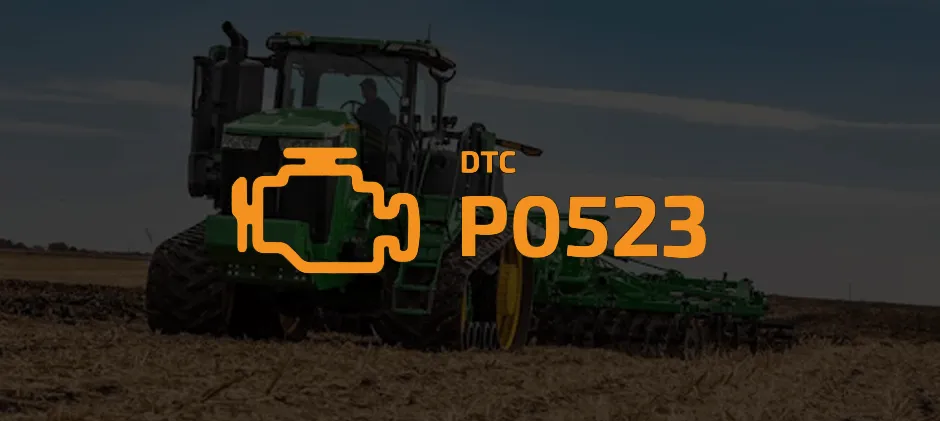
For heavy equipment working in tough conditions, a P0523 code can pop up from something as simple as an electrical glitch to more tricky mechanical issues. All the constant shaking, dust, and temperature ups and downs on job sites make certain problems happen a lot more often.
This is one of the top causes for off-road machines. The wiring of the oil pressure sensor has been exposed for a long time. Wires are prone to wear and short circuits. Connectors can also become damp and rusty. The vibration when the machine is operating will also easily loosen, making the signal unstable and the voltage reading will naturally be too high.
The sensor itself is another common trouble spot. It can fail on the inside, sending a steady high-voltage signal (usually around 5 volts) to the ECM, no matter what the actual oil pressure is.
Using oil that’s too thick—like the wrong grade for your machine or the weather—can make oil pressure spike right away. This is especially true when you start the engine cold. So always stick with the oil viscosity the manufacturer recommends.
These don’t cause a “circuit high” code as often, but they can lead to actual high pressure. Common triggers here are:
Technically, an internal issue with the ECM could set off a P0523 code—but this is super rare. You should only check this after you’ve ruled out every other possible cause completely.
If your machine throws a P0523 code, you’ll probably spot some obvious signs right away. Ignore them, and you could end up with a total engine breakdown.
To figure out what’s causing a P0523 code, you need to go step by step to zero in on the exact issue. Follow these steps instead.
Before you grab any tools, start with the basics. Check your engine oil level and condition. Is the oil dark and gunky? Did you use the right oil type in the last service?
Grab a diagnostic scanner that works with your heavy equipment to talk to the ECM. You’ll need the right connector for this. Once it’s hooked up, confirm that P0523 is the active code. Also, look for other related trouble codes.
Trace the oil pressure sensor wiring back to the main harness slowly. Look for obvious damage—melted plastic coating, frayed or broken wires, or green/white corrosion in the connector. Gently tug the wires at the connector to make sure they’re tight.
If the visual check shows nothing wrong, it’s time to test the circuit electrically.
If the reference voltage and ground are both there, the sensor is probably the culprit. A bad sensor will often send the full 5-volt signal straight to the ECM—that’s what triggers the “circuit high” code.
This is the final test that tells you if it’s an electrical glitch or a real mechanical problem.
If the mechanical gauge reads normal pressure, the problem’s electrical—it’s either a bad sensor or faulty wiring. If it shows way too high pressure, you’ve got a serious internal mechanical issue—fix it right away.
The P0523 trouble code is a serious warning you can’t ignore. Follow a proper diagnostic process, and you’ll easily tell if it’s just a bad sensor or a sign of a bigger mechanical issue. Replace a sensor or do a full oil filter service in time. This keeps the problem from spreading to other parts and triggering more trouble codes. The good news is that you can find tough, long-lasting replacement parts over at MechLink.