2026-08-27
The Kubota V3307 is a strong, reliable 4‑cylinder diesel from Kubota’s 07 Series, used in many heavy-duty off-road machines. Follow the correct maintenance specs to avoid breakdowns, costly repairs, and job-site downtime. This guide gives you the key technical data you need for proper service and repair.
The following specifications apply to the V3307-CR-T-E5 model. While the 07 Series shares many characteristics, always verify the specific emission-level plate on your engine before beginning assembly.
| Feature | Specification |
| Type | Vertical, water-cooled 4-cycle diesel |
| Aspiration | Turbocharged |
| Displacement | 3.331 L / 203.3 cu.in |
| Rated Output | 55.4 kW / 74.3 HP @ 2600 rpm |
| Maximum Torque | 265.0 Nm / 195.5 lb-ft @ 1500 rpm |
| Combustion System | Direct Injection / Common Rail |
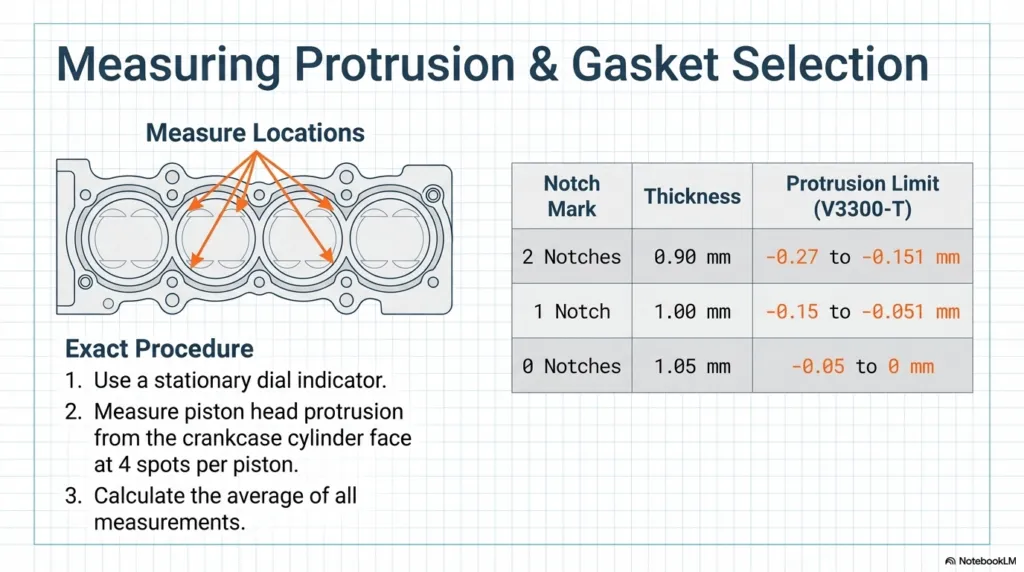
Choosing the right head gasket is about managing top clearance. If you are replacing the piston, connecting rod, or bearings, you must select a gasket thickness that matches your piston protrusion. To do this correctly, use a dial gauge to measure protrusion at 4 spots per piston, then calculate the average for all pistons.
Based on the calculated average protrusion, you must select the correct grade of gasket. You will need to consult the official Kubota workshop manual for the chart that matches your measurement to the correct gasket (identified by notches or a part number). A larger protrusion value requires a thicker gasket.
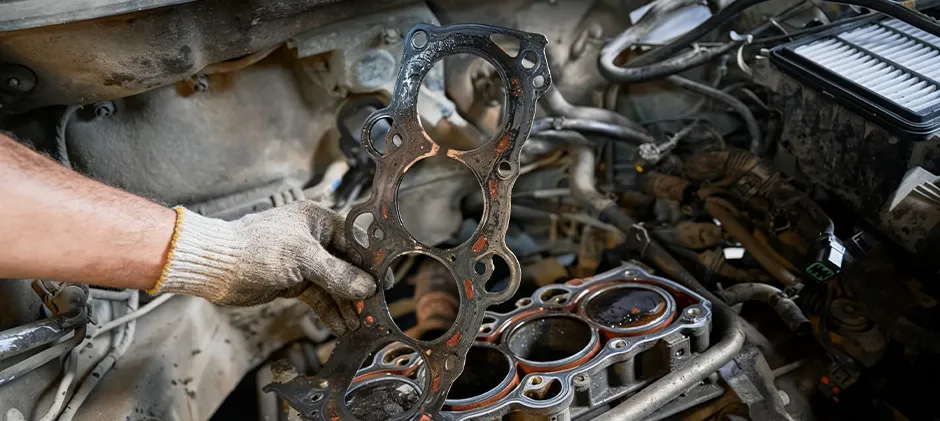
“If no work has been done on the engine before this head gasket repair, replace the head gasket with a ‘like’ gasket that is removed.”
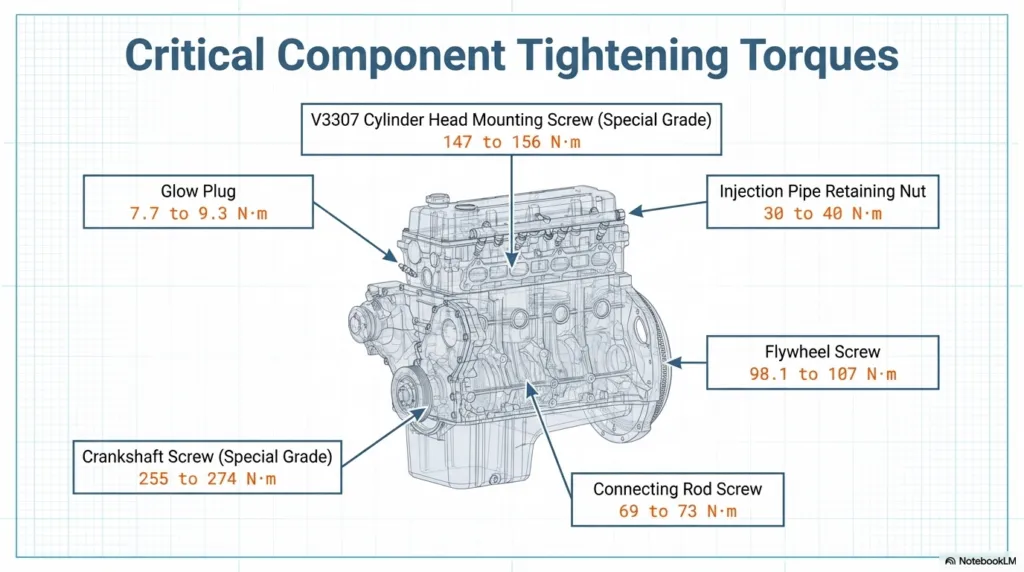
For the V3307-CR-T-E5, precision is non-negotiable. Skipping a torque spec is a guaranteed way to see a comeback within a week.
These engines use common-rail systems with higher backpressure, making heat management and oil film integrity critical. If you spot these signs, pull the intake boot and check for shaft play immediately. A complete turbocharger repair guide can walk you through the diagnostic steps.
Key Point: Across all turbocharged Kubota units, oil starvation is the leading cause of early failure. The bearings depend on a constant high-pressure oil film to survive shaft speeds that can exceed 100,000 RPM.
Use these “Factory Specifications” for standard tune-ups, but keep the “Allowable Limits” in mind. If your readings hit the allowable limit, it’s time to stop chasing symptoms and start planning a rebuild.
| Item | Factory Specification | Allowable Limit |
| Valve Clearance (Cold) | 0.13 to 0.17 mm | — |
| Engine Oil Pressure (Rated Speed) | 200 to 390 kPa (29 to 56 psi) | 150 kPa (21 psi) |
| Thermostat Opening Temperature | 74.5 to 78.5 °C (At the beginning) | 90 °C (Fully open) |
| Cylinder Head Flatness | — | 0.05 mm (Maximum) |
Using precise specs for the Kubota V3307 is the only way to extend engine life and prevent catastrophic metal-to-engine damage. From the 4-point piston measurement to the specific head torque sequence, these details make the difference between a reliable machine and an expensive anchor.
When performing a rebuild or routine maintenance, always source reliable components. Browse MechLink high-quality replacement parts here: Aftermarket Kubota engine parts.