2025-12-24
As heavy equipment like excavators, skid steers and loaders have become more advanced, the number of onboard electrical systems has increased. Headlights, air conditioning, navigation systems, engine sensors and other components all depend on electricity from the machine’s battery to function.
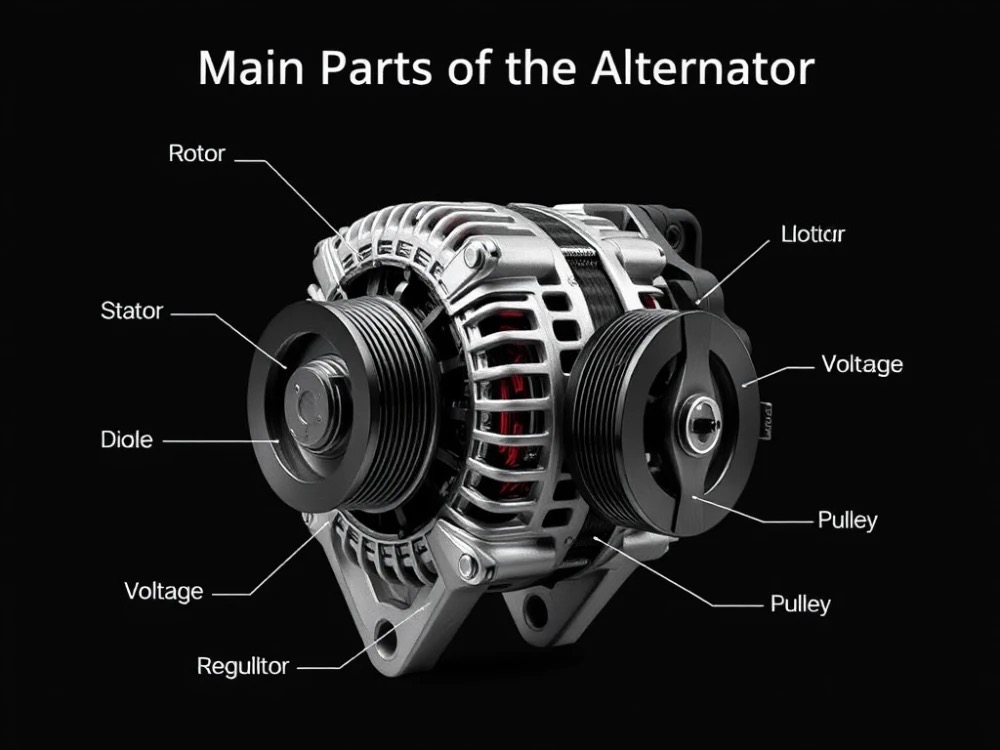
Alternators play the key role of keeping a machine’s battery charged. As a machine’s engine operates, some of its energy is used to turn a rotor inside the alternator via a belt. This mechanical energy is converted into electricity inside the alternator which charges the battery.
When a machine’s alternator stops working, the battery may lose its charge. In turn, the starter motor cannot function and the machine won’t start. Therefore, the alternator plays a crucial role in both the electrical system and the starter system.
In this article, we’ll get into the mechanics of heavy equipment alternators. We’ll go over the components that make up the alternator, how a faulty alternator can impact performance and how to keep your machine’s alternator running smoothly.
The primary role of alternators in heavy equipment is to generate the electrical power that’s essential for operating the equipment and charging its battery.
At the heart of an alternator’s design is the principle of electromagnetic induction. As the machine’s engine runs, it rotates a belt connected to the alternator’s rotor.
The rotor spins inside a set of magnetic coils known as the stator. As the rotor spins inside of the stator, an alternating-current (AC) electrical charge is generated via electromagnetic induction.
Alternators also are fitted with a voltage regulator, which ensures the output voltage of the alternator stays within a certain range. This is necessary to prevent damage to the electrical systems and battery that could result from voltage spikes.
Nearly all diesel-powered machines rely on alternators to generate electricity for charging their battery. However, all-electric heavy equipment, such as all-electric skid steers or forklifts, do not have alternators.
In order to provide reliable electrical power, alternators must work in tandem with a host of onboard components.
A well-functioning alternator ensures machines perform reliably and efficiently. By providing a stable power supply, they contribute to the functioning of a machine’s electrical components, starter system and other systems used to regulate the performance of the engine.
When your machine’s alternator begins to break down, you may notice its performance start to suffer. While many performance issues may have several causes, some signs typically indicate a faulty alternator.
Some initial signs of a faulty alternator include:
If left untreated, any of these malfunctions may lead to a total failure of the alternator. Once the alternator has failed, the machine will not start, rendering it unusable until it can be serviced.
Therefore, it’s critical to train operators to spot the signs of a faulty or failing alternator early on. By recognizing these symptoms before alternator failure occurs, you can minimize downtime and keep your equipment out of the service yard.
Deciding whether to repair or replace a faulty alternator involves several factors. Some important factors to consider when making your decision include the age of the alternator, the severity of the problem and the cost of repairing it vs replacing it.
Older alternators or those that have undergone several repairs may be more prone to failing again. If an alternator has reached the end of its expected service life, then it may be more cost-effective to replace it.
Simple issues, like a loose belt or a bad connection, might be easily repairable. Significant damage – such as failed bearings or a burnt-out stator – may warrant replacement.
Before making any repairs to the alternator, it’s wise to get estimates for both repairing and replacing it. While replacement may have a higher initial cost, it may reduce the likelihood of future downtime and additional repair expenses.
Alternators are a critical component in heavy equipment machinery. By providing reliable electricity to onboard electrical systems, they enable machines to perform a range of necessary functions. The MechLink Shop features a collection of OEM and aftermarket alternators available for purchase. Get fast shipping on those, plus other heavy equipment parts, when you order today. Can’t find exactly what you need? Reach out to our parts experts and get personalized assistance.