2026-07-21
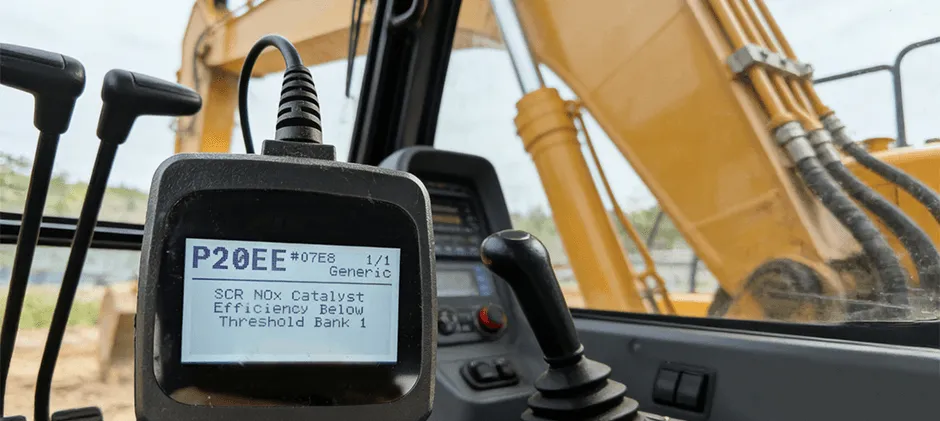
When P203F Cummins shows up on an off-road machine, the problem is rarely “mystery emissions.” It’s usually something practical we can verify: the DEF (diesel exhaust fluid) level really is low, the level reading is wrong, or the signal can’t reach the control module due to wiring/connector issues. In this guide, we’ll explain what the code means, why it happens on heavy equipment, what symptoms to expect (including derate/no-start), and how we fix it step by step without swapping parts blindly.
P203F Cummins points to a DEF/reductant level too low condition—either the tank is actually low, or the machine thinks it is because of a bad level sensor, wiring/connection trouble, or DEF quality/contamination issues. The fastest path is: verify DEF level/quality → check connectors and harness routing → confirm sensor readings with scan data → repair the root cause, then clear the fault and confirm the inducement resets.
On Cummins-powered off-road machinery with SCR aftertreatment, P203F is commonly used to indicate “Reductant (DEF) Level Too Low.” DEF is stored in a tank and injected into the exhaust stream upstream of the SCR catalyst to reduce NOx emissions. The control module monitors the DEF level signal (and often quality/temperature signals depending on the setup). If the level signal indicates “too low” for long enough, or falls outside expected behavior, it logs P203F Cummins and may start an inducement strategy.
A key point for off-road owners: P203F can appear even when the DEF tank looks full if the level sensor is failing or the wiring has high resistance/corrosion. So you don’t want to assume it’s just “add DEF” without checking scan data and wiring integrity.
On heavy equipment, most P203F root causes fall into a few repeat patterns driven by vibration, moisture, temperature swings, and long service intervals.
This sounds basic, but it’s common in fleet operations:
What you do: confirm the level on flat ground (per OEM procedure), and verify the dash/scan tool level reading changes appropriately after filling.
Level sensors can fail electrically or mechanically. Common patterns:
If you see P203F with a tank that’s clearly not empty, the level sensor moves up the suspect list quickly.
Related parts note: DEF tank assemblies vary by machine, but level sensing is a common failure point in off-road aftertreatment systems—especially where vibration and washdown are routine.
In real-world equipment conditions, wiring problems cause “comes and goes” faults:
This is why you always inspect the harness and connectors before you condemn expensive components.
If you need replacement harnesses/cables for heavy equipment repairs, this category is purpose-built for uptime fixes: wiring and connections.
While P203F is a “level too low” code, bad DEF can still contribute indirectly:
Practical rule: If DEF looks cloudy, has debris, or smells off (DEF should be clear and clean), you treat it as suspect and correct it before deeper electrical work.
Software or module issues can happen, but in off-road equipment, you treat this as a last step after you verify the level, sensor, and wiring. Module replacement or programming is costly and machine-specific.
Symptoms vary by machine and how far the inducement has progressed. Here’s what you typically see on off-road equipment:
| Likely Cause | What You Check First | Typical Fix |
| DEF actually low | DEF level per OEM procedure; scan tool level % | Fill with correct DEF; verify level signal updates |
| DEF level sensor fault | Live data stuck/erratic; sensor connector condition | Replace the sensor/tank sender as applicable |
| Harness/connector issue | Corrosion, loose pins, rubbed insulation, poor ground | Repair/replace harness/connector; secure routing |
| DEF contamination/wrong fluid | Visual inspection, service history, tank condition | Drain/flush per OEM guidance; refill with correct DEF |
| Module/software issue | Only after all the above pass | OEM-level diagnostics, update, or module repair |
You fix P203F Cummins fastest when you follow a controlled order. Here’s a field-proven workflow for off-road machinery owners and techs.
Why this matters: If live data shows the level stuck at 0% or wildly jumping, you stop guessing and move to sensor/wiring checks.
If DEF level is truly low, filling may resolve the warning—but you still confirm that the level reading is believable afterward.
This is where off-road machines often fail:
If the connector is compromised, replacing the assembly is often more reliable than repeated splicing. For application-specific repair parts, start here: wiring and connections.
Depending on the machine and sensor type, you typically:
If the circuit tests good but the signal is wrong, the sensor becomes the primary suspect.
If you’re sourcing heavy equipment sensors, including DEF/coolant/oil level sensing options, browse: level-sensor.
If you find contamination, you correct it decisively:
Note: Avoid improvised chemicals or “DEF hacks.” Off-road SCR systems are sensitive, and quick fixes often cause bigger downstream failures.
After repairs:
If P203F returns immediately with a confirmed good level and good wiring/sensor readings, then you escalate to OEM-level diagnostics for module logic or calibration concerns.
P203F Cummins is usually a solvable DEF level signal problem: low DEF, a bad level sensor, or wiring/connectors that can’t hold a clean signal in harsh jobsite conditions. When we verify level and scan data first, then inspect wiring before replacing parts, we avoid repeat derates and surprise no-start events. If you need reliable aftermarket replacements, MechLink supports off-road machinery owners with high-quality products at affordable prices, a vast inventory, and wide compatibility across many heavy equipment brands.