2026-08-14
When an off-road machine throws a P0328 code, we usually have two urgent goals: stop the power loss/overheating risk and avoid wasting time swapping parts blindly. In this guide, we’ll explain what P0328 really means on heavy equipment, what typically causes it in harsh jobsite conditions (dust, heat, vibration, pressure washing), what you’ll notice in real operation, and a practical fix plan you can follow with a scan tool and basic electrical checks.
The P0328 code is a diagnostic trouble code that translates to: “Knock Sensor 1 Circuit High (Bank 1).”
In plain terms, the engine control module (ECM/PCM) is seeing a knock sensor signal voltage that is higher than the expected range for a certain time or under certain conditions.
On spark-ignited off-road engines (gasoline, LPG, and some industrial spark engines), the knock sensor listens for engine “knock” (also called detonation/ping). It’s usually a piezoelectric sensor bolted to the engine block. When combustion becomes abnormal, vibrations in a specific frequency range increase, and the sensor outputs a voltage signal. The ECM uses that signal to adjust ignition timing (often retarding timing) to protect the engine.
On heavy equipment, we see P0328 most often from a mix of harsh-environment wiring issues and real operating-condition problems. Here are the common causes, grouped in the way we troubleshoot them.
Off-road harnesses live a tough life. “Circuit high” can show up when the ECM sees an abnormally high signal due to:
Even with a perfect sensor, abnormal combustion can push the signal high:
Some industrial spark engines use EGR strategies or similar controls to manage combustion temperatures. If that system is not working, combustion temperature rises, and knock likelihood increases.
A control module fault is possible, but we treat it as last after confirming sensor power/ground/reference, wiring integrity, and real engine conditions.
| Likely cause | Fast check we can do | Typical fix | Risk if ignored |
| Water/corrosion in the connector | Visual inspection, wiggle test, look for green pins | Clean/repair the connector, seal properly | Intermittent misfires, derate, downtime |
| Chafed harness / bad ground | Inspect near clamps, engine edges; check grounds | Repair harness, restore shielding/grounds | Repeat faults, false knock events |
| Failed knock sensor | The tap test is not reliable; compare data if possible | Replace sensor, torque to spec | Poor timing control, knock damage risk |
| Overheating / cooling weakness | Check temps, radiator restriction, and fan operation | Restore cooling, clean core, repair components | Real detonation, head/gasket damage |
| Lean condition/fuel delivery issue | Fuel pressure/flow tests, air leaks | Fix restriction/leaks, restore fueling | Knock, piston damage in severe cases |
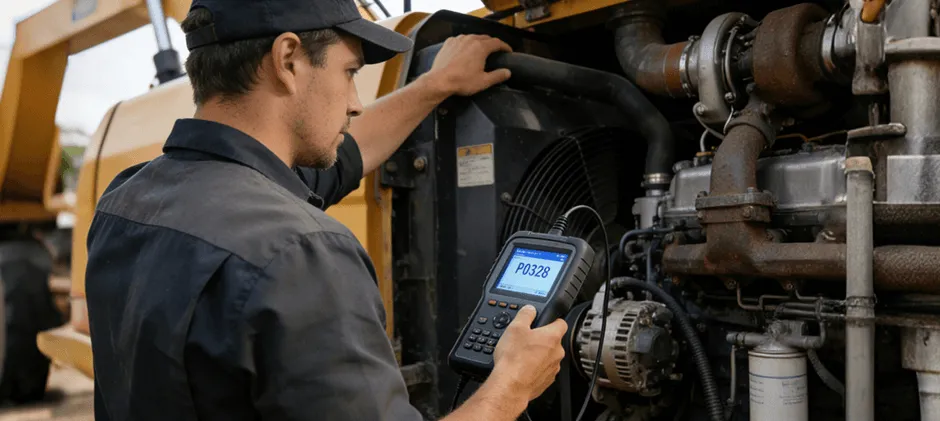
We fix P0328 fastest by following a sequence that rules out the most common failures first, while protecting the engine from continued knock.
If the machine is pinging/knocking, overheating, or derating under load:
Tip for off-road fleets: If your machine is diesel and a generic reader shows P0328, confirm the code with the correct diagnostic path for that engine/controller. Some generic tools mislabel or misread data on certain systems.
Most “circuit high” events on equipment come down to wiring and connectors.
If you find corrosion or damaged terminals, fix that first and retest. A perfect new sensor won’t help if the connector is compromised.
If wiring looks good and the code returns under load, treat this as a possible real knock.
Cooling checks (high priority on jobsite machines):
Fuel/air checks (spark industrial engines):
Operating habit check:
If you’ve verified wiring/connector integrity and mounting, and you still get P0328, replacing the knock sensor is a reasonable next step. On many machines, it’s one of the most direct repairs—as long as the underlying cause is not overheating or lean operation.
Mid-repair is also a good time to review other related sensors that affect combustion and protection strategies (oil pressure switches, coolant temp sensors, speed sensors, NOx sensors on certain setups). If you need dependable replacements with broad equipment coverage, you can browse MechLink sensors to match your machine and reduce guesswork.
After repairs:
The P0328 code means the knock sensor signal is reading abnormally high, often due to harsh-environment wiring issues or real knock caused by heat, load, or fueling problems. We fix it fastest by confirming the fault with the right scan tool, inspecting connectors and grounds, verifying sensor mounting, and correcting cooling/fuel/operating triggers before replacing parts. A careful test under real load is the final proof that the repair has been completed