2026-06-24
When we shop for a sub-compact tractor, the hard part usually isn’t “Can it do the job?”—it’s “Will we regret not stepping up (or overspending) after a few months of real work?” This guide breaks down the John Deere 1023E vs John Deere 1025R decision in plain terms: what each machine is best at, where the real differences show up in off-road work (PTO load, hydraulics, operator time, winter use), and how to choose based on our tasks—not hype.
Both models sit in the sub-compact/compact utility space where one machine can mow, move material with a loader, run PTO-driven implements, and handle light ground engagement. They’re common on acreage, small farms, equestrian properties, orchards, and job sites where we need a tight turning radius and easy transport.
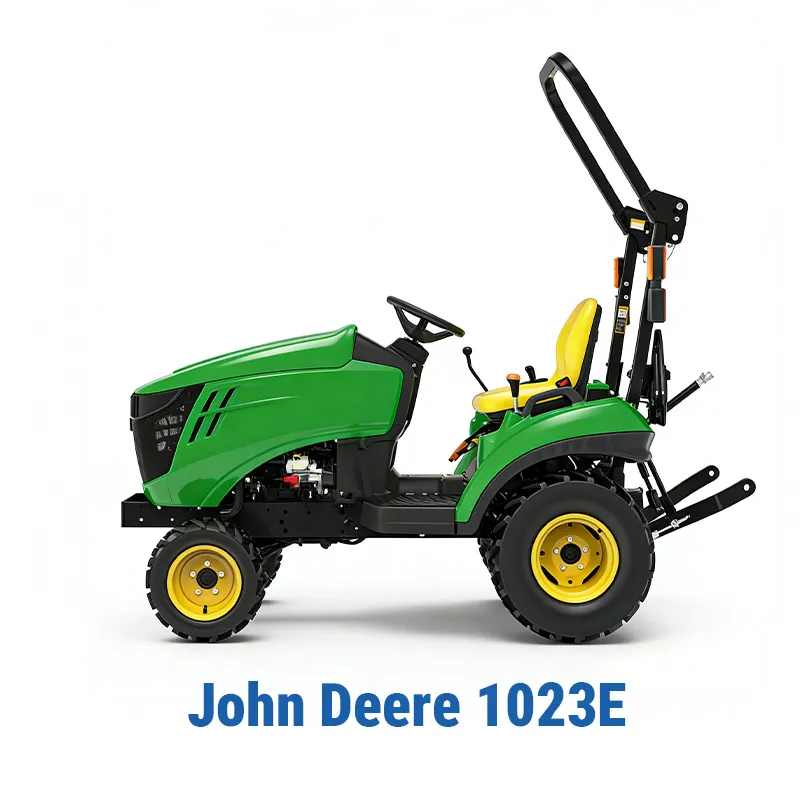
We typically look at the John Deere 1023E when our priority is value and simple capability.
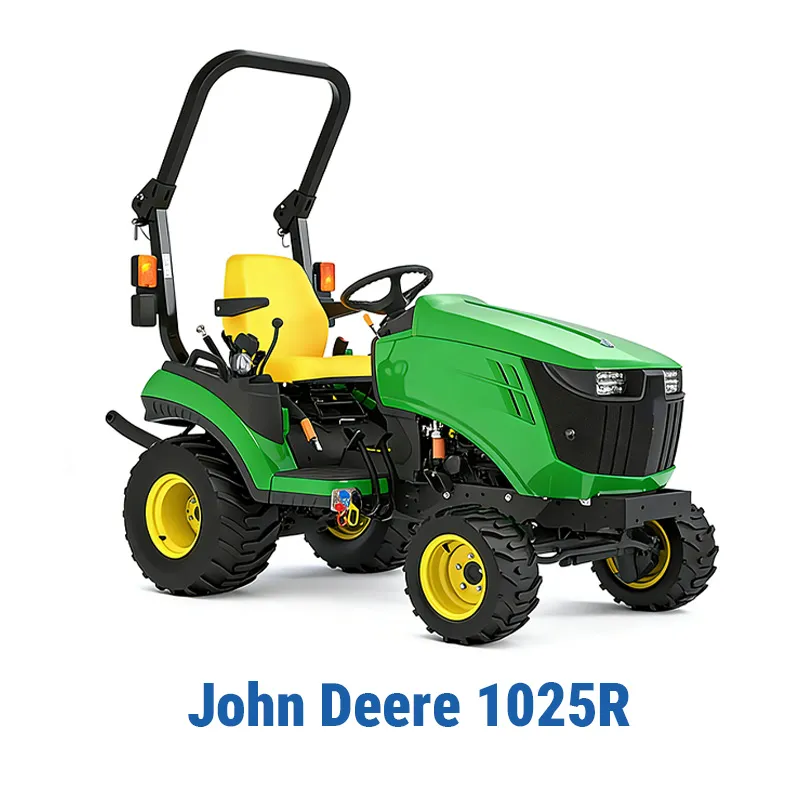
We usually consider the John Deere 1025R when we expect more seat time, more demanding PTO work, or more all-season operation.
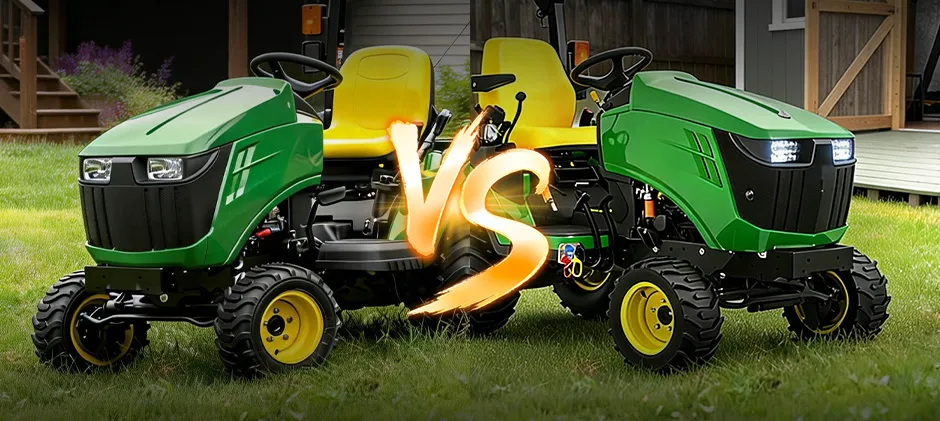
Before we focus on differences, it helps to call out why these two tractors get compared so often: they’re close in size and role. That means our choice usually comes down to power margin + features + how we work, not basic capability.
On paper, the biggest difference is usually reported as a modest horsepower and PTO power increase for the John Deere 1025R.
Here’s a commonly published comparison (exact figures can vary by configuration and year—always verify your specific machine and attachments):
| Spec | John Deere 1023E | John Deere 1025R | Why we care about off-road work |
| Gross engine horsepower | ~21.5 hp | ~23.9 hp | Extra margin under load (less bogging) |
| PTO power | ~14.9 hp | ~17.2 hp | More “usable work” for PTO implements |
| Shipping weight (open station) | ~1,446 lb | ~1,556 lb | Weight can help with traction/stability (setup matters) |
A practical way to think about it: the “small” power gap matters most when we’re already near the limit—thick growth, wet conditions, steep slopes, or high implement demand.
For many owners, the real difference is not raw power. It’s the set of features that reduces friction during every task.
If we do ground-engaging work, consistent depth and repeatability matter: box blade grading, rear blade work, cultivating, and some tilling setups.
The 1025R’s extra weight can be useful, but only when paired with the right setup:
If we’re buying a tractor to “feel planted,” we should budget for ballast and tires, not just model numbers.
Even with differences, these tractors are typically close in:
That’s why the decision is rarely “one is good, one is bad.” It’s more like picking the trim level that matches how we work.
This is where we make a practical choice. Instead of asking “Which one is better?”, we ask “Which one will save us time, money, and frustration for our tasks?”
A good mental test: If we’d rather buy the tractor plus the right attachments/ballast than pay for comfort extras, the 1023E is often the smarter total package.
A good mental test: If we expect to keep the tractor for years and use it in all seasons, “small” upgrades often pay back in fewer frustrating days.
No matter which model we choose, downtime is what hurts. Wear items and electrical/engine service parts are normal in off-road work—dust, vibration, moisture, and seasonal storage all add stress.
To address any unexpected tractor issues promptly, we recommend keeping some aftermarket John Deere tractor parts on hand. We also offer parts from other brands besides John Deere for your selection.
When our tractor is the tool that keeps the property running, a part that delays costs more than the part itself. MechLink is an aftermarket parts supplier offering high-quality products at affordable prices, a vast inventory, and broad compatibility across many heavy equipment brands. If we’re maintaining a John Deere 1023E or John Deere 1025R, using the catalog to confirm fitment and stocking common service parts is a simple way to cut downtime.