
2026-10-28
Every component of the steering system is important and necessary. But unlike the pitman arm or the tie rods, the idler arm is always overlooked. In fact, it keeps your steering stable, responsive, and predictable. Follow this guide, learn what is an idler arm, how does the idler arm works, what connects the idler arm, and how to tell if an idler arm is bad. As a result, you can tell when it’s failing and both save your money and protect your life.
The idler arm is a pivoting support component found in vehicles with a traditional parallelogram steering linkage, also known as a recirculating ball steering system. This design is most common in older cars, as well as many modern trucks, vans, and SUVs that require robust steering mechanisms.
Think of it as the passive “mirror image” of the pitman arm. While the pitman arm (connected to the steering box) actively initiates movement, it is mounted to the vehicle’s frame on the passenger side to simply support the other end of the linkage.
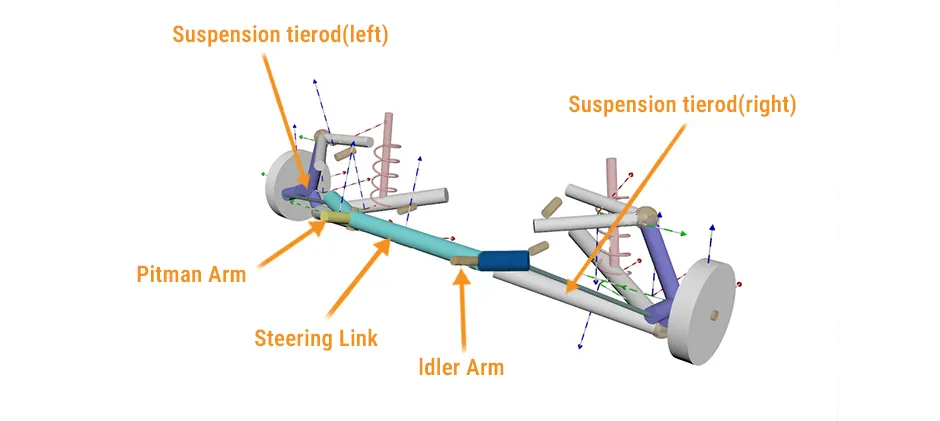
The primary job of it is to provide a solid pivot point that supports the steering linkage, ensuring it moves correctly.
To understand the idler arm, it helps to visualize the entire chain of command in the steering system.
The center link (sometimes called a drag link) is the long steel bar that connects the pitman arm on the driver’s side to the idler arm on the passenger’s side. It acts as the central bridge for the entire steering assembly. If you want to know their differences, you can read: Idler Arm Vs Pitman Arm: Function, Diagnosis, and Differences.
When you turn the steering wheel, a precise sequence of events occurs:
Because it contains a pivot joint that is constantly under stress from road impacts and turning forces, it is a common wear item. A worn-out idler arm introduces dangerous “play” into the steering system.
This is the most common symptom. You’ll feel a “dead spot” in the steering wheel, especially when driving straight, and you’ll have to constantly make small corrections to keep the vehicle from drifting. This is caused by excessive play in the idler arm’s worn-out pivot.
You may hear a clunking or popping sound from the front passenger side of the vehicle, especially when turning at low speeds or going over bumps. This is the sound of the loose joint moving around inside the idler arm assembly.
A bad idler arm allows for unwanted movement in the steering linkage, which messes up the front wheels’ alignment (specifically the “toe” angle). This causes the tires to scrub against the pavement, rapidly wearing down the inside or outside edges.
When it is severely worn, the entire steering linkage can sag, causing your steering wheel to be off-center even when you are driving straight.
You can perform a simple check at home to confirm if the idler arm is the culprit.
Learning what an idler arm is, how it works, and the failing symptoms of it, ensuring your steering stability and operating safety. This also depends on the quality of components. And MechLink is here for help. We offer high-quality and durable idlers & idler accessories, extending your equipment’s longevity and safety, which could also prevent other components from being damaged.
Visit MechLink to explore the whole power tools catalog, making your equipment run strong!
Undercarriage for excavator: 2026 comprehensive guide
2026-10-28
Hydraulic cylinder repair cost in 2026
2026-10-27
Idler pulley guide: definition, types & assembly choice
2026-10-27
How to evaluate the quality of a hydraulic oil filter?
2026-10-26