2026-09-08
Brake pads wear out naturally over time. There’s no schedule to replace them. A lot of factors affect their service life, like the work conditions, the way of operating the machine, heavy loads, and so on. Even for the same machine, different brake pads have different work times. How long do brakes last? What signs mean it’s time to replace? Knowing that will help you cut down on breakdowns and downtime.
For heavy equipment, we measure brake life by operating hours. Brake pads are made of friction material—they’re supposed to wear down over time when they press against the steel brake rotors to slow the machine down. So, what’s the exact number of hours they last? There isn’t one. Brake pads on off-road gear can vary a lot—from as few as 1,000 hours to over 5,000 hours. A small tractor used for light landscaping on flat ground? Its original brakes might last for years. But a wheel loader hauling heavy stuff back and forth nonstop in a quarry, hitting the brakes all the time? It might burn through a set of pads in just one season. That’s why knowing what affects brake wear is way more important than trying to find some average lifespan number.
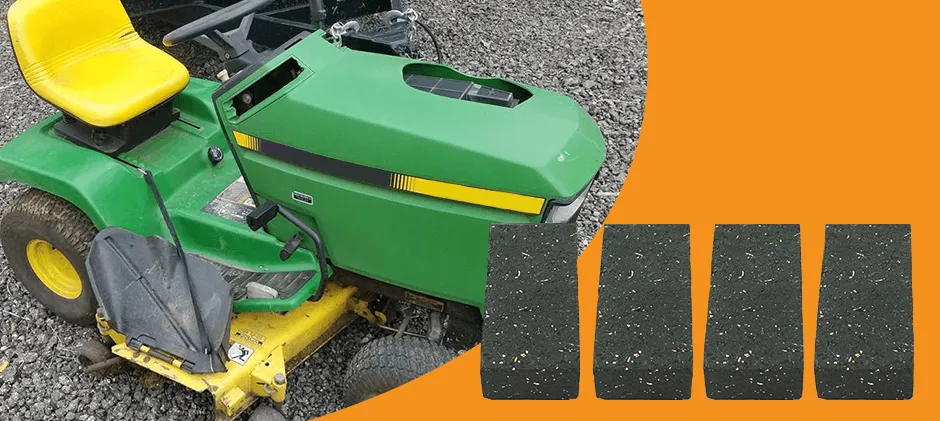
Hit the brake pedal, and the caliper pinches the pads against the rotor. This turns the machine’s moving force into heat. Every single time this happens, a tiny bit of the friction material wears off. How fast it wears depends on these key things.
How your crew runs the machine is the biggest factor here. An operator who slams on the service brakes every time to slow down or stop will wear out pads way faster than someone who uses the hydrostatic drive or transmission to decelerate. Letting the machine coast to a stop and planning moves ahead of time cuts down on unnecessary braking.
A huge 40-ton articulated dump truck needs way more force to stop than a tiny 5-ton compact excavator. The heavier the machine and the bigger the load it’s carrying, the more heat the brakes have to get rid of. That means faster wear.
Grit and gunk: Mud, sand, dirt, and sludge get between the pads and rotors, acting like sandpaper. This makes brakes wear out way quicker.
What the pads are made of matters a lot, too.
Your equipment will basically “remind you” before the brakes completely fail. Pay more attention to these common signs of worn brake pads and you will be able to detect problems early.
Brake repair costs for heavy equipment can vary a lot. The total bill boils down to 2 things: parts and labor.
How much brake pads and rotors cost depends on your machine’s size and type. Pads for a small tractor are pretty cheap. But a full set for a big wheel loader? That’ll cost you a pretty penny. This is where smart shopping helps. Good quality aftermarket parts work just as well as original ones, but they’re way cheaper. Here’s a realistic price range for replacing pads and rotors on one axle (two wheels):
Heavy equipment mechanics charge a lot for their time. Replacing pads is a quick job. But if a caliper is stuck or a rotor is ruined, the job gets way more time-consuming—and way more expensive.
The labor cost to take rotors off and machine them is almost as much as buying new ones. What’s more, new rotors have more material thickness for better heat dissipation. They also give you the safest, best performance. They also give you the safest, best performance. So getting brand-new, high-quality rotors is a better choice.
High-performance aftermarket brake pads use a different friction material than regular ones. Their formula is way more advanced, and their quality standards are met or exceeded. That means even with constant heavy use, they usually last a lot longer. One key thing to remember about our parts: they’re designed to strike a perfect balance between cost and performance. For most equipment owners, that makes them a wallet-friendly choice for replacements. If you’re dealing with brake troubles and need help finding or fixing the brake system, head over to MechLink for professional-grade brake pads and rotors.