2026-07-11
When a hydraulic pump starts acting up, the job slows down fast: weak lift, slow travel, jerky functions, and heat that keeps climbing. In this guide, we’ll walk through a practical hydraulic pump repair process for off-road machinery—how to identify the pump type, why pumps fail, how to troubleshoot in the right order, and how to choose replacement parts so the fix lasts instead of coming back next week.
Before you turn wrenches, we need to know what we’re working on. Pump design affects typical failure points, test methods, and whether a rebuild is worth it.
Where you see them: smaller loaders, tractors, utility machines, simple implement circuits, steering/aux hydraulics.
Why they’re used: simple, durable, and cost-effective.
Common wear pattern: housing and gear tips wear over time, increasing internal leakage. Once the housing is worn, a full rebuild may not restore performance.
Typical symptoms
Where you see them: many mobile hydraulic systems that need smooth flow and medium pressure.
Why they’re used: smooth output and good efficiency for the cost.
Common wear pattern: vane cartridge wear, scoring on cam ring/plates, and seal issues. Cartridge replacement often restores performance if the housing isn’t damaged.
Where you see them: high-demand circuits on loaders, excavators, and hydrostatic systems that need high pressure and control.
Why they’re used: high efficiency and strong pressure capability.
Common wear patterns: swash plate/valve plate scoring, piston shoe wear, bearing issues, case drain increase, control/servo problems.
Most pump failures come from a short list of root causes. Knowing them helps us troubleshoot faster and avoid replacing the wrong part.
Contamination accelerates wear on tight-clearance parts. It also damages control valves and relief valves, which can mimic pump failure.
Cavitation happens when the pump can’t get enough oil at the inlet (restriction, low oil level, wrong viscosity, cold oil). Bubbles collapse under pressure and pit metal surfaces. Aeration (air leaks into the suction) causes spongy operation and heat.
Heat thins oil, reduces lubrication, and hardens seals. Above normal ranges, wear speeds up and internal leakage climbs.
If you want a fast refresher on what failure looks like in the real world (noise, cavitation, overheating, contamination patterns), this breakdown of pump failure warning signs and maintenance actions is a useful companion reference: pump failure warning signs and maintenance actions.
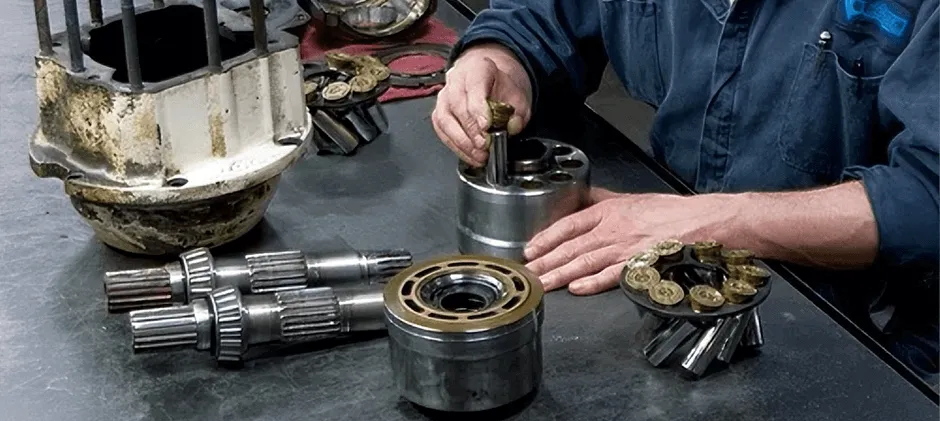
This is the core of hydraulic pump repair: a structured sequence that prevents guesswork. We’ll start simple and only move toward teardown when test results point there.
Write down what’s wrong and when it happens:
This is the fastest “save a pump” check.
If oil is foamy, suspect suction leaks or a low fluid level. Fix that before touching the pump.
Most cavitation starts on the inlet side.
Rule: pressure-side leaks make a mess; suction-side leaks often pull air without leaking oil.
A clogged filter can starve the flow or force bypass (sending dirt through the system).
Use the correct test ports and gauges rated for the system.
A flow meter (or shop flow test) is the cleanest way to confirm pump output. For piston pumps, case drain flow is a strong indicator of internal wear.
A worn cylinder seal or a valve spool leaking internally can steal flow and build heat.
At this point, you should have evidence, not guesses.
These are the details that separate a lasting fix from a repeat failure.
| Symptom | Most likely causes | What you do first |
| Whining/knocking at the pump | Cavitation, suction restriction, air leak | Check fluid level, suction line, breather, and strainer |
| Slow functions, worse when hot | Internal leakage (pump or actuators), oil too thin | Pressure + flow test; compare temps across components |
| Foamy oil | Suction leak, low level, return leak above oil line | Fix suction connections; correct level; check return routing |
| Runs hot fast | Over-relief operation, internal leakage, blocked cooler | Check relief settings, cooler airflow, and leakage tests |
| Normal pressure but weak travel | Drive hydraulic motor leakage, valve issue | Case drain check on motor; valve diagnostics |
Good hydraulic pump repair starts with disciplined troubleshooting: verify fluid and suction health, confirm pressure and flow, then isolate whether the pump, valves, actuators, or a hydraulic motor is causing the loss. When it’s time to replace a full pump or rebuild with kits, MechLink supports off-road machinery owners with high-quality aftermarket options at affordable prices, a vast inventory, and wide compatibility across many heavy equipment brands—helping us cut downtime and get back to work faster.