
2026-07-19
The PTO (Power Take-off) sends the tractor’s power straight to all kinds of farm implements, making a lot of work easier and more efficient. You usually have to engage it by hand, and it relies a lot on manual operation. So how to engage PTO on a Kubota tractor? Today, we’ll show you the right way to do it, plus some common issues you might run into while doing it.
The PTO (Power Take-Off) isn’t all that complicated. It just takes power from the tractor’s engine and sends it to the farm implements hooked up to the front or back—letting those tools without their own engines spin right up. Think of it as a universal power port on your tractor: mowers, tillers, post-hole diggers, wood chippers, they all run off it.
The PTO is separate from the tractor’s drive system for moving. That means you can drive slow, drive fast, or even stop the tractor entirely, and the implement will still keep spinning at the same speed. That’s what makes the PTO so flexible to use. But you have to follow the steps to engage, and you won’t damage your equipment.
Engaging the PTO needs to be done slow and steady—never rush it. Kubota models have slight differences in where the controls are, but the basic steps are all the same.
Park your tractor on flat ground and set the parking brake tight. Make sure no one’s near the PTO shaft or the implement. And double-check that the implement matches your tractor’s PTO speed (it’s usually 540 RPM or 1000 RPM). Using a mismatched one will damage both the tractor and the tool for sure.
On most Kubotas, the PTO lever is easy to reach, right by the operator’s seat—usually it’s yellow, so it stands out. There’s also a PTO light on the dash that lights up when it’s on. Just get to know where the ON and OFF positions are.
Glance at the implement to make sure it’s running right, and listen for any weird noises. Check the dash—your PTO light should be on. If all looks and sounds good, you’re ready to go. To turn the PTO off, just do the steps in reverse: drop the RPM to idle, press the clutch, flip the lever to OFF, then let the clutch out slow.
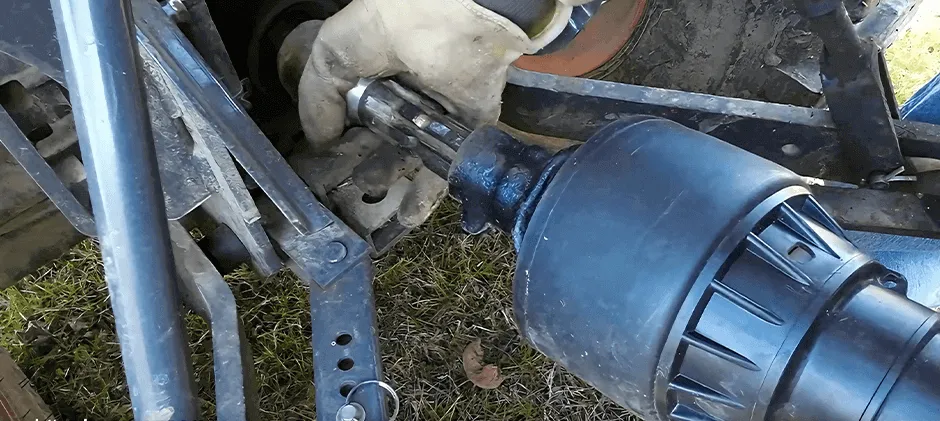
How you engage the PTO directly affects how long your tractor’s clutch, gearbox and the implement last. Stick to the right habits, and you’ll save a ton on repair costs. The biggest mistake operators make is turning on the PTO when the engine’s revving at medium or high speed. This slams a hard jolt through the whole system—just like dumping the clutch in a manual car when it’s at 4,000 RPM. This shock is extra tough on heavy, high-inertia implements, like big rotary cutters (bush hogs), where the heavy blades spin like a flywheel. Here’s how to minimize wear and tear:
Below are some common problems you might encounter when engaging the PTO, along with their solutions.
If your PTO lever won’t move, don’t force it. Check for anything blocking the lever or the linkage—like a random tool, mud, or dirt. That stuff jams the mechanism super easy. If there’s no obstruction, check the whole linkage from the lever all the way down to the transmission case. Look for bent rods or rusted, stuck pivot points. Spraying good penetrating oil on all the pivot points will usually free it up. And one last thing: on some Kubota models, faulty safety interlocks (like the seat sensor) can stop the PTO from engaging. Make sure all the safety features are working right before you try moving the lever again.
This dangerous issue’s usually called PTO creep or hydraulic drag. You’ll see the shaft spin slow at idle, even when the PTO lever’s in the OFF position. It might not have enough power to run an implement all the way, but this is a huge safety risk. This problem almost always comes down to one of three things:
A tech can do a simple pressure test on the control valve to figure out the exact problem fast. Don’t use the tractor with this issue. It could hurt you, and it’ll damage the PTO brake and clutch parts even more.
New or unusual noises are your machine’s way of telling you something is wrong. If you hear grinding, whining, or heavy vibration when the PTO is engaged, shut it down and investigate.
A PTO that cuts out unexpectedly is a big safety issue. The most common reason is a faulty seat safety switch. Tractors are for shut off the PTO automatically if the operator gets off the seat. If this switch or its wiring is broken, it’ll send a wrong signal and shut the system down. You can test this easily by moving around a bit in the seat—if the PTO cuts out, that’s almost certainly the problem. Other causes includea worn mechanical linkage (it lets the lever vibrate out of the ON position) or, in worse cases, a drop in internal hydraulic pressure that makes the clutch disengage on its own.
Engaging the PTO on a Kubota tractor needs to be smooth and controlled. Even with good maintenance, the PTO can still have problems for all kinds of reasons—like worn parts, electrical issues or misalignment. You can find all types of Kubota parts at MechLink. Check things regularly and fix problems as soon as they pop up, to keep your Kubota tractor and PTO system running right.
What is cummins p203f: engine error code causes explained
2026-07-21
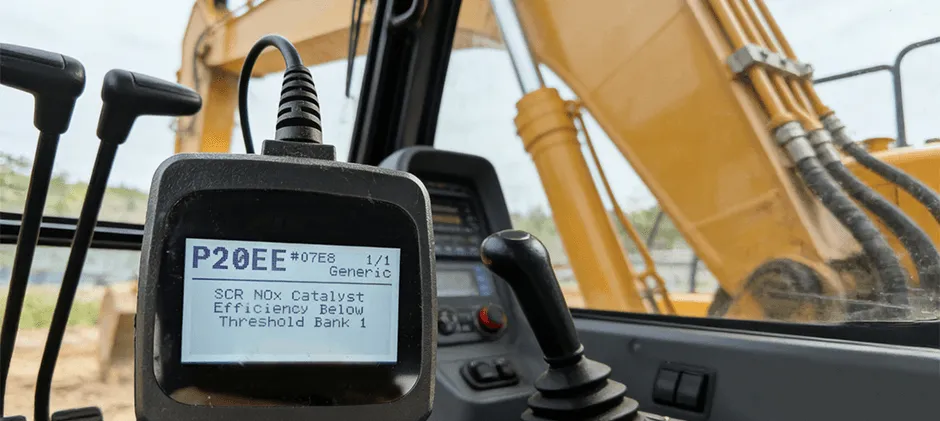
P20ee code explained: what it means, causes, & fixes
2026-07-21
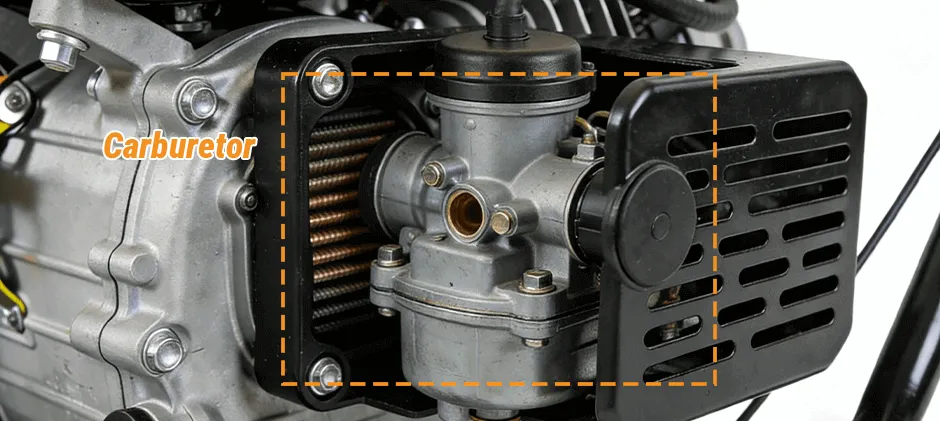
How to clean snow blower carburetor: a step-by-step guide
2026-07-20
Tractor battery maintenance: winter care for reliable spring starts - fridayparts blog
2026-07-20