2026-08-11
When an off-road machine shows low engine oil pressure, we’re not dealing with a “finish the job first” warning. Oil pressure is what pushes oil through galleries and clearances so it reaches bearings, cam surfaces, turbo bearings (if equipped), and other moving parts. If pressure drops too far, oil may still be in the sump—but it may not be reaching the parts that need it. In this article, we’ll explain what oil pressure means, why it matters, the 10 most common causes of low engine oil pressure, the symptoms to watch for, and what to do next.
Engine oil pressure is the resistance the oil pump works against as it moves oil through the filter, passages, and tight spaces between moving parts. It’s usually shown on a gauge (psi/bar) or as a warning light driven by a sensor. Pressure changes with engine speed and oil temperature: cold oil often shows higher pressure; hot oil often shows lower pressure. A healthy engine stays within the maker’s normal range for that machine and operating conditions.
Off-road machinery engines live under load: long idle time, heavy pulls, dust, heat cycles, and sometimes steep angles. Under these conditions, proper oil pressure matters for three reasons:
Bearings and journals rely on a thin oil film. If pressure/flow drops, the film breaks and wear accelerates fast.
Oil doesn’t just lubricate. It also carries heat away from bearings and other parts. Low pressure often means less oil flow and higher temperatures.
A short period of low engine oil pressure can wipe bearings, score crank journals, damage cam surfaces, and severely shorten the service life of critical engine parts, turning a routine repair into a full engine rebuild.
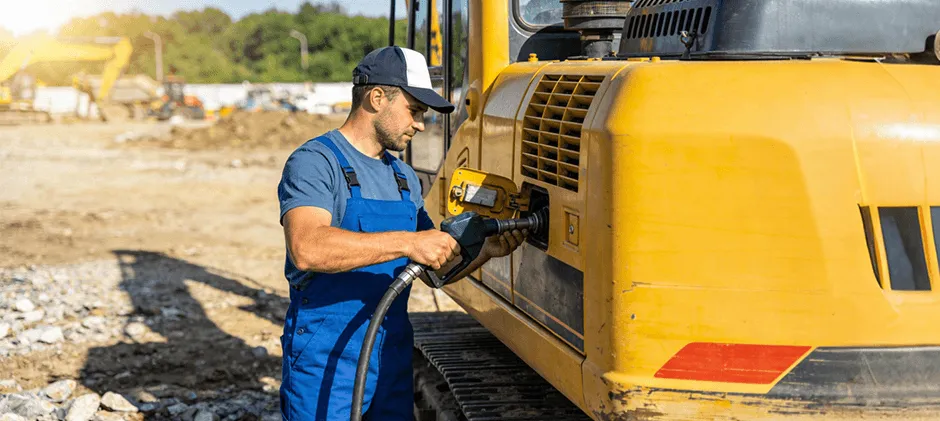
This is the first thing you check because it’s common and easy to confirm. Off-road engines can lose oil through:
Why does it drop pressure? The pump can pull air along with oil, especially on slopes or during braking/acceleration. Aerated oil can’t build steady pressure.
Quick checks: Dipstick level, fresh wet spots on engine/undercarriage, oil under the machine, oily residue near gaskets.
Oil that’s too thin for the engine’s spec (or thinned by heat/fuel) tends to show low pressure at idle and hot operating temp. Oil that’s too thick can also cause trouble, especially at cold start, by slowing the flow and stressing the pump and filter bypass.
For off-road machinery: Cold mornings + high idle + immediate heavy load is a common recipe for oil that hasn’t warmed up yet.
Quick checks: Confirm the correct grade for your engine and ambient temps; verify what was actually installed at the last service.
Even with the “right” grade, oil can lose viscosity. A common cause in diesel equipment is fuel dilution (unburned fuel getting into the crankcase) due to:
Why it drops pressure: Fuel-thinned oil flows too easily, so it can’t maintain pressure in clearances.
Quick checks: Oil level rising without adding oil, strong fuel smell on the dipstick, unusually thin oil on the fingers.
A cooler or head gasket problem can put coolant into the oil. This doesn’t always drop pressure immediately, but it destroys lubrication quality and can cause bearing damage that later shows up as low pressure.
Why it drops pressure: Contamination changes viscosity and can lead to bearing wear, which increases clearance and reduces pressure.
Quick checks: Milky oil, sludge under cap (not always), coolant loss with no obvious leak, oil analysis if available.
Filters don’t just “catch dirt.” They’re part of the pressure/flow path. A clogged filter can restrict flow. Many systems have a bypass valve to prevent starvation, but a stuck bypass or incorrect filter spec can create bad outcomes.
Why it drops pressure: Restriction can reduce downstream pressure, or bypass behavior can change readings and oil cleanliness.
Quick checks: Review service history, confirm correct filter part, cut-open inspection (maintenance shop), look for metal in media.
In dusty or high-hour equipment, sludge and debris can build up in the pan and on the pickup screen. Also, pickup tube O-rings/seals can harden and leak air.
Why it drops pressure: The pump can’t get enough oil, or it draws air—both reduce pressure and cause noisy lifters/bearings.
Quick checks: Pressure is low mostly at high load or hot idle; delayed pressure build after start; requires pan inspection to confirm.
Pumps wear internally (gears/rotors/housing). Sometimes the pump is fine, but the pressure relief valve sticks open.
Why it drops pressure: Internal leakage inside the pump or a relief valve that dumps oil back to the inlet prevents pressure from rising.
Quick checks: Confirm actual pressure with a mechanical gauge; if real and persistent, pump/relief becomes a top suspect.
As the main and rod bearings wear, the clearance grows. Oil escapes the bearing area faster, and pressure drops—especially at idle when pump speed is low.
Why does it drop pressure? Pressure is created by resistance. Too much “leak path” inside the engine means low pressure, even with a good pump.
Quick checks: High hours, history of overheating or poor oil changes, low hot-idle pressure that improves with rpm, metallic debris in oil/filter.
Not every warning is a real lubrication failure. Sensors can fail, wiring can chafe, connectors can corrode, and gauges can drift.
Why does it look low? The engine may have normal pressure, but the signal is wrong.
Quick checks: Verify with a mechanical gauge at the test port; compare scan tool reading (if available) to actual. Replace the pressure sensor as needed.
Sometimes nothing “breaks” today—conditions simply push a marginal system over the edge:
Why it drops pressure: Hot, thin oil + low pump speed + aeration risk = low pressure.
Quick checks: When does it happen—only hot, only idle, only on angles, only after long pulls?
Low pressure often gives clues before a failure. Watch for:
Low engine oil pressure means the oil may not reach critical parts with sufficient pressure and flow to protect them. The most common causes are low oil level, incorrect or degraded oil, filter or pickup restriction, pump/relief valve problems, false sensor readings, or internal wear that opens clearances. When the warning appears, we shut down safely, check the level/leaks, and verify the pressure with a mechanical gauge. A fast and accurate diagnosis prevents downtime and protects the engine.