2026-07-02
When an off-road machine throws aftertreatment faults, derates under load, or starts burning more fluid than normal, we often end up chasing “emissions system” problems without a clear starting point. This guide gives us that starting point: what a NOx sensor is, how it measures nitrogen oxides in exhaust, where it’s usually mounted on off-road diesel machinery, and what the most common failure patterns look like—so we can decide what to inspect first and what to replace to get back to steady uptime.
A NOx sensor is an exhaust gas sensor used on many modern off-road diesel engines to measure nitrogen oxides (NOx) in the exhaust stream. “NOx” mainly refers to nitric oxide (NO) and nitrogen dioxide (NO₂)—gases that form when combustion temperatures and oxygen levels are high.
On off-road machinery, the measurement is not just for “reporting.” The aftertreatment system uses NOx data to control and verify emissions reduction, especially when the engine is equipped with SCR (Selective Catalytic Reduction). In practical terms, the sensor helps the machine decide:
For owners and fleet techs, a healthy NOx sensor usually means:
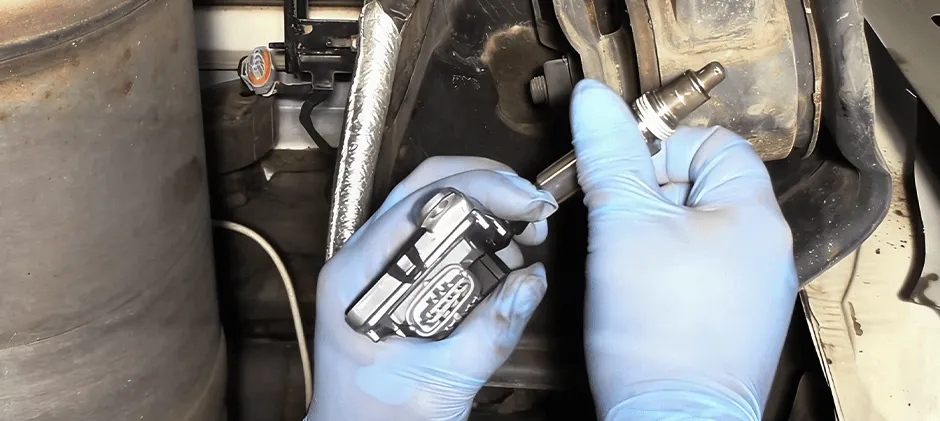
A NOx sensor is best understood as a small gas lab in the exhaust pipe. It samples exhaust, runs an electrochemical measurement, and outputs a signal to the controller.
While designs vary, many heavy-duty-style sensors work using an electrochemical ceramic element (often zirconia-based) plus a control module (sometimes built in-line on the harness). Here’s the working flow in plain terms.
Exhaust gas enters the sensor tip through small passages. The sensor is designed to handle heat and flow, but it still needs the right conditions:
Inside the sensor, a “cell” manages oxygen content so the measurement is consistent. This matters because exhaust oxygen changes with load, turbo boost, and EGR rates (where used).
Another cell drives reactions that break NOx down and measures the electrical response needed to do it. The sensor electronics translate that response into a NOx concentration value.
You don’t need to memorize the chemistry to troubleshoot well, but you do need to remember the practical result:
The reading is sent to the aftertreatment controller/engine controller, which uses it to:
Many sensors include an internal heater so they can reach operating temperature quickly and stay stable. If the heater circuit fails, readings often become unreliable, and faults appear even if the engine is running fine.
What this means for diagnosis: you treat a NOx sensor as both a chemical measurement device and an electrical component with a heater and data circuit. That’s why wiring integrity is not “secondary”—it’s part of how the sensor works.
On off-road diesel machinery with SCR, there are two common sensor placement strategies. Exact layout depends on the engine platform and packaging, but the logic stays consistent.
Some machines use one sensor, many use two. When you see two, you usually treat them as a pair: one tells the system what’s coming in, the other confirms what’s leaving.
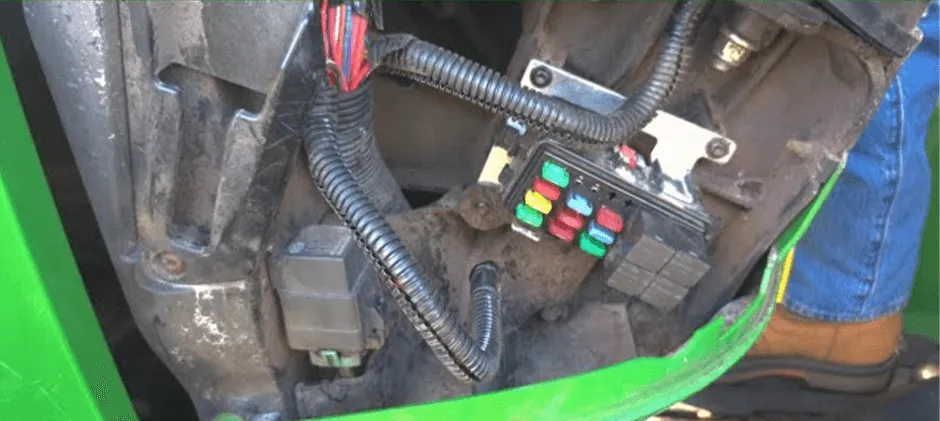
Because off-road machinery lives in dust, mud, and vibration, you routinely check:
When a NOx sensor-related code appears, the sensor itself is not always the only culprit. We usually sort root causes into three groups: sensor element problems, electrical/wiring problems, and system-level issues that make readings look wrong.
Over time, sensor tips can be affected by:
This often shows up as slow response, drift, or frequent “implausible” readings.
Symptoms often include:
Root causes include internal heater failure, damaged wiring, or connector corrosion, increasing resistance.
Off-road vibration and moisture make this a top cause.
Even a small increase in resistance can cause heater faults or data dropouts. Intermittent faults that appear “only on bumps” are classic wiring/connector issues.
A leak can pull in outside air or change local flow, making NOx readings unreliable. This is especially important near:
Sometimes the sensor is telling the truth: NOx really is high because SCR dosing is not right. Typical causes include:
| What you see on the machine | What it often means | What you check first | Typical fix path |
| Derate + NOx-related code soon after start | The heater circuit is not working, or the wiring resistance is high | Heater circuit, power/ground, and connector condition | Repair wiring/connector or replace sensor |
| Fault is intermittent on rough ground | Connector pin tension, rub-through, and moisture | Wiggle test + harness routing + corrosion | Restore harness/connector; re-secure routing |
| Post-SCR NOx reading stays high | SCR not reducing NOx (or sensor reading wrong) | Exhaust leaks + compare upstream/downstream behavior | Fix leaks; verify dosing; replace sensor if proven faulty |
| High DEF use with performance complaints | Dosing strategy reacting to bad readings or real NOx | Check sensor plausibility + dosing components | Repair root cause; calibrate/clear codes |
| Code returns quickly after clearing | Hard fault (electrical open/short or sensor dead) | Circuit checks with meter + visual inspection | Repair the circuit or replace the sensor |
We generally don’t recommend cleaning a NOx sensor. The sensing element is delicate, and cleaning attempts often damage it or create repeated faults. If the diagnosis shows the sensor response is out of spec, replacement is usually the reliable fix.
If we see intermittent faults tied to vibration or moisture, wiring is often the first win.
Not all, but many SCR-equipped machines use two (pre- and post-SCR). Some use one depending on design and compliance strategy.
If we’ve confirmed that wiring and exhaust sealing are good, but the sensor shows:
In that case, sourcing a compatible heavy-equipment replacement is often the cleanest path. For a wide selection aimed at machinery applications, we can use this parts category: NOx sensor. (Link placed here intentionally mid-article so it supports the repair decision point, not the intro.)
A NOx sensor is a key feedback tool for SCR-equipped off-road machinery: it measures NOx in the exhaust so the control system can dose DEF correctly and confirm emissions reduction. When it fails—or when wiring, heater power, or exhaust sealing causes bad readings—derates and repeat faults are common. As an aftermarket parts supplier, MechLink supports fast repairs with high-quality products at affordable prices, a vast inventory, and wide compatibility across many heavy equipment brands.