2026-08-07
As temperatures drop, diesel equipment either fails to start or operates inefficiently. It may even stop suddenly during the operation. At low temperatures and extreme cold, the paraffin wax in fuel oil begins to crystallize. So, what temp does diesel freeze? In this article, we’ll talk about diesel fuel’s cloud point, how to safely thaw it out, and help you get fully prepared for the cold weather ahead.
First, let’s clear up a common misunderstanding. When we say diesel “freezes,” it’s nothing like water turning into a solid chunk of ice. What actually happens is called gelling. Diesel has paraffin wax in it—it’s a normal ingredient that helps with viscosity and lubrication. But when temperatures drop, this wax starts to form tiny crystals. These little wax crystals float around in the fuel. As it gets colder, they multiply and stick together. This makes the fuel thicker and slows down its flow. Eventually, the crystals get dense enough to clog your fuel lines, and worst of all, your fuel filters.
So diesel doesn’t have one single “freezing point.” It has a temperature range where it goes from a freely flowing liquid to a thick, useless gel. This is a huge problem for off-road equipment, since most of it relies on consistent #2 diesel performance. A super common mistake? Using plain “summer” diesel in cold weather. That’s exactly what causes all these issues.
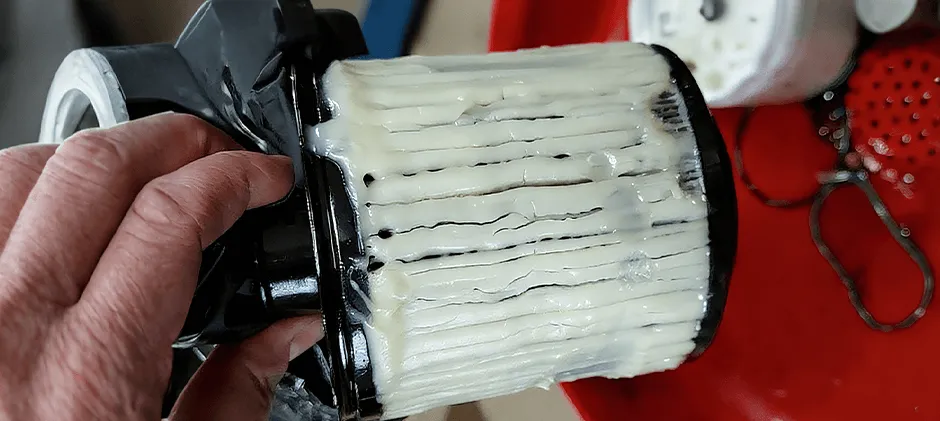
Standard #2 diesel is the most commonly used fuel in construction and agricultural machinery. Its gelling process begins when the ambient temperature drops to about 10 °F to 19 °F (-12 °C to -7 °C). At this point, accumulated wax crystals can severely restrict fuel flow or even completely block the oil.
However, not all diesel is the same. There is also #1 diesel fuel, which is a lighter, more refined fuel, similar to kerosene. It has a much lower paraffin content. So it remains fluid even at very low temperatures, as low as -40 °F (-40 °C).
To cope with the cold weather problems. Fuel suppliers provide “winter blend” diesel, which is a mixture of #1 diesel and #2 diesel. This hybrid fuel combines the energy content of #2 diesel and the excellent low-temperature performance of #1 diesel, effectively reducing the risk temperature of diesel gel.
People in construction and farming use red diesel for their off-road machines. The only big difference between red diesel and regular clear diesel? That red dye they add—purely for tax reasons, to tell it apart from the fuel you use in road vehicles. Chemically, they’re the same stuff.
So red diesel gels up at the same temps as standard #2 diesel—between 10°F and 19°F (-12°C and -7°C).
But tractors, bulldozers, and excavators often sit around idle on job sites. That makes them extra prone to problems when the temperature drops. Using the right additives to winterize your red diesel isn’t just a good idea—it’s must-do stuff.
The transition from liquid to gel isn’t instantaneous. It happens in stages, and understanding these stages helps you diagnose and prevent problems before your engine shuts down. To truly protect your machinery, we need to look closer at three critical temperature thresholds: the Cloud Point, the Cold Filter Plugging Point, and the Pour Point.
Cloud Point is the temperature when tiny paraffin wax crystals start to form—and you can actually see them. The fuel looks hazy, or “cloudy”—that’s where the name comes from. This is your first heads-up that the fuel’s getting too cold.
Your engine might still run okay at this temp, but those crystals are a clear warning: you’re getting close to the temperatures where real trouble starts. At this stage, the new crystals can already clog up fuel filters and injectors a little bit. Most fuel suppliers use ASTM (American Society for Testing and Materials) standards to check Cloud Point—it’s a great way to tell how well the fuel will hold up in the cold.
Once you pass the cloud point, the next stage is way more critical—it’s called the Cold Filter Plugging Point (CFPP). This is the temperature where wax crystals get big and numerous enough to clog your fuel filter completely. Hit this temperature, and your engine’s gonna starve for fuel. You’ll probably notice these issues:
Last up is the Pour Point. This is the temp where diesel gets so thick, it won’t flow at all. At this stage, the fuel’s basically a gel—and your engine won’t start or run, period. Here’s a quick breakdown of how this all goes down:
| Property | Description | Temperature Range (#2 Diesel) | Impact |
| Cloud Point | Wax crystals start forming, making the fuel look cloudy. | 32°F to 21°F (0°C to -6°C) | First warning sign. Minor flow restriction may begin. |
| Cold Filter Plugging Point (CFPP) | Wax crystals are large enough to block fuel filters. | 17°F to 10°F (-8°C to -12°C) | Engine starves for fuel, leading to rough starts, power loss, or stalling. |
| Pour Point | Fuel becomes too thick to flow from the tank. | 5°F to -13°F (-15°C to -25°C) | Engine will not start. Complete operational failure. |
Staying clear of these temperature points is super important. One minute your filter’s clogged, the next your engine won’t start at all—it can happen that fast. And then you’re stuck with your pricey equipment sitting idle on the job.
When it comes to fuel gelling, prevention is always your best bet. Take action before the cold snap hits, and you’ll skip the massive headache of dealing with a broken-down machine. Here are the most effective ways to keep your fleet up and running:
Having reliable fuel system parts, from quality filters to heaters, is just as important as treating the fuel itself. You never go over budget when buying parts at FrifayParts. Make sure you get the best value for your money.
If you’re running #2 diesel (whether it’s clear or red) and the temp’s gonna drop to 19°F (-7°C) or lower, you need to use an anti-gel additive—it’s non-negotiable for prevention.
Here’s the key thing: add the anti-gel before the fuel gets cold. These additives stop big wax crystals from forming in the first place. They don’t work well at all for melting crystals that’ve already clumped up. Pour in the right amount when you’re topping off the tank—that way it mixes in good and proper with the fuel.
A quick heads-up, though: follow the manufacturer’s dosage instructions to the letter.
If you get caught off guard and your fuel’s already gelled up, don’t panic. Never use an open flame to thaw a fuel tank or lines. This is dangerous. It could spark a fire or even an explosion. Here’s the right way to unfreeze gelled diesel:
If none of these steps work, or you think the fuel injectors are messed up, too, call a pro mechanic. Don’t risk messing up the delicate fuel injection system even more.
If you run off-road equipment, it’s necessary to know the temps that make diesel gel up—it directly affects whether your machines work properly when it’s cold out. Diesel first forms wax crystals at the cloud point. Then it hits the cold filter plugging point (around 10–19°F), where fuel flow gets messed up. Finally, at the pour point, your equipment could shut down completely.
Using winter-blend diesel or adding anti-gel additives is a surefire way to cut down on this problem. If your diesel does gel up already, warm it up slowly and add de-gel treatment—this’ll get your machines running again. Knowing these small details will go a long way in protecting your equipment.