2026-06-22
Air in the fuel system can delay or block diesel from reaching the injectors. This can make the engine hard to start, reduce power, or, in serious cases, prevent it from starting at all. Keep reading to learn how to bleed a diesel fuel system.
Familiarize and identify the fuel system key components. Take some time to inspect the engine’s fuel system layout and connections. The diagram below is a modern Common Rail fuel system. Knowing this specific flow helps you check where an air bubble is and how to get rid of it. The fuel travels along this path:
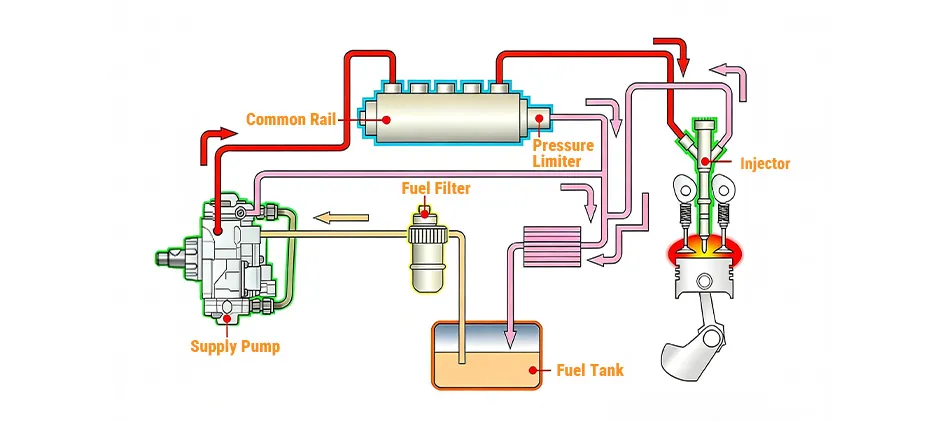
Fuel Tank: It stores diesel. Fuel is being drawn from the tank toward the engine.
Filter: From the tank, fuel is pulled through the fuel filter. Its job is to remove contaminants and water. In a high-pressure system like this, clean fuel is absolutely critical to prevent damage to the precision components that follow. This is often the first place to bleed air from the system.
Supply Pump (High-Pressure Pump): After being filtered, the fuel enters the supply pump. This is the heart of the system, responsible for generating immense pressure—often exceeding 20,000 PSI in modern engines. This pump pushes the highly pressurized fuel (shown in red) toward the common rail.
Common Rail: The common rail is like a high-pressure fuel storage tank. All injectors share it. It keeps the fuel under constant high pressure, ready at any time. Next to it is a pressure relief valve. It works like a safety valve. If the pressure gets too high, it releases the extra pressure to protect the system.
Injectors: The high-pressure fuel lines link the common rail to the electronic injectors. When the ECM sends a signal, the injector opens and sprays fuel as a fine mist directly into the cylinder to burn.
Return Line: The pink lines in the diagram are the fuel return lines. Any unused fuel from the injectors, pressure relief valve, and fuel pump flows back to the tank through this line. This completes the fuel cycle.
Air can get into a diesel fuel system in different ways. Before you start bleeding the system, make sure you know how the air got in. Fix the problem first. Otherwise, air can get back into the system again after bleeding.
When the tank runs empty, the lift pump pulls in air instead of fuel. Air then fills the whole fuel system.
On the low-pressure supply side, a cracked fuel line or worn seal may not leak fuel out. But when the lift pump pulls fuel, it can also pull air in through small gaps. Once the engine is running, air keeps getting into the system.
Changing the fuel filter is normal maintenance. But if it’s not done correctly, air can get in easily. When you remove the old filter, fuel can drain back to the tank. This leaves a large pocket of air in the lines.
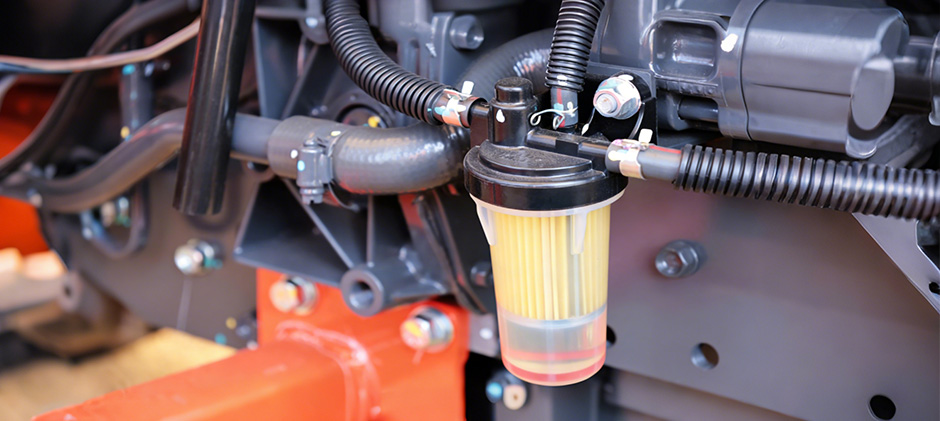
Now that we know the components, let’s get our hands dirty. The process is methodical, moving from the tank towards the engine.
Get tools ready before you start. That way, you won’t find tools with fuel all over your hands.
If your machine has an electric fuel pump, you may not see a hand primer. In that case, turn the key to the “ON” position. Do not start the engine. Let the fuel pump run for 30 to 60 seconds. The fuel through the system and helps remove the air.
We will use the hand primer pump to push fuel through the filter and push the air out.
If your machine has more than one filter or bleed screw, repeat the same steps. Always start from the one closest to the fuel tank, then move to the next one.
If you’ve bled the filters and the engine still won’t start, or if you have a much older mechanical system, air may be trapped in the high-pressure lines. This step forces that last bit of air out.
WARNING: This method is for older mechanical injection systems only. Do NOT use this method on modern High-Pressure Common Rail (HPCR) engines. Fuel pressure in HPCR systems is extremely high. It can cause serious injection injuries. If you are not sure what system your machine has, stop and ask a professional.
After the engine starts, you’re not done yet. Let it idle for a few minutes. Listen carefully. If it shakes, runs rough, or the idle is unstable, there may still be some air in the system.
While it’s idling, check everything by eye. Look at the bleeder screw, the filter seal, and any injector lines you loosened. See if there is any fuel leaking or seeping out. A good fuel system should be dry and tight. No leaks.
If you followed the steps and the engine still won’t start or runs rough, don’t worry. Sometimes, air is hard to remove.
Start by bleeding the system again from the fuel filter. Big air pockets may take a few tries to clear.
If it still doesn’t work, check your work. Is the new fuel filter gasket installed correctly? Is it pinched? Did you tighten all the fittings you loosened? Even a small leak on the suction side can keep pulling air in.
Also, do not try to take apart the injection pump or the fuel injectors. These parts are very precise. They need special tools and professional service. If needed, contact a qualified technician for help.
A little prevention goes a long way to keep your fuel system free of air.
Bleeding a diesel fuel system is a common DIY skill. Start from the fuel tank and work toward the injectors to push the air out. Patiently, get the engine running again.
To reduce future bleeding issues and protect the engine, it’s a good idea to replace old parts and filters with MechLink fuel system components. This fix machine immediately and a long reliable.