
2026-07-26
Change your fuel filter regularly is basic maintenance. The filter catches dirt and impurities in the fuel, keeping the fuel system running smoothly. This eases the load on your fuel pump and helps it last longer. Over time, the filter gets clogged. This drops fuel flow and pressure. If your machine loses power, it’s a sure sign the filter is dirty. Always replace it according to the manufacturer’s recommended schedule.
Heavy-duty off-road equipment uses a more durable multi-stage fuel filter system, because diesel fuel is more likely to get contaminated and mixed with water. There are usually two main fuel filters on the machine.
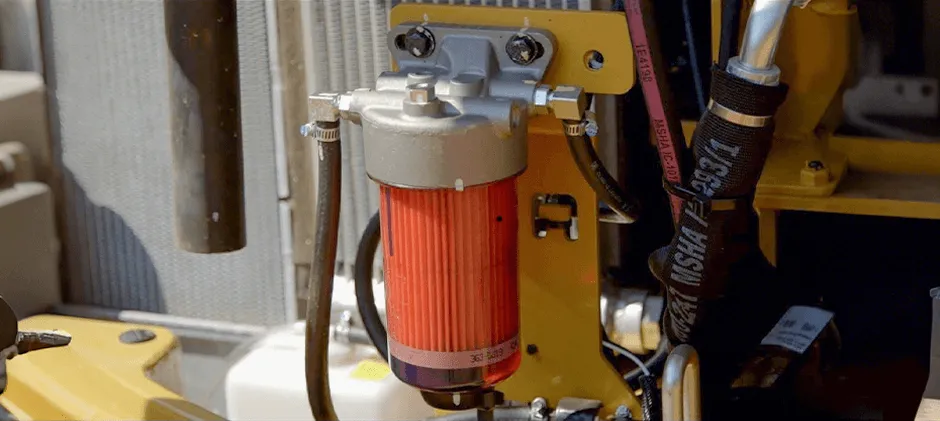
The primary fuel filter is also called a water separator. It mainly filters out larger impurities in diesel, and most importantly, separates water from the fuel. This filter assembly usually has a clear plastic or glass bowl at the bottom, letting you see directly if there’s water or sediment inside. There’s also a small drain valve or petcock at the bottom of the bowl. It’s usually installed in an easy-to-reach place—either on the machine’s chassis frame, inside a side access panel, right on the fuel line between the fuel tank and the engine.
The secondary fuel filter is also known as the fine fuel filter. After diesel passes through the primary filter, it flows to this one for a final fine filtration before entering the precision parts inside the engine. This filter looks just like a regular spin-on oil filter, a painted metal canister, with no clear bowl at the bottom. It’s almost always mounted directly on the engine block, usually near the high-pressure fuel pump or right next to the fuel injection system it’s meant to protect.
If you’re not sure where the filters are exactly, check the machine’s operator’s manual or service manual. It’s the most authoritative reference, with diagrams that clearly mark the exact positions of the fuel filters for your specific model.
You can change the fuel filters on your own. Follow these steps to avoid fuel contamination.
Park the machine on flat ground, turn off the engine and let it cool down. Wear safety goggles and nitrile gloves to keep diesel off your skin. A new set of quality fuel filters (primary and secondary), a filter wrench, a drain pan for spilled fuel, and clean, lint-free rags.
Wipe or blow off the area around both filter housings with a rag or compressed air. This stops dirt and debris from getting into the clean part of the fuel system while you work.
Even a tiny grain of sand can damage a high-pressure fuel system. Keeping everything clean while changing filters isn’t just a good habit – it protects your equipment.
This is the most important final step. You need to get all the air out of the system that got in during the change.
Turn the key to start the engine. There’s still some air left in the injectors that needs to work its way out, so it might crank a few extra seconds to fire up, or run a little rough at first—it’ll smooth out quickly. Let the engine idle for a few minutes, then do a final check around the filter gaskets and all fittings to make sure there’s no fuel leaking.
Knowing how to maintain your heavy equipment is key, and knowing when to do it matters just as much. All maintenance timelines for heavy gear go by operating hours.
For most excavators, loaders and other off-road machines, the basic rule is: change both the main and secondary fuel filters every 500 operating hours. That timeline might need to be shorter, though. Replace the filters more often if you:
Always check your operator’s manual for the maker’s exact guidelines, but sticking to the 500-hour mark as a standard is a safe, dependable way to protect your engine.
A clogged fuel filter cuts down fuel flow. By the time these clear signs pop up, your engine’s already short on fuel—so swap out the filter proactively, don’t wait.
If you notice any such problems, replacing the fuel filter is the easiest and most cost-effective way to do it.
When you’re thinking about cost, it’s key to compare the low price of filter parts against the huge cost of fixing your machine if something breaks.
Part costs: Fuel filters are way more affordable than you’d think. For most common excavator and loader models in the North American market, a set of high-quality aftermarket primary and secondary fuel filters only costs $50 to $150. They give you the same (or even better) protection, but for a tiny fraction of the price.
Labor costs: If you have a mechanic change them for you, it’ll take about 1 to 1.5 hours of their time—and you’ll pay for that. Do it yourself, and you save all that labor money.
Now think about what happens if you don’t change the filters. Dirt and water can get past a clogged filter and ruin your high-pressure fuel pump and injectors. Just one new fuel injector can cost over $1,000, and a high-pressure pump can set you back thousands more. Suddenly, spending a little on regular filter changes feels like nothing. It’s the cheapest insurance you can buy to protect your engine’s fuel system.
Regularly changing your fuel filters is not just routine maintenance; it’s a fundamental practice for preserving the health and power of your heavy equipment. By following a 500-hour interval and using the correct replacement procedure, especially pre-filling and priming, you prevent costly downtime and catastrophic engine damage. As a supplier of high-quality aftermarket parts, MechLink is committed to providing a vast inventory of filters compatible with many heavy equipment brands. Our goal is to give you access to reliable, affordable products so you can perform this critical maintenance with confidence and keep your machinery earning for you.
P0138 trouble code explained & how to fix it?
2026-07-26
What causes the spn 3226 fmi 20? how to fix it?
2026-07-26
Why is my truck overheating? 10 common causes
2026-07-26
What is code p0521 and how to fix oil pressure sensor faults
2026-07-25