
2026-04-06
/filters:format(.webp)/filters:quality(50)/news/1773126967609-Why-Do-Excavators-Need-to-Use-High-Quality-Bucket-Pins-and-Bushings.png)
In today’s rapidly developing infrastructure and mining industries, excavators have become an indispensable “iron arm” on every large project site. However, the stability and efficiency of this behemoth does not only depend on the horsepower of the engine or the flow of the hydraulic system, but is also deeply rooted in those small parts that you may never notice – bucket pins and bushings. Just like the bones and joints of the human body, if the key joints lose lubrication or become loose, simple rotation will become laborious, and in severe cases, it will even make the entire “body” difficult to move.
In the action chain of the excavator, excavator pins and bushes carry various complex loads: static pressure, impact force, lateral friction and rotary torque. Many times, we only pay attention to their status after the failure occurs. However, understanding their working principles can actually help us detect potential problems early in daily inspections.
The competition in the microscopic world: Under the microscope, the microstructure of alloy steel determines the tensile strength and toughness; at the macro level, the matching clearance of the bushing determines whether the lubricating film can be effectively formed. The two are like a precise dance. When they work in harmony, friction and wear are minimized.
Lubricating film: Grease is squeezed, sheared, and redistributed between the pin and the bushing to form a stable oil film. It requires sufficient viscosity to bear high pressure and good temperature resistance to avoid “melting” and failure in high temperature environment.
The working environment of excavators is often full of sharp stones, corrosive slurry and severe impact loads. Therefore, ordinary steel is far from meeting the needs:
Choosing among many suppliers and accessory models is sometimes like looking for a lighthouse in the vast ocean. The following three steps can help you change from “looking at parameters” to “feeling quality”:
Visual and tactile experience: When you pick up the bucket pin and gently rotate the surface, does it feel round and without abnormal protrusions? Use your fingernails to brush the surface. Are there uniform fine pits? Through this intuitive touch and vision, you will have a preliminary judgment on the quality of rough machining.
Prototype test installation: You may want to install the sample on an idle bucket rod or boom for a few hours of trial operation, paying attention to the noise, temperature changes and vibration amplitude at the moment of startup. The so-called “perceptual test” can often restore the real working conditions better than the cold data in the laboratory.
Environmental tolerance test: If possible, place the sample in a mud or water-containing salt spray environment for testing, and check the wear and corrosion after 24 hours. Real on-site verification can help you avoid the risk of large-scale failure in the later stage.
At the assembly site, avoid secondary damage caused by carelessness:
##From passive to active: digital operation ideas
Data collection: Install micro sensors at the bucket pin and bushing to collect real-time data such as vibration, temperature and usage time.
Cloud analysis: Upload the collected data to the cloud platform, combine with big data analysis models to predict the remaining life of components and the best replacement cycle.
Early warning and response: When the system detects abnormal fluctuations, it immediately notifies relevant personnel through SMS or APP push notifications, and recommends specific action plans (such as replacement, lubrication or continued observation).
By combining data and experience, you will change from “waiting for the sound to repair” to “dealing with the problem when it sprouts”, which not only avoids the loss of production capacity caused by downtime, but also reduces the risk of overhaul.
In different engineering environments, high-quality excavator bucket pins and bushings play a vital role. The following scenarios show how these “invisible hubs” play a role in stabilizing and improving efficiency in various operations.
Urban underground pipe gallery construction
In narrow underground spaces, the movements of excavators need to be precisely controllable. After a municipal pipe gallery project adopted MechLink’s high-precision ground bucket pins and corrosion-resistant phosphating bushings, the response speed of the rotation and digging actions was significantly improved, the vibration of the pipe gallery side wall was reduced by 40%, the operation of on-site workers was smoother, and the risk of pipeline damage caused by equipment shaking was reduced.
Tunnel excavation in mountainous areas
The interior of the tunnel is dusty and humid, and conventional greases often fail in a short time. The project team tried to apply high-temperature solid lubricants on the joint surface of the bucket pin and the bushing, and matched them with nitrided bushings. There was no lubrication interruption or sudden temperature rise during the 72-hour continuous excavation, which greatly reduced the number of temporary maintenance.
Offshore wind power foundation installation
Faced with the erosion of sea breeze and salty fog, standard parts are prone to pitting. In the construction of an offshore wind power support, galvanized shot-peened bucket pins and multi-layer anti-rust coating bushings were used. After half a year of operation, there was no pitting or local peeling, ensuring the continuous and stable operation of the high-cost offshore platform drilling rig.
Construction of fire isolation belts for agriculture and forestry
During the construction of fire isolation belts in high temperature and drought, the equipment is dusty, and the lubricant is easily contaminated by dust and fails. The construction team selected a self-sealing design for the bushing, and combined with regular press-fit inspections, the failure rate was controlled within 5/10,000, effectively improving the efficiency of isolation belt construction.
Maintenance of farmland irrigation channels
Long-term contact with water-soil mixtures will cause bucket pins and bushings to wear quickly. A certain agricultural irrigation project customized a titanium-coated bucket pin and lined the bushing with polytetrafluoroethylene (PTFE) film, which reduced the friction coefficient by nearly 30% and extended the maintenance interval to twice the original.
“A thousand-mile embankment is destroyed by an ant hole.” The small bucket pins and bushings are the “invisible hubs” in the excavator system. Through reasonable material selection, strict procurement acceptance, sophisticated installation process and intelligent operation management, you can keep the equipment stable, reliable and efficient in any environment.
![Mechlink:Flywheel vs flexplate: key differences explained [2026 guide]](https://img.mechandlink.com/news/1773649127094-厚度对比.png)
Flywheel vs flexplate: key differences explained [2026 guide]
2026-05-30
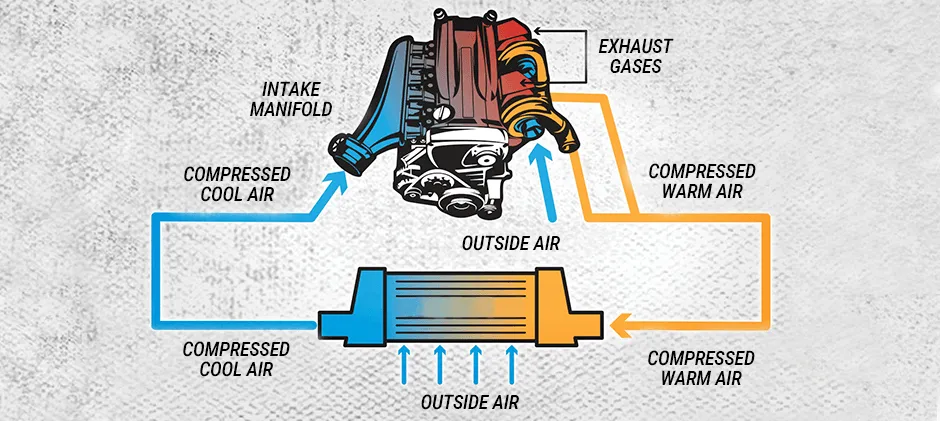
Intercooler vs radiator: what's the difference?
2026-05-30
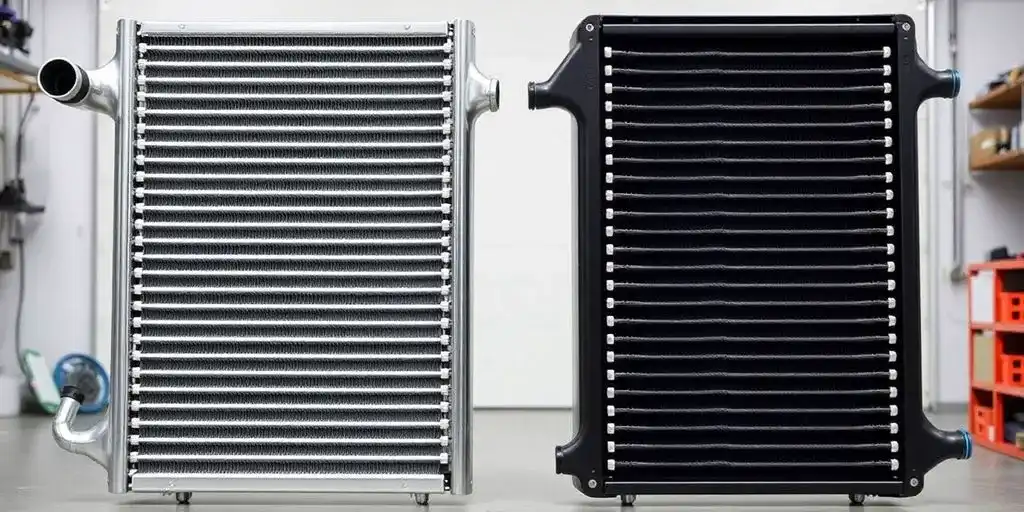
Aftercooler vs. intercooler in diesel engines
2026-05-29
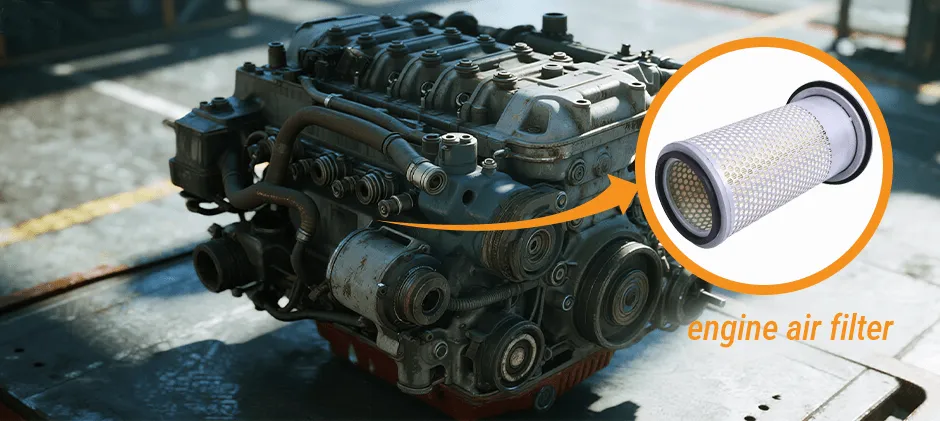
Engine air filter vs cabin air filter: what's the differences?
2026-05-29