
2026-10-09
You turn the key, and your diesel engine roars to life. But have you ever wondered what’s happening behind the scenes? Your diesel fuel pump is the heart of your engine’s fuel system, pushing diesel through your system at pressures that would blow apart a regular gas engine. At MechLink, we’ve replaced thousands of these pumps, and we’re going to explain exactly how they work and what you need to know to keep yours running.
Whether you’re troubleshooting a no-start condition or just want to understand your equipment better, this guide breaks down diesel fuel pumps in plain English. No confusing technical jargon – just straight talk about what makes your diesel tick.
Your diesel fuel pump has one job: deliver the right amount of fuel at the right pressure at exactly the right time. Sounds simple, but the engineering behind it is incredible. Unlike gas engines that might run 40-60 PSI of fuel pressure, your diesel fuel pump creates pressures up to 30,000 PSI – enough to cut through steel.
The pump draws diesel from your tank through the lift pump, which acts like a helper getting fuel to the main event. Then the high-pressure pump takes over, compressing that fuel to extreme pressures. This high pressure is what allows diesel to atomize properly when injected into your cylinders. Without proper atomization, you get incomplete combustion, black smoke, and terrible fuel economy.
Think of your diesel fuel pump like your heart – it needs to maintain constant pressure and flow, adjusting hundreds of times per second as you accelerate, decelerate, or climb hills. Modern diesel fuel pumps are controlled by computers that monitor dozens of sensors, making microscopic adjustments to fuel delivery faster than you can blink.
Not all diesel fuel pumps are created equal. The type in your engine depends on its age, manufacturer, and application. Let’s break down the main players you’ll encounter.
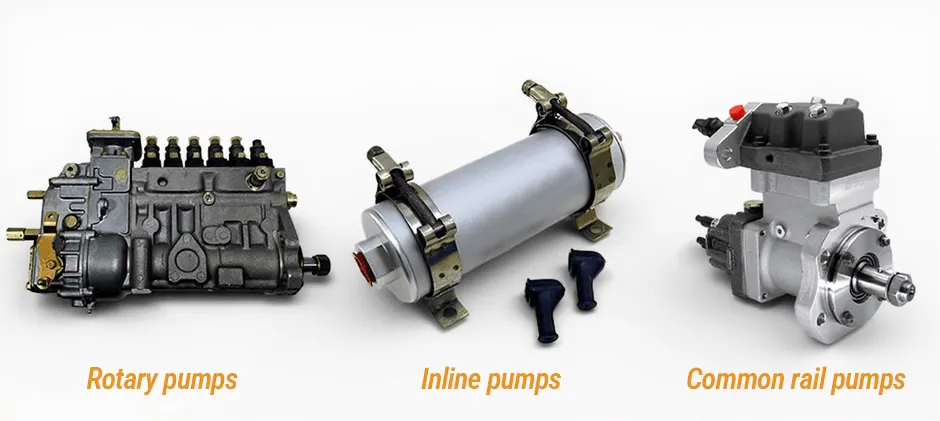
The battle between common rail and mechanical diesel fuel pumps isn’t a battle anymore – common rail won. But you need to understand both systems because millions of mechanical pump engines still power equipment worldwide.
Here’s what we tell customers at MechLink: if you need maximum reliability and can handle the noise and emissions, mechanical pumps are hard to beat. If you want efficiency, power, and smooth operation, a common rail is worth the complexity.
Your diesel fuel pump rarely fails without warning. Learning these symptoms can save you from roadside breakdowns and expensive tow bills, and replace the fuel pumps immediately when necessary.
Your lift pump doesn’t get the glory, but without it, your high-pressure pump would die quickly. The lift pump pulls fuel from your tank and delivers it to the main pump at 5-15 PSI. Think of it as the assistant that makes sure the star performer has everything needed to shine.
Electric lift pumps mount near the fuel tank or on the frame rail. They run whenever the ignition is on, maintaining a constant fuel supply. When they fail, your engine might run at idle but stumble under load. You’ll hear the high-pressure pump working harder, almost growling as it struggles to pull fuel on its own.
Mechanical lift pumps bolt directly to the engine, driven by the camshaft or a dedicated lobe. They’re simple and reliable, but can develop diaphragm leaks that dilute your engine oil with diesel. If your oil level keeps rising and smells like fuel, check that the mechanical lift pump immediately – diesel fuel destroys engine bearings fast.
We see lift pump failures constantly at MechLink, usually from contaminated fuel or clogged filters. A 100liftpumpreplacementbeatsa100 liftpump replacement beats a 100liftpumpreplacementbeatsa2,000 injection pump replacement every time. Don’t ignore lift pump problems thinking they’re minor – they’re protecting your expensive high-pressure pump.
Do you want your diesel fuel pump to last? Then you need to treat it right. We’re not talking about complicated procedures – just simple habits that prevent expensive failures.
Water is your pump’s worst enemy. Diesel fuel attracts moisture like a magnet, and water causes instant corrosion inside precision pump components. Drain your water separator weekly. If you don’t have one, install one yesterday. Those few ounces of water you drain could save you thousands in pump repairs.
Change your fuel filters on schedule, not when you “get around to it.” Dirty filters make your pump work harder, increasing wear and heat. We recommend changing primary filters every 15,000 miles and secondary filters every 30,000 miles. Running construction equipment in dusty conditions? Cut those intervals in half.
Use quality diesel fuel additives, especially in winter. Lubricity additives protect pump internals from wear – remember, diesel fuel itself provides lubrication for pump components. Winter additives prevent gelling that can starve your pump of fuel. A $10 bottle of additive is cheap insurance against pump damage.
Keep your tank above quarter-full whenever possible. Running low forces your lift pump to work harder and can suck up debris from the tank bottom. Plus, space in your tank promotes condensation, adding water to your fuel. Fill up at half-tank and your pump will thank you with years of reliable service.
If you’re running a modern diesel, you likely have either a CP3 or CP4 high-pressure pump. Understanding the difference could save you from catastrophic engine damage.
If you have a CP4 pump, protection is critical. Install a lift pump with extra filtration. Use fuel additives religiously. Consider a disaster prevention kit that limits contamination if the pump fails. Some owners preemptively swap to CP3 pumps – expensive but cheaper than one catastrophic failure.
When your diesel won’t start or runs poorly, you need systematic troubleshooting to identify pump problems. Here’s how we diagnose fuel pump issues at MechLink.
Start with the basics: check for fuel in the tank (yes, really – we see this weekly). Verify your lift pump is running – you should hear it humming when you turn the key on. No sound? Check fuses, relays, and power at the pump connector.
Next, test fuel pressure. Install a gauge between the lift pump and injection pump. You should see 5-15 PSI at idle. Low pressure means lift pump problems or restricted filters. No pressure? Your lift pump is dead, or you have a major fuel line blockage.
For high-pressure pump testing, you’ll need specialized equipment. But you can check basics: look for fuel in the oil (worn pump seals), external leaks (failed gaskets), or metal shavings in the fuel filter (internal pump damage). If you find any of these, stop running the engine immediately – continued operation spreads damage throughout your fuel system.
Nobody wants to hear their fuel pump needs replacement, but knowing costs helps you budget and make smart decisions. Prices vary wildly based on your engine and pump type.
Mechanical injection pumps typically cost 800−2,000 for rebuilding. You’re paying for expertise more than parts – properly timing and calibrating these pumps requires specialized knowledge and equipment. New mechanical pumps run 1,500-3,500, but rebuilt units work just as well when done right.
Common rail pumps hurt the wallet more. The pump itself costs 800−2,000, but labor adds another 500−1,500. If your pump failed catastrophically (looking at you, CP4), add injector replacement at 400−800 each, plus fuel system flushing. Total bill? Potentially 8,000−12,000.
Here’s how to minimize costs: Catch problems early through maintenance and monitoring. Keep receipts showing proper maintenance – some manufacturers offer goodwill warranties for documented care. Consider quality aftermarket pumps from MechLink instead of dealer-only options. Most importantly, fix problems immediately before contamination spreads.
Diesel fuel pump technology keeps advancing, making engines cleaner, quieter, and more efficient. Understanding these innovations helps you appreciate what’s under your hood.
Piezoelectric injectors work with modern pumps to deliver up to nine injection events per combustion cycle. Instead of one big fuel dump, you get precise pilot injections that reduce noise and emissions. Main injection provides power, while post-injections clean up exhaust. This symphony happens in milliseconds, controlled by computers processing thousands of calculations per second.
Variable-pressure pumps adjust output based on demand instead of maintaining a constant high pressure. At idle, they might run 5,000 PSI. Under full load, they’ll jump to 30,000 PSI instantly. This reduces parasitic power loss and pump wear while improving fuel economy. You get maximum efficiency without sacrificing performance.
Smart pumps now include onboard diagnostics that predict failures before they happen. Sensors monitor pump temperature, pressure variations, and internal wear. Your engine computer tracks these patterns, alerting you to problems while they’re still minor. It’s like having a mechanic constantly monitoring your pump health.
How Long Do Diesel Fuel Pumps Typically Last?
Most diesel fuel pumps last 200,000 to 300,000 miles with proper maintenance. Mechanical pumps often exceed 500,000 miles with periodic rebuilds. Common rail pumps typically need replacement between 150,000-250,000 miles, though we’ve seen well-maintained units at MechLink survive 400,000+ miles.
Can You Drive With a Bad Diesel Fuel Pump?
You shouldn’t drive with a failing diesel fuel pump. Low pressure causes incomplete combustion, washing cylinder walls with raw fuel, and diluting engine oil. Metal contamination from pump failure destroys injectors and fuel system components. That short drive could turn a 1,000pumpreplacementintoa1,000 pump replacement into a 1,000pumpreplacementintoa10,000 engine rebuild.
What Causes Diesel Fuel Pump Failure?
Water contamination causes most diesel fuel pump failures, followed by dirty fuel and a lack of lubrication. Running your tank empty sucks up debris, while bad fuel filters restrict flow. Poor quality fuel lacks lubricity, accelerating wear. Skipping maintenance turns small issues into complete pump failure.
How Do You Test a Diesel Fuel Pump?
Test your lift pump with a fuel pressure gauge – you need 5-15 PSI depending on specifications. High-pressure pumps require specialized scan tools to read rail pressure. Listen for unusual noises, check for external leaks, and monitor performance changes. Any metal shavings in fuel filters indicate internal pump damage requiring immediate attention.
Why Are Diesel Fuel Pumps So Expensive?
Diesel fuel pumps operate at extreme pressures with microscopic tolerances measured in microns. They’re precision instruments manufactured from specialized materials that withstand incredible forces. The engineering, materials, and manufacturing precision required make them expensive, but that same precision is why your diesel engine delivers such impressive power and efficiency.
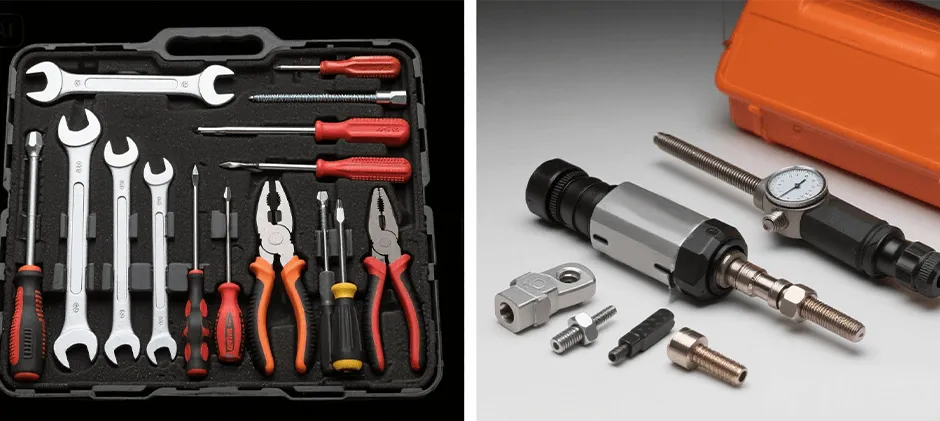
Are there any specific tools needed to install jlg parts?
2026-10-09
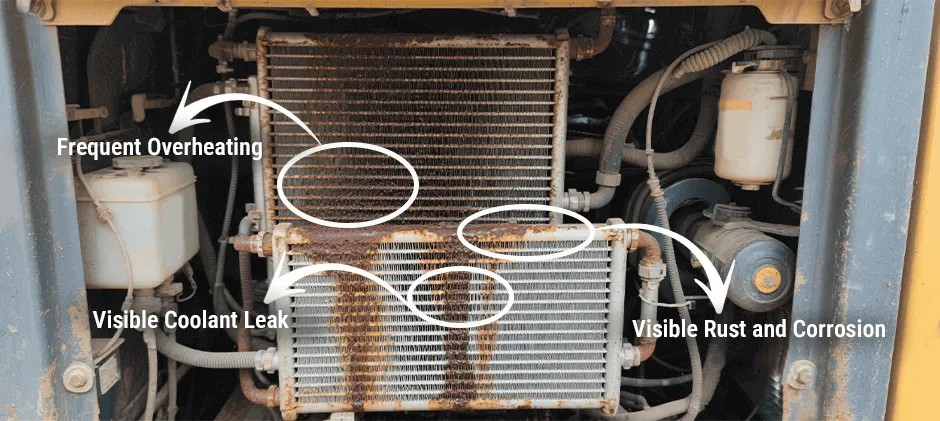
When should you replace an off-road machinery radiator
2026-10-08
![Mechlink:Cat 3406e engine guide: specs, maintenance & parts [2026]](https://img.mechandlink.com/news/CAT-3406E-Engine-Guide-Specs-Maintenance-Parts-2026-3apm8t.png)
Cat 3406e engine guide: specs, maintenance & parts [2026]
2026-10-08
![Mechlink:Camshaft failure analysis: causes of excessive lobe wear [2026]](https://img.mechandlink.com/news/1773827546572-camshaft.png)
Camshaft failure analysis: causes of excessive lobe wear [2026]
2026-10-07