2026-08-10
Conclusion first: you usually don’t need to leave a block heater plugged in all night. For most off-road machines, plugging it in 2 to 4 hours before you start is enough. After that, the engine does not keep getting much warmer, so extra time mostly wastes electricity.
Is it safe overnight? Often yes, as long as the heater cord, outlet, and extension cord are heavy-duty and not damaged. The most common safety problem is using a cheap or undersized extension cord or having exposed/wet connections.
This guide explains how to use it, why it helps your engine, and simple ways to use it efficiently during cold weather.
A block heater helps with cold starts. It warms the engine block and the coolant, so the oil flows better when you start.
That helps because:
A block heater is a helpful tool—especially for diesel engines and very cold mornings.
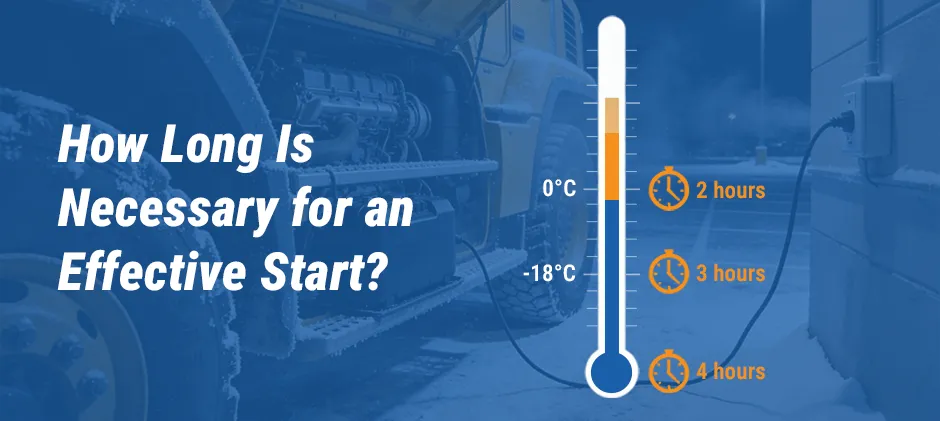
Heating time depends on outside temperature, wind, and where the machine is parked (inside or outside). Use this simple guide.
Two hours is usually enough.
At around freezing, many machines will start without a block heater if they are in good shape. But using one for a short time can still make starting easier and gentler.
Three hours is a good target.
As it gets colder, oil thickens more, and it takes longer for heat to spread through the engine.
Four hours is plenty for most machines.
Clear Statement: More than 4 hours usually does not help much. Many manufacturers and experienced owners treat about 4 hours as a practical maximum because the engine reaches a steady temperature.
A typical block heater can draw around 1000–1500 watts (varies by machine). Running it 10–12 hours instead of 3–4 hours can add noticeable cost.
Owners in the post are right about this: leaving it plugged in “forever” is mainly safe only if the electrical parts are correct.
Check these simple safety points:
Leaving it on longer than needed can slowly add wear to the heating element and cord—like any part that is used more than necessary.
The easiest way is a heavy-duty outdoor timer.
It turns the heater on only when you need it, which saves money and reduces unnecessary run time.
Simple setup:
Example: If you start at 7:00 a.m., set the timer for 3:00–4:00 a.m.
Extra easy tips from experienced owners:
As this guide highlights, safety and reliability start with having the right equipment. A frayed cord or a failing heating element can undermine your efforts and create a serious safety hazard. If your inspection reveals that your current setup is worn, damaged, or underperforming, it’s time for a replacement.
For a comprehensive selection of high-quality components, you can explore the wide range of block heater options available on the MechLink product pages.