2026-04-05
/filters:format(.webp)/filters:quality(50)/news/1772790736867-OEM-and-ODM-of-Excavator-Parts-1.png)
Today, as the global construction machinery industry is booming, the performance and reliability of excavators, as core equipment in infrastructure, mining and municipal engineering, directly affect construction efficiency and cost control. In the life cycle of excavators, the selection and supply mode of accessories have become an important part of ensuring the continuous and efficient operation of equipment. For the purchaser, the decision to adopt the OEM (Original Equipment Manufacturer) or ODM (Original Design Manufacturer) production model is a comprehensive decision that takes into account both technical maturity, cost budget, time nodes and market demand. This article will combine MechLink’s rich experience in the field of excavator parts manufacturing for many years to explain in detail the core differences between undercarriage excavator parts OEM and ODM, and help equipment manufacturers, parts dealers and maintenance service providers make the best choice in actual procurement and cooperation.
In the following, we will not only analyze the key differences between the two models in terms of design participation, intellectual property ownership, cost and cycle, quality management and after-sales guarantee, but also combine industry authoritative data, field cases and operational tools and methods to provide a clear decision-making process and practical operational suggestions.
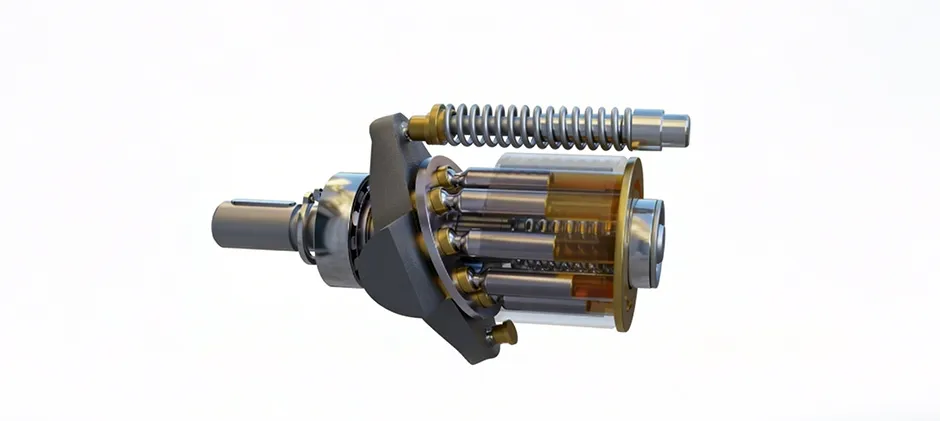
The OEM model is the original equipment manufacturer model. Its core lies in the purchaser mastering the product design drawings, technical standards and brand requirements, and outsourcing the production tasks to professional manufacturers with large-scale manufacturing capabilities. For excavator accessories, common OEM parts include hydraulic pumps, track shoes, gears, cylinders and filters. These parts are highly standardized in terms of performance indicators, material selection and manufacturing processes.
Design and drawing control: The purchaser usually provides detailed 3D models, technical drawings and material lists to ensure that each batch of products produced fully meets the established specifications.
Process flow and equipment capabilities: MechLink has a complete production line from forging, machining to heat treatment and surface coating, which can meet the batch processing needs of high-strength alloy steel parts.
Quality management system: According to the ISO 9001 quality management standard, the OEM production process has established strict raw material inspection (IQC), process inspection (IPQC) and factory inspection (OQC) to ensure that the dimensional accuracy, surface quality and mechanical properties of the parts meet the standards.
Supply chain collaboration: Through the integration of ERP and MES systems, real-time monitoring of order production progress, inventory consumption and logistics tracking can be achieved to further improve delivery stability.
The ODM model adds design and R&D links on the basis of OEM, that is, the original design manufacturer model. Unlike OEM, under the ODM model, manufacturers not only undertake production, but also undertake a series of innovative R&D work from concept scheme to structural design and model verification. For accessories that pursue market differentiation and functional optimization, such as intelligent monitoring modules, modular bucket teeth, and high-wear-resistant alloy structural parts, the ODM model can provide higher added value.
Demand research and design concept: The MechLink R&D team will first conduct demand research with customers to clarify the use conditions, performance indicators and cost targets, and issue a requirement specification (RSR).
Structural optimization and CAE simulation: Finite element analysis (FEA) and computational fluid dynamics (CFD) simulation are used to optimize the strength, fatigue life and hydraulic flow channels of key components to ensure that the design solution meets both performance requirements and manufacturing feasibility.
Rapid prototyping and 3D printing: After the program review, prototype samples can be quickly produced through SLA or metal 3D printing technology, which is convenient for customers to conduct assembly verification and performance testing, reducing iteration time.
Joint testing and certification: After completing the sample testing, the reliability and durability of the product in extreme environments can be verified based on the test reports of third-party authoritative testing agencies (such as TÜV Rheinland, SGS), laying the foundation for subsequent mass production.
Professional tool recommendation: In the ODM design stage, it is recommended to use the PLM (Product Lifecycle Management) system to uniformly manage documents and design versions, and use the PDM (Product Data Management) module to track design changes to achieve efficient collaboration.
Cost advantage: Standardized production reduces unit cost. Taking MechLink as an example, through batch processing, the production cost of a single piece of hydraulic pump housing can be reduced by 15% compared with small batch orders.
Delivery speed: No design modification is required, and production can be directly entered, and the delivery cycle of conventional projects can be shortened by 20%.
Stable supply chain: With the help of a mature network of parts suppliers, ensure that raw materials are in place in a timely manner.
Innovative design: Through structural optimization and material innovation, product function upgrades and differentiated competition are achieved.
Brand building: Customizable brand-specific appearance, laser engraving logo, etc. can be used to enhance brand awareness.
Integrated solution: Combine sensors and automatic control modules to achieve intelligent accessories.
When choosing OEM or ODM mode, both the purchaser and the manufacturer need to pay attention to potential risks and challenges to ensure the smooth implementation of the project and achieve the expected goals. The following content will explain the main risk factors common in the OEM and ODM modes respectively, and propose effective coping strategies based on MechLink’s practical experience.
OEM model risks: If the drawings or technical specifications provided by the purchaser are defective, the produced accessories may not meet the performance requirements.
ODM model risks: If the manufacturer’s independent design plan does not fully consider the actual working conditions or manufacturability, it may cause subsequent rework or substandard performance.
Response strategy:
Establish a cross-departmental technical review team, conduct multiple rounds of review of drawings and requirements, use the PLM system to manage versions, and ensure that technical documents are accurate;
Under the ODM model, use CAE simulation and rapid prototype testing to verify the feasibility of the design in advance, and conduct small-batch trial production in the initial stage to reduce rework costs.
OEM model risks: During mass production, if the supplier’s quality control is not strict, there may be performance fluctuations or increased defective rates between batches.
ODM model risks: In the design and production handover link, if the verification test is not sufficient, it may affect the consistency and reliability of the final product.
Response strategy:
Under the OEM model, set up Cpk/PPK indicators for key components, and monitor production consistency in real time through SPC statistical process control.
Under the ODM model, strengthen the linkage between design and process, formulate a detailed design verification plan (DVP), and conduct multi-stage evaluation of key performance indicators.
OEM model risks: The purchaser’s drawings and technical data need to be circulated in multiple parties in the supply chain, and there is a risk of leakage.
ODM model risk: Manufacturers may accumulate a large number of new technologies during the design process. If the IP ownership is not clear, it may lead to subsequent intellectual property disputes.
Countermeasures:
Sign a strict confidentiality agreement (NDA) and clarify data isolation and access rights management in the contract;
For the ODM model, clearly stipulate the IP ownership of design results and technological improvements, and set up breach of contract liability and arbitration mechanism in the contract.
OEM model risk: Delays in raw material supply or quality problems will directly affect production progress and delivery cycle.
ODM model risk: Uncertain time for design iteration and trial production stages may lead to overall project delays.
Countermeasures:
Establish a pool of multiple qualified suppliers and sign long-term cooperation agreements with core suppliers to ensure timely supply of raw materials;
Establish reasonable milestone nodes in the ODM project, set strict time nodes and acceptance standards for the design, trial production and testing stages, and reserve buffer time.
OEM model risk: If the initial investment such as mold fees and trial production fees is underestimated, the total cost of the project may exceed the target.
ODM model risk: The uncertainty of design and development costs, prototype production costs and testing costs can easily cause the budget to get out of control.
Countermeasures:
Before the OEM model is launched, a detailed cost estimate is made based on historical data and supplier quotations, and a 10%-15% budget fluctuation is reserved.
In the ODM model, budget review is conducted in stages, and the design and development, sample verification and certification testing costs are budgeted separately, and a difference analysis is conducted after each stage is completed.
Through the systematic identification and effective response to the above risk factors, the purchaser and the MechLink manufacturer can minimize uncertainty during the execution of OEM and ODM projects to ensure that the project is completed on schedule and with high quality.
The OEM and ODM models of excavator accessories have their own advantages and are applicable in completely different scenarios. The OEM model is suitable for standardized accessories with clear requirements, mature drawings, and rapid mass production; the ODM model provides design empowerment for companies pursuing product differentiation and functional innovation. Choosing the optimal model requires comprehensive consideration of project requirements, internal technical reserves, budget and time costs.
By cooperating with MechLink, a professional excavator parts manufacturer with rich OEM and ODM experience, you will get one-stop support from technology selection, design and development to production delivery and after-sales service, which can minimize project risks and enhance product competitiveness.