2026-09-01
Both plow vs tiller help loosen soil for planting, but they work in very different ways and are used for different jobs. This article breaks down the key differences and explains when to use each one so that you can get better results in the field.
A rotary tiller is a farm tool for turning soil. It’s driven by the tractor’s PTO, with a row of blades spinning at high speed through the field, turning, breaking and mixing the soil up. It’s a super-sized mixer designed just for working the land. It smashes big clods, mixes fertilizer and compost into the soil, and loosens and fines the dirt. In the end, it creates a perfect seedbed for planting.
All tillers work on the same basic principle, but they come in different configurations based on the orientation of the blade shaft.
This is the most common type available. Its blade shaft is mounted horizontally, perpendicular to the direction of travel. The tines cut into the soil and fling it against a rear shield, which further breaks up clods before the soil surface is leveled. It’s highly effective for creating a standard seedbed.
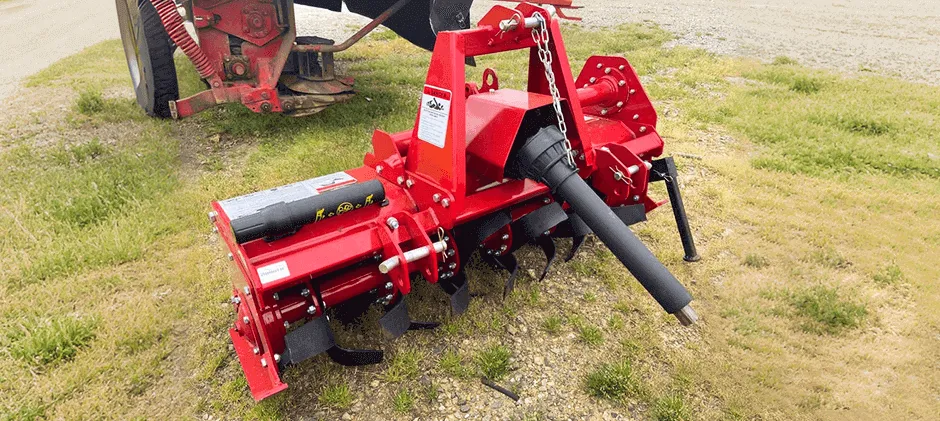
For this type, tines are attached to one or more vertical shafts. As the shafts spin, the tines drill down into the soil and break it apart with a vertical mixing motion. This design is especially suitable for wet, sticky soil conditions (e.g., rice paddies), as it is less likely to get clogged than a horizontal tiller.
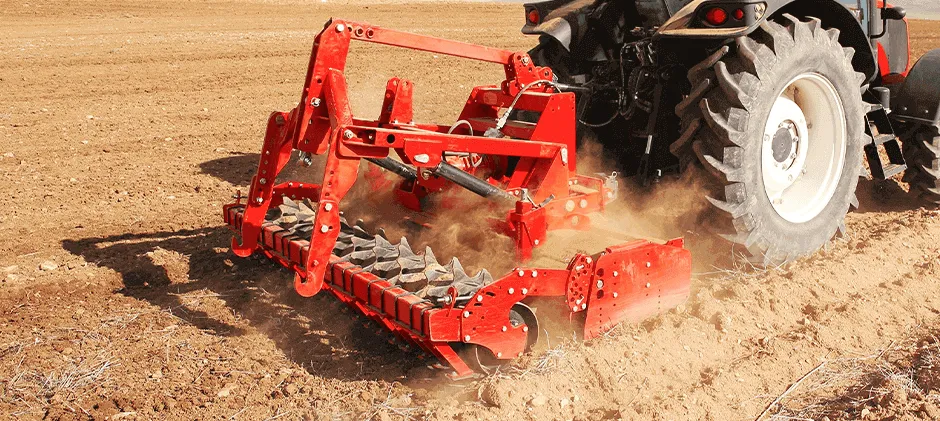
This is a hybrid design with the blade shaft set at an angle. It can both dig deep into the soil and throw soil sideways. So it is effective for mixing heavy surface residues (such as chopped corn stalks) into the soil while preparing the seedbed at the same time.
A plow is a tool for deep tilling the soil. Unlike a rotary tiller that only breaks up the topsoil, a plow cuts straight into the earth and turns over large clods of soil. It buries all the surface weeds, straw and crop residues underground to let them decompose slowly into nutrients. It also breaks up the compacted hardpan in the deeper soil—an area a rotary tiller can’t usually reach.
There are two main types of plows on tractors: the disc plow and the moldboard plow.
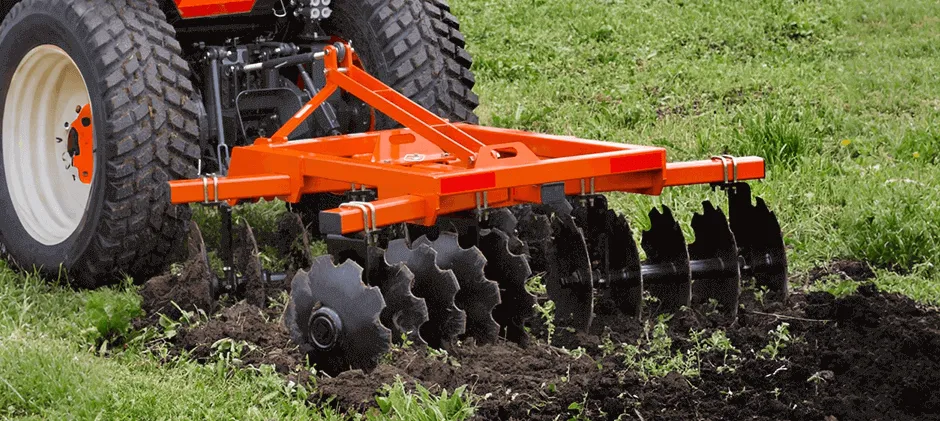
A disc plow features a row of large steel discs mounted at an angle. As the tractor moves forward, the discs rotate and cut into the soil. It is especially suitable for hard, dry, stony ground or soil with dense roots. The discs can roll over obstacles, making them less likely to get stuck or damaged.
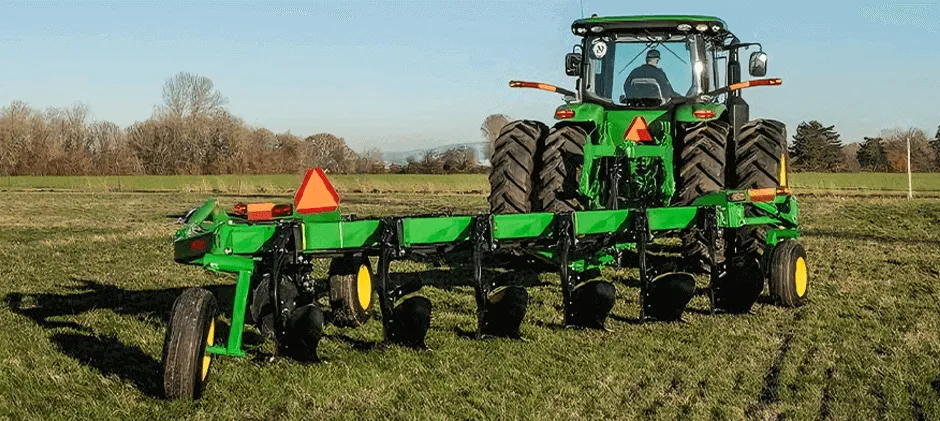
This is the most classic and widely used plow. It first makes a horizontal cut in the soil, then uses a curved moldboard to lift and turn over entire clods of soil. It leaves the tilled land neat with straight furrows and can fully bury all surface weeds and straw underground. For turning over sod, reclaiming uncultivated land, and establishing new vegetable gardens or fields, it isthe first choice.
There are several key factors to weigh when deciding between a plow and a rotary tiller.
Both tools offer benefits when used properly, but overusing either can cause soil damage.
Overtilling, such as repeated tillage, destroys the original soil structure and breaks down soil aggregates. Soil aggregates are clumps of soil particles bound together by organic matter. This results in a dense, compacted layer forming beneath the tilled zone, and the soil surface also becomes prone to crusting and erosion by rain and wind.
Plowing turns the soil with great force, but it flips over big clods of soil as a whole, so it damages the overall structure of soil aggregates relatively less. The problem though, is that plowing leaves the soil surface bare, making it really easy to be eroded by wind and water—this is even more obvious when plowing is done in the fall.
For spring planting, choosing a plow or a rotary tiller mostly depends on your soil’s condition.
If it’s an established field, tilled the fall before and the soil is loose, a rotary tiller is the easiest option: One pass kills weeds, mixes in fertilizer and preps the seedbed—you can plant right after tilling, it’s fast and efficient.
If you’re breaking new ground or dealing with heavy crop residue (like corn stalks), start with a plow. A rotary tiller can’t handle that well. A plow turns the residue deep into the soil. After plowing, you’ll still need another pass with a harrow or a rotary tiller to properly prepare the field for planting.
A more professional method is plowing in the fall and tilling in the spring: Plow deep and bury residue in the fall. Let winter’s freeze and thaw break up clods naturally. Light tilling with a rotary tiller in spring.
The plow is for primary tillage, the heavy lifting. The tiller is for secondary tillage, the finishing touch. The best choice for your spring planting depends entirely on your soil’s condition, your crop, and your timeline. No matter which tool you use, tillage wears down your equipment. Tines, plowshares and bearings all take damage, keeping your equipment in good shape and tractor parts with reliable ones at MechLink.