2026-08-05
When our off-road machines lose power, start hard, overheat, or trigger emissions faults, the real cost is not the repair bill—it’s the stalled jobsite. This guide breaks down diesel engine maintenance habits that also fit diesel-powered off-road equipment (loaders, dozers, excavators, compact machines, off-highway haulers, and site support trucks) so we can cut downtime, protect expensive components, and plan parts replacement before a “small issue” turns into a teardown.
Off-road diesel engines live a tougher life than many people expect: long idle time, heavy load at low speeds, heat soak, dust, vibration, and frequent short moves between work zones. That mix speeds up contamination (soot, dirt, water), raises under-hood temperatures, and stresses cooling and air systems. If you treat maintenance as “just oil changes,” you usually miss the systems that fail first in off-road conditions:
A diesel engine can run for many thousands of hours, but only if you keep three basics stable: clean air, clean fuel, and controlled temperature. Once one of those slips occurs, everything else follows—oil breaks down faster, injectors clog up, and regen problems show up at the worst time.
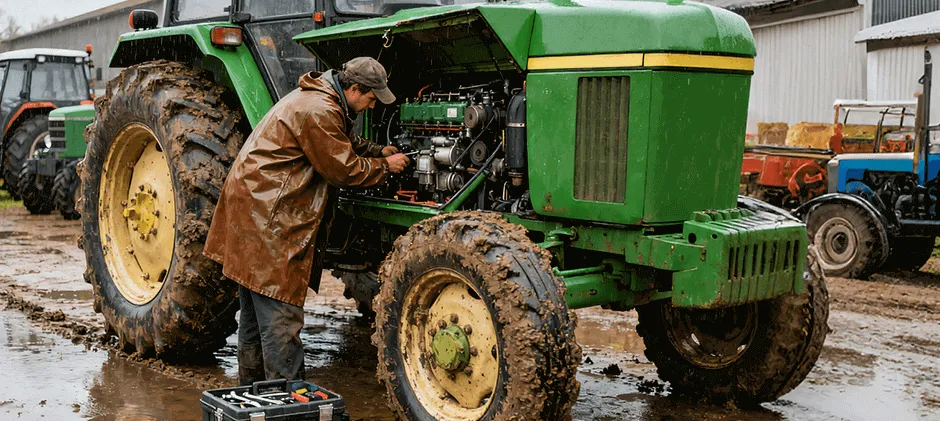 Diesel Engine Maintenance Checklist
Use this as a practical baseline. Always follow the OEM manual for exact intervals and fluid specs, but this list matches what you see on off-road fleets: dust-heavy sites, mixed operators, and machines that idle a lot.
| System | What you check | Typical off-road trigger to act | If you ignore it | Practical tip |
| Air intake | Filter restriction, cracked ducts | Dusty site = sooner than “hours.” | Low power, turbo wear, black smoke | Don’t blow out paper filters; replace when restricted |
| Fuel system | Filters, water separator, tank cap seal | Water found or power drop | Injector/pump damage, hard starts | Drain water regularly; keep the bulk tank clean |
| Cooling | Debris in fins, thermostat, cap, hoses | Rising temps under load | Head gasket risk, derate, downtime | Clean coolers from the fan side outward (as designed) |
| Turbo/charge air | Hose clamps, CAC hose condition | Oil mist at joints, hiss under load | Boost leak, high EGT, soot | Pressure test the intake if the power feels “soft.” |
| Lubrication | Oil level/condition, leaks | High idle = shorter interval | Bearing wear, turbo failure | Sample oil for soot/fuel dilution on critical units |
| Emissions (Tier 4/Stage V) | EGR/DEF levels, sensors, regen patterns | Frequent regens or fault codes | Derate, limp mode | Use correct DEF; fix boost leaks first to reduce soot |
This is the “high leverage” section—what tends to prevent the most downtime on off-road machines.
Dust is the quiet killer on jobsites. It doesn’t just clog the air filter; it can:
A clean, sealed intake keeps fuel burn stable and reduces soot load—this helps both performance and emissions equipment.
In off-road work, a small leak in a charge-air cooler hose can look like a fuel issue: sluggish response, more smoke, more regen activity. Heat and vibration make hoses age fast.
A quality high-temp charge air cooler hose (like the type listed on the MechLink catalog page) is often a low-cost fix compared with chasing injectors or turbos.
Overheating on a dozer or loader is often “airflow,” not “coolant.” If fins are packed, the radiator can’t reject heat—even with good coolant.
Thermostats are inexpensive compared with lost production time, and they’re common wear items on high-hour machines.
Diesel fuel can carry fine particles and water. Off-road refueling (bulk tanks, transfer pumps, dusty nozzles) increases that risk.
This is one of the most cost-effective diesel engine maintenance habits you can apply to off-road equipment, too.
Extended idle leads to lower combustion temps, more soot, and faster oil contamination. It can also increase aftertreatment workload on modern emissions machines.
Hour meters matter, but jobsite reality matters more. Two machines with the same hours can have very different wear based on:
On emissions-equipped equipment, sensors can fail gradually and cause “ghost” faults. On older machines, basic wear items still drive downtime: filters, hoses, switches, and seals.
When you’re ready to refresh common service items (filters, hoses, sensors, EGR-related components on certain diesel setups), it helps to source compatible aftermarket replacements from a supplier with wide coverage. For planned replacements, browsing truck parts can be a practical starting point because the catalog includes common maintenance-related components (filters, sensors, hoses, valves) across many heavy equipment and support-vehicle applications.
Instead of stocking everything, stock what stops the job.
A smart kit often includes:
This is where diesel engine maintenance thinking helps off-road owners: you reduce “waiting on parts” events that can cost more than the part itself.
Even if you rarely drive on highways, the benefits of disciplined diesel engine maintenance translate directly to off-road machinery ownership:
Small failures (plugged filter, weak cap, cracked hose) are the ones that stop work unexpectedly.
Preventing overheating and fuel contamination protects the most expensive items: injectors, turbo, head gasket, and aftertreatment parts.
Clean air, tight boost plumbing, and good cooling keep torque consistent—especially on long pushes, heavy bucket work, and uphill hauls.
Oil lasts longer in grade, bearings remain protected, and engines avoid heat cycles that can warp and crack.
Many electronic faults are triggered by issues with airflow, temperature, or voltage. Good basics reduce false alarms.
Good diesel engine maintenance is not complicated: we protect airflow, keep fuel clean, control heat, and replace wear parts before they fail. For off-road machinery, those steps prevent the most common downtime events—overheating, low power, hard starts, and emissions derates. When it’s time to refresh filters, hoses, sensors, or valves, an aftermarket supplier with affordable pricing, wide compatibility, and a large inventory can help us get back to work fast.