
2026-11-24
A fuel filter and an oil filter can sit a few centimetres apart in the same engine bay, share a similar cylindrical outline, and end up on the same purchase order. They are not interchangeable, and mixing them up is one of the more expensive mistakes an operator can make.
This guide keeps the two apart: what each one removes, where each one sits on the machine, how the replacement routine differs, and which warning signs mean a filter is already past its useful life.
Combustion depends on two fluids staying clean, and each of them collects a different kind of contamination. The oil filter looks after the lubricant that circulates through the engine; the fuel filter looks after the diesel on its way to the combustion chamber. One guards moving parts against abrasive dirt carried in oil, the other guards the injection system against impurities carried in fuel.
Diesel is drawn from the tank by the fuel pump and pushed to the injectors, which atomise it and spray it into the combustion chamber. Those injectors work with very fine clearances. Dust, grit or metal shavings that reach them can block the passages, spoil the spray pattern and, in the worst case, stop the engine altogether.
A fuel filter sits upstream of the injectors and takes those particles out before they arrive. Clean fuel means steady running and fewer unplanned stoppages.
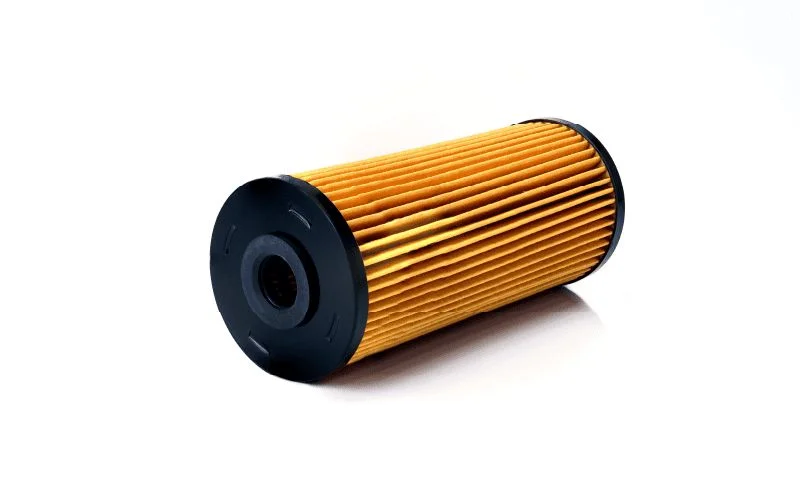
An engine is a dense assembly of metal surfaces in constant motion, and oil is what keeps them apart. It lubricates, reduces friction and slows wear. As combustion takes place, however, contaminants form and find their way into that oil; left to accumulate, they raise operating temperature and accelerate damage.
The purpose of an oil filter is to pull sludge and particles back out, so the oil keeps flowing and lubricating as designed and the engine carries less load.
The two components also live in different places, which matters when you are tracing a leak or planning a service.
It is normally plumbed into the fuel line between the tank and the injectors. On current machines it sits in the engine bay where a technician can reach it. The John Deere 35G excavator, for instance, carries its fuel filter in the engine bay immediately to the left of the engine; the cylindrical body is the easy way to recognise it.
For the exact position on your own model, the service manual is the authority.
Most machines place it in the engine bay as well. On larger units it moves into one of the maintenance compartments. A CAT 314E excavator, for example, keeps its oil filter in a side compartment behind an access panel.
Again, check the service manual for the precise location before you start.
Follow the interval printed in the operating manual. As a working rule, excavators, skid steers and tractors should have their fuel filter renewed at least once a year, and sooner where fuel quality or dust levels are poor.
The procedure is short: take the old filter off, coat the gasket with a little oil, spin the new one on. Resist the urge to over-tighten, because excess torque damages the element and the seal. Once it is fitted, prime the engine exactly as the manual describes — some machines prime themselves, others need the new filter filled with fuel first.
Delayed replacement can cost a fuel pump or an injection system. Earlier warnings usually show up as power loss, stalling and a rough idle. We cover the tell-tale signs in more detail in our article on five symptoms of a fuel filter that needs changing.
This is one of the cheaper jobs on the service sheet. Depending on make and model, a replacement filter runs from $15 to $70, and the work needs only basic tools.
Stock is easy to find, both over the counter at heavy equipment suppliers and online. MechLink carries OEM and aftermarket fuel filters from a range of manufacturers, so a mixed fleet can be covered from one order.
There is no single answer. The interval depends on the machine, the filter specification and the oil in use, so the service manual guidelines should take priority over any generic schedule.
A clogged filter forces the engine to work harder and shows up as low oil pressure, unfamiliar engine noise, weaker performance and rising temperature.
An oil filter for an excavator, tractor or similar machine generally costs between $15 and $60, and fitting one takes minimal tooling.
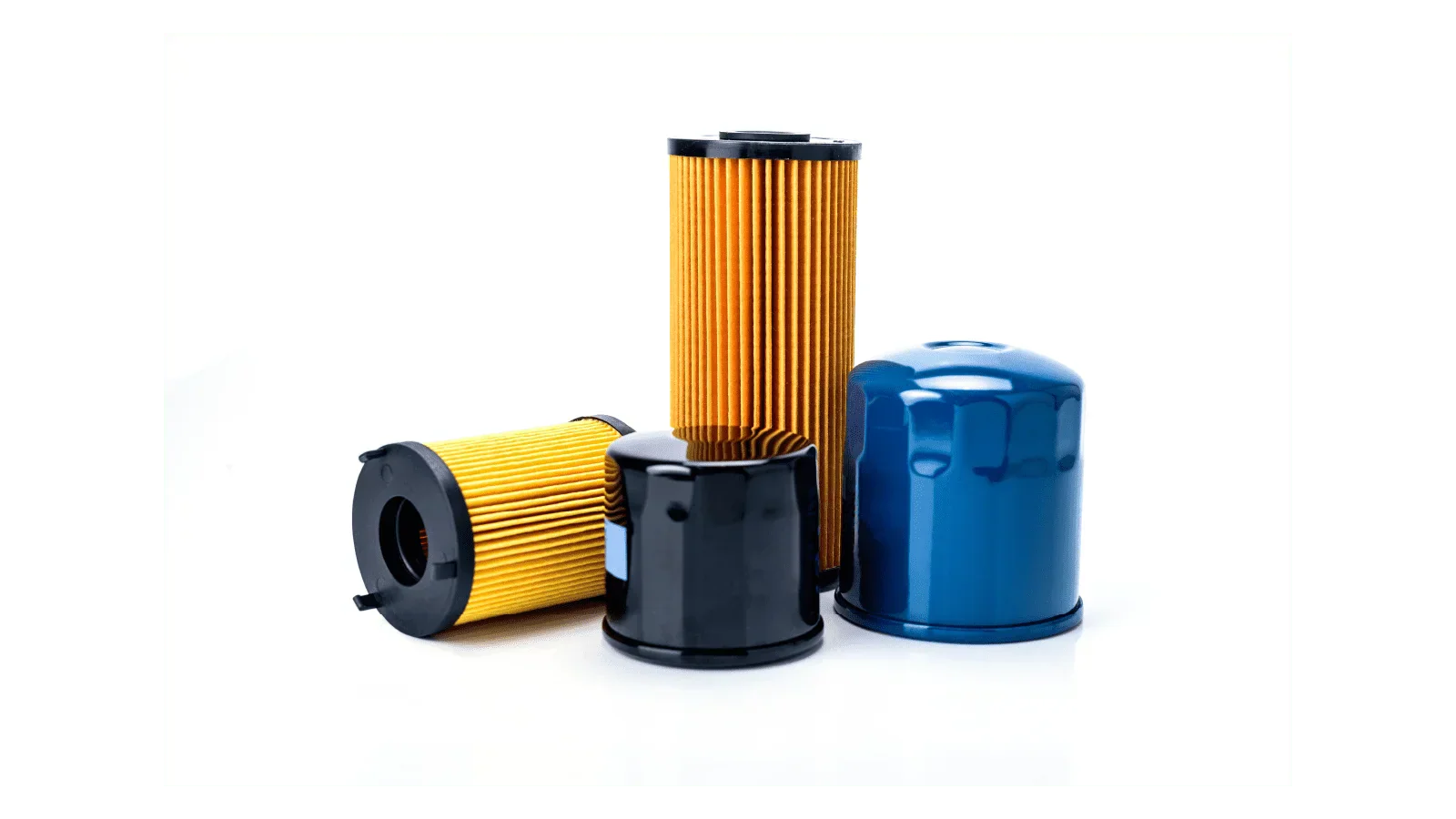
No. The two may look alike in shape and size, but they are built for different jobs and cannot be swapped.
An oil filter is designed around the dirt and debris that accumulate in circulating oil. A fuel filter is designed around the contaminants found in fuel. Their filter media and internal construction differ because the particles they must capture differ.
Viscosity settles the argument. Oil is far thicker than fuel, and a filter sized for one will not meter the other correctly. Fitting the wrong type can damage an engine badly — sometimes immediately, always over time. Never substitute one for the other in either direction.
If a service is due, work from the part number rather than the appearance of the old filter. MechLink's catalogue lists filters from a number of leading manufacturers, and the range covers both fuel and oil applications, so you can search by machine and confirm fitment before ordering. For anything unclear — a mid-season engine change, a mixed fleet, an unusual model — talk to a parts expert and get the specification checked before the machine goes back to work.
Four tire habits that keep heavy equipment rolling
2026-11-24
9 Undercarriage Habits That Keep Tracked Machines Running Longer
2026-11-23
Is Your Fuel Filter Clogged? Five Symptoms You Should Not Ignore
2026-11-23

Hydraulic cylinder seals: five parts that decide cylinder performance
2026-11-22