2026-07-01
Unexpected downtime and sudden loss of engine performance are the primary enemies of high-productivity job sites. When a machine fails in the field, it halts progress and drains your maintenance budget immediately. We see fuel injector issues as a frequent culprit behind these disruptions. This guide helps you identify fuel injector problems early. Identifying these signs before a total failure occurs allows you to perform targeted repairs and avoid expensive secondary damage. Catching a fault now can turn a $99~$1200 injector swap into a way to avoid a $15,000 engine overhaul, keeping your equipment in the field where it belongs.
Fuel injectors are precise mechanical instruments that must operate under extreme pressure and heat. In off-road and heavy machinery environments, conditions are rarely ideal. High-pressure common rail systems demand absolute purity, but the grit of a construction site or mine often interferes. Several factors contribute to fuel system degradation
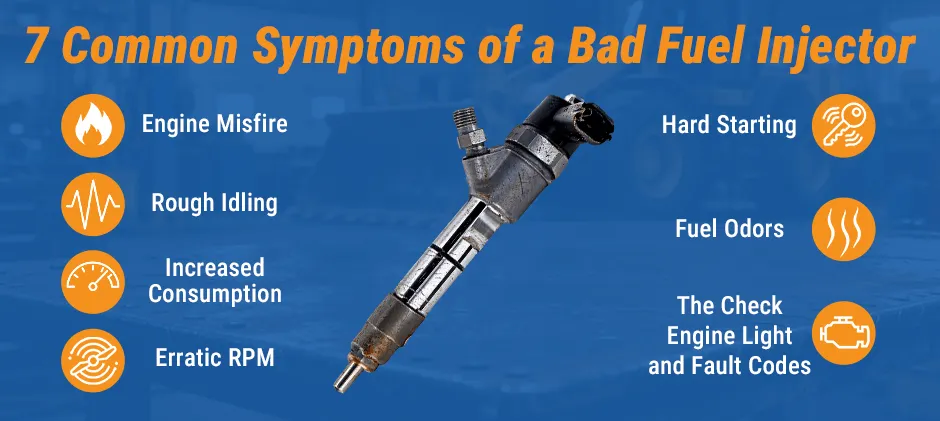
Detecting a bad injector requires a close watch on how the machine behaves during operation. Because heavy equipment relies on precise air-fuel ratios for power and torque, even a small deviation results in a performance drop.
An engine misfire occurs when the injector fails to deliver the correct amount of fuel at the exact moment required by the combustion cycle. In the cab of an excavator or loader, you will feel this as a distinct vibration through the seat or a rhythmic “hiccup” in the engine’s operation. The motor will sound like it is sputtering under load. This happens because the air-fuel mixture is out of balance, preventing the cylinder from reaching full compression ignition. If an injector is completely blocked or the solenoid has failed, the cylinder may not fire at all. This results in a “dead” cylinder, which creates an unbalanced load on the crankshaft and reduces the torque available to your hydraulic pumps.
When your machine is stationary between tasks, the engine should maintain a steady, smooth idle. If you notice the RPM needle fluctuating unprompted while the foot is off the pedal, you are experiencing a rough idle. This is often a result of debris buildup at the injector nozzles, which affects the spray pattern. Instead of a mist, the injector might “dribble” fuel. This inconsistent delivery makes it hard for the ECU to maintain a steady idle speed. If the delivery becomes too erratic, the engine may stall entirely when you let off the throttle. This is a safety issue, especially if the machine stalls while you are maneuvering on a slope or in a tight space.
A faulty injector often wastes fuel. If an injector is “leaking” or “dripping” rather than spraying a fine mist, the fuel does not burn efficiently. You will notice the machine is guzzling more diesel than usual to perform the same amount of work. This inefficiency results in higher operating costs and more frequent refueling stops. Also, in Tier 4 Final engines, this unburnt fuel creates “wet” exhaust. This soot travels into the exhaust system and plugs the Diesel Particulate Filter (DPF) much faster than normal. You will find the machine calling for more frequent “forced regens,” which burns even more fuel and increases downtime.
Heavy equipment engines are designed to provide steady torque under load. When injectors are dirty or failing, the tachometer needle may move unpredictably. You might see the RPMs surge or drop even when you are not changing the throttle position. This erratic behavior indicates that the ECU is trying to compensate for inconsistent fuel delivery. Imagine a loader operator trying to approach a dump truck with a full bucket; a sudden surge in RPM can make the machine lurch, creating a dangerous situation. This choppiness makes it difficult to perform precise tasks with the machine’s hydraulics, as the engine cannot provide a steady flow of power to the pumps.
Fuel injectors must deliver a precise “shot” of fuel to initiate the combustion required to start a heavy-duty engine. If the injectors are starved for fuel or are unable to build the necessary pressure because the internal valves are leaking, the machine will be hard to start. You may find yourself cranking the engine for much longer than usual, which puts a strain on your batteries and starter motor. In cold weather, this problem is worse because the engine relies on the glow plugs and a perfect fuel mist to fire. If the injectors fail to atomize the fuel properly, the motor will not generate the combustion reaction needed to operate.
Most modern machinery uses an Electronic Control Unit to monitor fuel delivery. If the ECU detects that a cylinder is receiving too much or too little fuel, it will trigger a fault light on the dashboard. Use a scanner tool to look for specific misfire codes. Common codes include P0300 (Random Cylinder Misfire) or codes ranging from P0301 through P0308, which identify the specific cylinder that is failing. You may also see “lean” or “rich” codes. Unlike older mechanical engines, these electronic codes provide a clear path to the fix, but they require you to stop and check the system before the ECU puts the machine into a “limp mode” de-rate to protect the engine.
A strong smell of diesel around the machine or inside the cab often points to a fuel leak. These leaks frequently occur at the injector seal kit area. Over time, the O-rings between the injectors and the fuel rails become brittle and cracked due to constant engine heat. When these seals fail, high-pressure fuel can spray or seep out onto the hot engine block. This is a major fire risk and a result of deferred maintenance. Also, external leaks can lead to “washed” cylinders if fuel seeps into the oil, which thins out the lubricant and causes rapid wear on the bearings and cylinder walls.
| Symptom | Likely Cause | Operational Impact |
| Engine Misfire | Air-fuel mixture imbalance | Sputtering, vibration, and loss of hydraulic torque. |
| Rough Idling | Debris at the injector nozzle | RPM fluctuations, stalling, and operator fatigue |
| Increased Consumption | Poor atomization/leaking | High fuel costs and rapid DPF soot accumulation. |
| Erratic RPM | Failing solenoid or clogging | Unpredictable power and danger during truck loading. |
| Hard Starting | Fuel starvation/no combustion | Increased wear on the starter, batteries, and downtime. |
| Check Engine Light | ECU detects fuel delivery error | Forced engine de-rate (limp mode), required diagnostics. |
| Fuel Odors | Cracked body or brittle O-rings | Fire hazard and failed emissions or SCR system errors. |
Preventive maintenance is the best way to stop injector issues before they start. Use these steps to extend the life of your fuel system:
The most common symptoms of a bad fuel injector in off-road machinery include hard starting, rough idle, misfire under load, power loss, changes in smoke, fuel odors, and increased fuel consumption. Because these symptoms can also result from upstream pressure and contamination issues, we should diagnose the full fuel path and fix leaks correctly. With MechLink, we can source affordable, high-quality aftermarket parts from a large inventory with wide compatibility—helping us reduce downtime and keep machines working.