2026-06-17
When an off-road machine starts to lose drive power, shudder under load, or run hot, we usually face the same costly question: is it the torque converter or the transmission? Guessing leads to wrong parts, long downtime, and repeated failures. This guide gives us a practical way to separate torque converter problems from transmission problems on heavy equipment, using symptoms, fluid checks, and simple tests that point to the right next step.
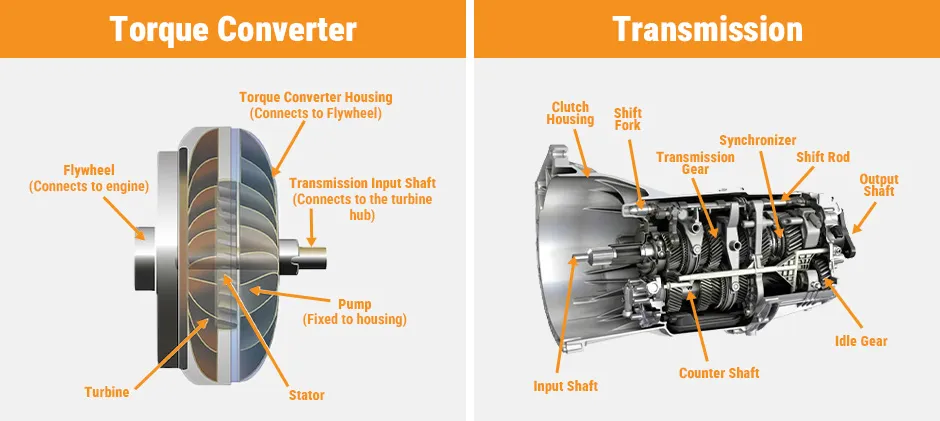
On many off-road machines with powershift or automatic-style drivetrains, the torque converter sits between the engine and the transmission. It’s a hydraulic coupling that takes engine power from the crankshaft and transfers it to the drivetrain via fluid. That fluid link helps the machine move smoothly from a stop, hold on grades with light brake input, and soften shock loads that would otherwise hit gears and clutches.
The transmission is the gear-and-clutch system that turns the incoming power into usable speed and pulling force. It manages direction changes (forward/reverse), ranges, and gear steps so the machine can push, climb, carry, and travel without the operator manually “clutching” like a manual gearbox.
A key point for diagnostics: the converter and transmission are tied together by the same fluid circuit on many machines. Heat, contamination, and pressure problems can spread from one to the other.
A failing torque converter often shows up first during low-speed work: takeoff, inching, climbing into a pile, or trying to hold steady push. Here are the signs that lean converter-first.
Converter work creates heat by design, but overheating is a red flag. If oil temperature rises quickly during pushing, hill starts, or slow high-load work, the converter may be slipping more than it should—or the fluid circuit feeding it is not doing its job.
If the machine shudders when we start moving or when it transitions into a steady drive state, the converter clutch (lock-up clutch on some systems) may be worn or glazed. This shudder often feels like a fast vibration under the seat or through the chassis, especially under light-to-medium throttle.
When engine RPM climbs yet ground speed or push power lags, the converter may not be transferring torque well. This can also happen with transmission clutch issues—so we note when it happens:
If we shift into F/R and the machine pauses before it starts to pull, that delay can come from converter problems—but it can also come from low charge pressure, leaking seals, or clutch fill issues inside the transmission. We treat this as a “converter circuit/pressure circuit suspect” until pressure is verified.
Whining, buzzing, or a harsh rubbing sound that changes with throttle can point to internal wear in the converter (bearings, turbine/pump damage). Noise alone is not enough to condemn a converter, but it raises the priority for inspection—especially if heat and power loss are also present.
Many symptoms overlap. The best separator is when it happens and how consistent it is.
| Symptom | More Likely Torque Converter | More Likely Transmission | What We Check First |
| Shudder during takeoff/inching | High | Medium | Fluid condition + temps + stall/lock-up behavior |
| RPM rises, but the machine lags at low speed | High | Medium | Charge pressure + converter heat + leakage signs |
| Slips in one gear/range only | Low | High | Clutch pressure + solenoids/valves + clutch pack health |
| Harsh shifting or slam engagement | Medium | High | Pressure regulation + valve body + oil contamination |
| Overheats quickly while pushing | High | Medium | Cooler flow + charge pressure + converter outlet pressure |
| Metal debris in the filter | Medium | High | Filter cut + magnet check + pressure test |
Transition to diagnosis: once we map symptoms, we confirm with pressure, temperature, and oil checks. That’s how we stop guessing.
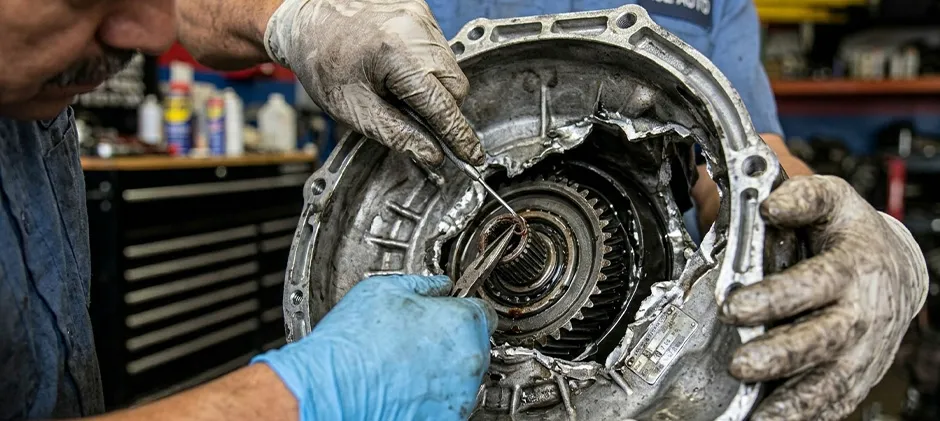
Below is a field-friendly process we can follow before we authorize major labor. Always use lockout/tagout and follow the service manual for test ports and pressure specs.
A sudden failure after service often points to wrong oil, blocked pickup, air ingestion, or an installed seal/filter issue.
We check the oil level per the manual procedure (hot/cold steps differ). Then we look for:
If the oil is wrong, dirty, or low, we fix that first—then re-test. Many “bad converter” complaints are really low oil or aeration.
This is one of the highest-value checks we can do.
Temperature trend helps separate causes:
On most off-road drivetrains, charge pressure feeds lubrication and clutch apply circuits, and also supports converter flow. Low charge pressure can mimic both converter and transmission failure.
If the charge pressure is low, we do not jump straight to “bad transmission.” We check the supply side first.
This is where parts selection matters. If testing points to a weak or worn pump, replacing the correct transmission pump is often the cleanest fix to restore charge pressure and protect both the converter and the transmission.
Some machines allow a controlled stall or pull test to compare the expected engine RPM under load. A converter that has lost efficiency may show abnormal stall behavior. Because these tests can create heat quickly, we keep them short and stop if temps climb or pressure is unstable.
The converter sits in the bellhousing area, and access often means major labor. If we find:
If evidence points to converter-only failure (shudder/overheat + clean pressure + minimal debris), replacing the torque converter can be the most direct path to restore drive feel—as long as we also correct the root cause (cooling, oil type, charge flow).
Even when the main fault is clear, small parts can cause big repeat issues:
If we’re already opening the system, it’s smart to have the right repair items staged. Sourcing the correct transmission parts (filters, bearings, clutch-related service items, and related hardware) helps us finish the job without waiting days for small but critical components.
A bad torque converter and a bad transmission can feel similar on off-road machinery, but the patterns are different. We diagnose faster by tracking when symptoms happen, checking oil and filters, watching heat rise, and confirming charge pressure before replacing major parts. Fix the root cause—flow, cooling, contamination—and we prevent repeat failure. With the right aftermarket parts on hand, we reduce downtime and protect the full powertrain.