
2026-11-13
Buying used is one of the most sensible moves in construction equipment, provided the machine behind the price tag is sound. The saving is real, but it is only real once you have confirmed that the unit will work, not just start.

For most buyers the appeal of used construction equipment comes down to capital. A second-hand machine normally costs considerably less than its new equivalent, which lets a company with a tight budget put good-quality iron on site for each project instead of stretching for one new unit.
There is a second, quieter benefit: the first owner has already absorbed the sharpest part of the depreciation curve. New equipment can drop anywhere between 20% and 40% in its early life, and a buyer who steps in after that fall avoids it entirely. Keep the machine serviced and it will continue to hold value reasonably well.
None of that works if the machine is tired. Used stock varies enormously, from near-new trade-ins to units that have been run into the ground, and the difference is rarely obvious from a photograph or an asking price. What follows is the sequence a careful buyer works through before any money moves.
Two small arrangements make an inspection far more useful. Ask the seller not to warm the machine before you arrive, because a cold start is one of the few moments when an engine reveals what it is really like. And leave enough time for the visit: an hour spent checking is cheaper than a month spent chasing a repair.
Bring a torch, a rag for the fluid checks and something to take notes with. A written record of what you saw turns the negotiation into a factual discussion and gives your workshop something concrete to price. If you are not confident judging hydraulic behaviour or reading exhaust colour, bring a technician who is; against the value of the machine, a second opinion is cheap insurance.
Reputation is the first filter, and it costs nothing to check. Look for a trading history, read customer reviews, and ask for references from previous buyers in the same line of work. A seller who answers awkward questions about a machine's history, and who is comfortable putting commitments in writing, removes most of the risk from the transaction before the inspection even begins.
Always confirm the operating hours and ask how they were accumulated. Hours are a useful starting point rather than a verdict: a machine with a high reading but a disciplined service routine can outlast a lower-hour unit that was neglected. What matters is the combination of hours, duty cycle and maintenance, so treat the number as one input among several.
The service record is the clearest single indicator of how a machine has been treated. A credible log should tell you how often fluids were changed, whether small repairs were dealt with promptly, and whether anything major went wrong during the machine's life. A complete, boring log is a good sign. A missing one is a negotiating point at best and a reason to walk away at worst.
Some wear is normal on any second-hand unit, and expecting a flawless machine is unrealistic. What you are looking for is wear that points to a bigger bill: hairline cracks in structural steel, corrosion around mounts and panels, damaged hydraulic rams, and tracks or tyres that have been worn past their useful margin. Photograph anything suspicious and price the repair before you negotiate.
Cold starting tells you more than a warm idle ever will. Listen at the stack: black smoke points to over-fuelling or an air and combustion problem, while blue smoke usually means oil is being burned. Either colour is a reason to slow down and ask questions. A brief puff at start-up on an older mechanical engine may be normal, but sustained smoke is not.
Ask to dip the engine oil, transmission fluid, coolant and hydraulic oil before you decide. Very low or dirty fluids suggest a machine that has not been looked after, and that is exactly the history you are trying to avoid. Water mixed into the engine oil, which shows up as a milky emulsion, is a hard stop rather than a bargaining chip.
Ask the seller to walk you through the controls, then run the machine yourself through each speed and movement rather than accepting a demonstration. Travel, swing, boom, arm, bucket and any auxiliary circuits should respond smoothly and hold position without drift. A machine that hesitates, judders or drifts is telling you where the money will go after the sale.
Heavy equipment lives under load, so it is normal for a component to crack and be welded back at some point, particularly on a machine that is ten or fifteen years old. The problem is that a welded repair is never as strong or as precise as the original steel, which makes it a weak point under repeated stress. A single tidy weld on a bracket is one conversation; welding across a boom, stick or main frame is a reason to look at other machines.
Brake work on a heavy machine is not a small line item. If the external brake discs are noisy, or the machine is slow to stop, expect a substantial repair and price it in. Where the cost of that repair wipes out the discount you were offered, the honest answer is usually to keep looking.
Equipment that has seized, or that has clearly sat unused for a long period, points to a previous owner who stopped investing in it. Before you discuss specifications at all, establish the machine's history: how long it has stood, why it stopped, and what was done about it. Seized components often hide a much longer list of problems behind them.
Individually, none of these checks is complicated. Together they answer the only question that matters: will this machine earn its purchase price back on your work, or will it spend the next two years in the workshop? A used unit that passes all ten is usually the better financial decision. A unit that fails three or four is a discount you should decline.
It also helps to set your walk-away points before the visit. Write down the two or three faults you will not accept, such as a cracked main frame, water in the engine oil or a hydraulic function that will not hold, and hold that line when the conversation turns to schedule and price. Most poor used-equipment purchases are not caused by missing information; they happen because the information was in hand and then ignored under pressure.
MechLink trades used construction equipment and holds stock across cranes, road equipment, quarry plant, earthmoving, piling, drilling and underground mining. Every quotation is issued with the machine's details and photographs, so you can review condition and specification before agreeing to anything, and the team supports the process from inspection through to shipping. Buyers who want a documented condition check can also read about the authenticity service before shortlisting a unit.

Buying Used Construction Equipment in the Gulf: A Contractor's Procurement Playbook
2026-11-13

Heat, Rock and Uptime: Specifying a Caterpillar Excavator for Middle East Work
2026-11-12
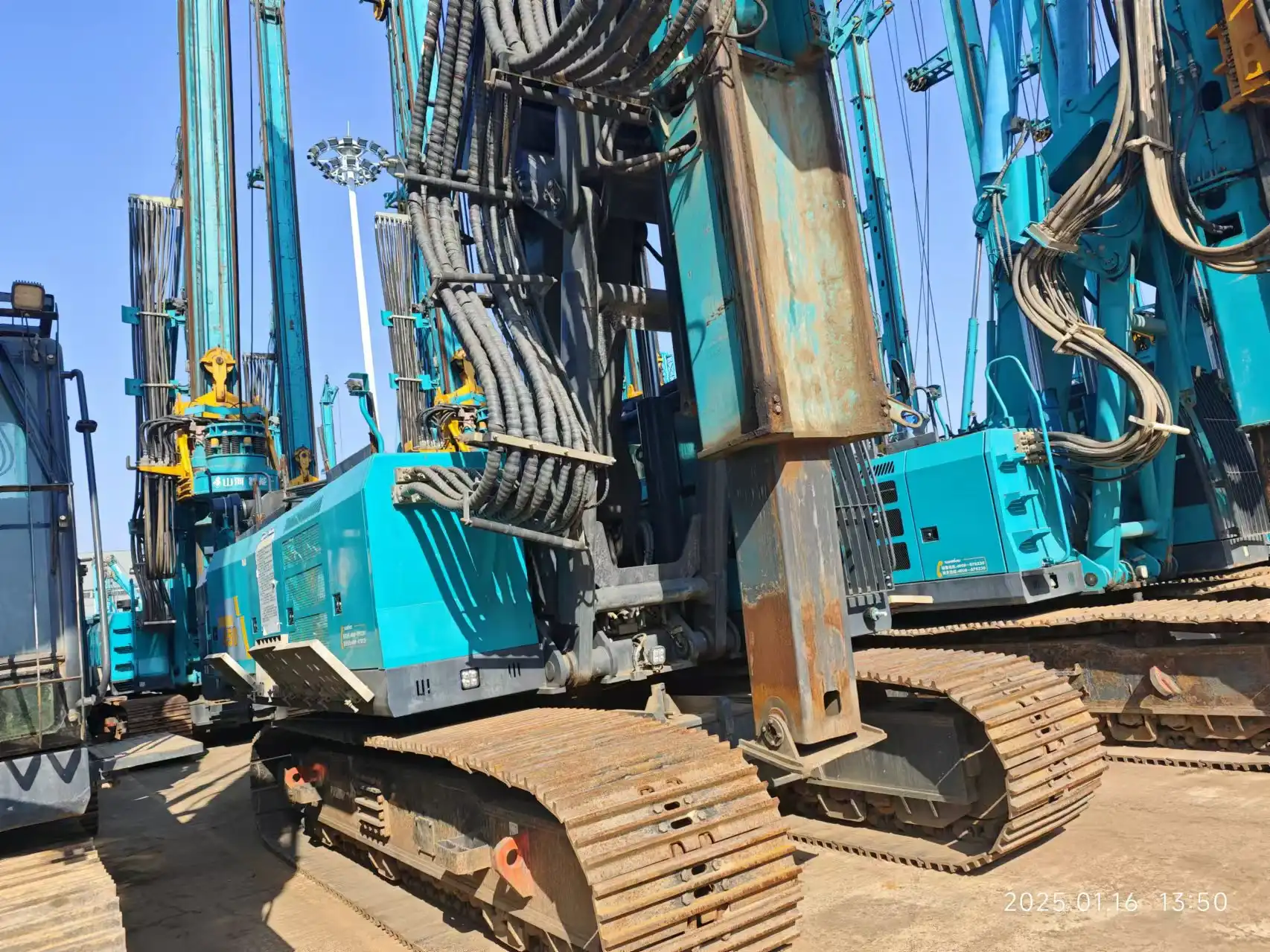
Piledriver, Piling Rig or Rotary Drill? Telling the Piling Machine Family Apart
2026-11-12

Loader Classes Explained: Matching Machine Type to Material, Space and Cycle
2026-11-12