2026-11-02
If you’re looking to replace your equipment’s ball joints but are hesitant to decide due to the wide range of prices on the market, or if you need a more comprehensive price guide, this article is perfect for you. This guide provides a clear and practical analysis of the cost of replacing an off-highway equipment ball joint in 2026, the factors that influence price, and the information you need to make an informed decision.
In 2026, the average market price to replace one ball joint ranges from $250 to $350, depending on the machine type, labor hours, and the part itself. A restoration conducted within an OEM dealership is often observed to ascend from $500 to beyond $800 per single joint, encompassing both components and the labor involved.
For individuals whose financial capacity is under consideration, or who pursue the utmost value, the following aspects merit attention:
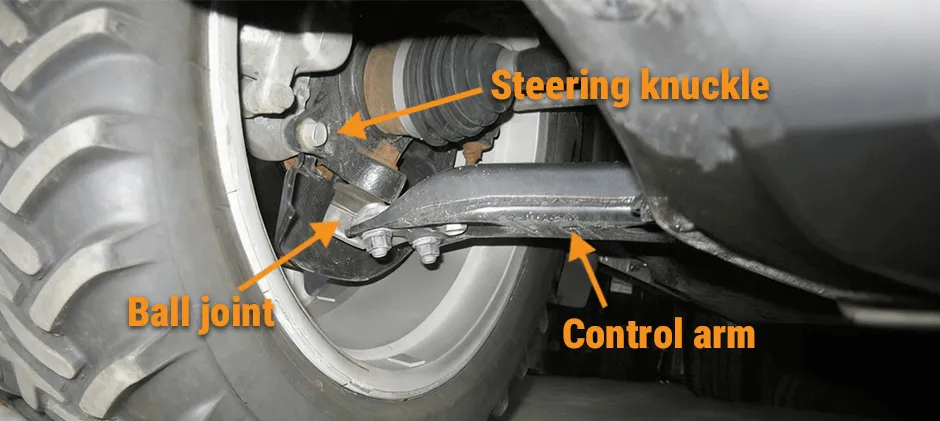
Unlike those small vehicle ball joints, the ball joints on heavy-duty machinery such as skid steers, backhoes, or telehandlers are constructed with great endurance to bear tremendous stress. In essence, a ball joint is a flexible connection in the form of a ball and socket, resembling the structure of a human hip. It is composed of a metallic casing (serving as the socket) and a ball stud that performs both rotational and pivotal movements inside.
This seemingly simple structure accomplishes two indispensable functions:
In the absence of properly operating ball joints, the machine’s steering mechanism would cease to function, and the entire wheel assembly would lose its steadiness. They serve as the essential axis that secures the integrity of the front suspension system.
The total cost to replace ball joints is a combination of part cost and labor. Labor is often the largest part of the expense, as the job can be intensive. Below is a table with estimated costs for common types of off-road machinery.
| Machine Type | Aftermarket Part Cost (Per Joint) | OEM Part Cost (Per Joint) | Estimated Labor Hours (Per Joint) | Estimated Total Aftermarket Cost | Estimated Total OEM Cost |
| Skid Steer Loader | $40 – $90 | $150 – $300 | 2 – 3 hours | $240 – $490 | $350 – $900 |
| Backhoe Loader | $60 – $135 | $250 – $500 | 2.5 – 4 hours | $310 – $735 | $500 – $1,300 |
| Telehandler | $75 – $150 | $300 – $600 | 3 – 5 hours | $375 – $950 | $600 – $1,600 |
| Compact Wheel Loader | $80 – $160 | $350 – $700 | 3 – 5 hours | $380 – $960 | $650 – $1,700 |
For those maintaining older off-road machines, sourcing aftermarket ball joints can significantly reduce total costs while maintaining quality. Most parts cost much less than what you’ll find on the market. MechLink sets ball joint prices according to raw materials and basic costs, ranging from $19 to $135 to ensure both price and quality. Midway through your purchasing research, browse transmission & undercarriage parts to compare compatible assemblies that often pair with suspension or steering maintenance.
On average, replacing a single ball joint takes between 1–3 hours. Machines with press‑fit assemblies or restricted access may require extra disassembly time. Alignments or steering recalibration add an hour.
Scheduling multiple joint replacements together can lower total labor costs, as technicians can complete both sides with fewer setup changes.
Several variables can influence the final invoice for your repair.
Ball joints do not have an exact lifespan, but for most off-road machinery, it is considered necessary to conduct inspections every 500–1,000 working hours. Replacement commonly occurs within 2,000–5,000 hours, with the precise timing influenced by labor intensity and the sufficiency of lubrication.
Watch for the following signs of bad ball joints:
To persist in operating machinery with defective ball joints (or with loosened pivot points) shall aggravate the wear of control arms, steering knuckles, and tires, thereby causing the expenditure on repair to increase in swift multiplication.
Replacing ball joints isn’t impossible for skilled operators, but for off‑road machinery, the process can be physically demanding and tool‑intensive. Proper lifting, torque specifications, and alignment setup are vital for safety.
DIY replacement may be feasible if you have:
If any step feels uncertain, it’s worth hiring a certified mechanic. Improper installation can lead to premature wear or sudden steering failure. Remember — a poor repair on heavy machinery has consequences more serious than on a car.
Replacing ball joints is critical for steering safety and control precision. With part prices steadily rising in 2026, choosing the right supplier matters more than ever.MechLink offers a full range of ball joints, steering kits, and transmission & undercarriage parts for off‑road machinery at $19–$135, combining affordable pricing with proven durability. Whether you operate loaders, tractors, or dump trucks, maintaining joint integrity ensures smoother operation, less downtime, and lower lifecycle costs.