2025-12-15
When it comes to moving materials around a job site, telehandlers are the machine of choice. Sometimes described as a hybrid between a crane and a forklift, these versatile machines are rapidly gaining popularity in the construction industry.
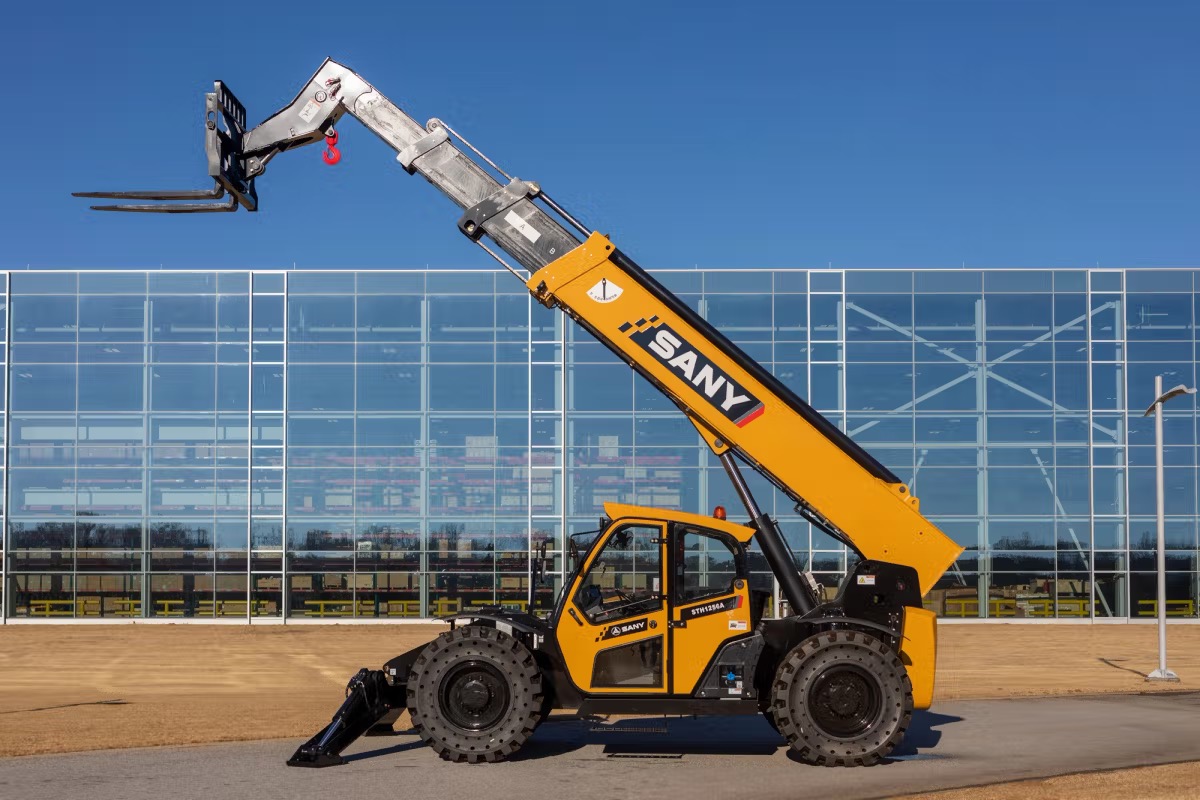
Short for telescopic handler, a telehandler consists of a four-wheeled chassis and operator cab with a boom mounted to one side. A telehandler’s boom is retractable, with common models having a reach of up to 30 ft.
While forks are the most common type of attachment used with telehandlers, a wide array of attachments can be fitted to their boom, ranging from cages to buckets.
Telehandlers are very popular due to their unique design and robust versatility. They can be used to haul materials at the beginning of a project, and at the end during cleanup.
As they are primarily used for transporting materials, telehandlers are frequently compared to forklifts. However, telehandlers have many advantages that forklifts do not, such as a retractable boom, more lifting capacity and a more rugged design.
In this guide, we’ll cover the basics of telehandlers and how they’re used in modern construction. Understanding the applications and advantages of telehandlers in construction can help you unlock their potential for your next project.
The primary functions of a telehandler are related to loading, unloading and placing materials.
Some common use cases for telehandlers include:
One major advantage of telehandlers is they are capable of working in challenging terrain. This makes them uniquely suited for jobs on uneven, muddy or sloped terrain, as well as for applications in agriculture.
Telehandlers possess several unique characteristics that make them especially useful for construction tasks.
Perhaps the most distinctive feature of a telehandler is its telescopic boom. This boom can extend and retract, allowing the telehandler to reach high areas with ease.
Another unique feature of telehandlers is their high lifting capacity. Telehandlers typically have a lifting capacity ranging from several thousand pounds to over 10,000 pounds or more, depending on the model. This allows them to handle heavy loads that similar machines, like forklifts, would not be able to handle.
Finally, telehandlers can be equipped with various attachments, including pallet forks, buckets, crane jibs and more. This adaptability allows them to efficiently perform a wide range of tasks beyond just lifting.
While pallet forks are the most common attachment used with a telehandler, many useful attachments can help augment the machine’s capabilities. Some of the most popular attachments for telehandlers include:
Like other machines, changing attachments on a telehandler is relatively straightforward. Securing an attachment to a telehandler typically involves aligning attachment pins or connectors with the telehandler’s attachment points and securing them with locking pins or fasteners.
However, the exact mechanism used to secure attachments will depend on your telehandler’s make and model.
Telehandlers are powerful, capable machines which must be maintained properly in order to remain in working condition. Like all heavy equipment, the best way to maintain your telehandler is by devising a thorough preventive maintenance program that addresses the following key areas:
Proper maintenance will go a long way in improving the efficiency of your telehandler and preventing common issues like hydraulic system problems and engine issues.
Buying a telehandler is a good investment if you frequently use one for the same task. For example, framing contractors would be wise to invest in a telehandler since they’re likely to use one on every job.
If, however, you don’t plan on using the telehandler often, renting could be a better choice. Renting a telehandler allows you to pay for the machine only so long as you need it. Another advantage of renting is the rental company maintains the machine, so you won’t need to dedicate additional resources to keeping the telehandler in good condition.
Renting can also be a better option if the tasks for which you use the telehandler vary in their size and/or complexity. Since telehandlers come in a variety of sizes, renting a telehandler will provide you with the flexibility to select a machine that is the ideal size for the task at hand.
Telehandlers are impressive, capable machines that can help your team move materials efficiently. Through the use of attachments, they can tackle a wide range of tasks from hauling soil to stacking pallets.
If you need help maintaining your telehandler, look no further than the MechLink Shop. Our online shop carries OEM and aftermarket parts for telehandlers, making maintenance easier than ever. Still can’t find the specific part you need? Reach out to our dedicated parts experts and get personalized assistance.