2026-08-02
Among the most respected models in the compact category is the Ford 1500. Produced for only a few years, this machine has earned a lasting reputation for its durability and straightforward design. For owners, whether you’re restoring a family heirloom or relying on it for daily chores, understanding your Ford 1500 inside and out is the key to keeping it running for decades to come. This guide is your central resource for that knowledge. We’ll explore what makes this tractor special, dive deep into its maintenance needs, troubleshoot common problems, and guide you toward finding the right parts to ensure its longevity.
Manufactured by the Japanese company Shibaura for Ford from 1979 to 1982, the Ford 1500 was a direct response to the growing demand for powerful yet nimble compact tractors. It wasn’t designed with flashy features or complex electronics. Instead, its purpose was singular: to be an accessible, dependable tool for a variety of tasks. Its enduring popularity is a testament to the success of that philosophy.
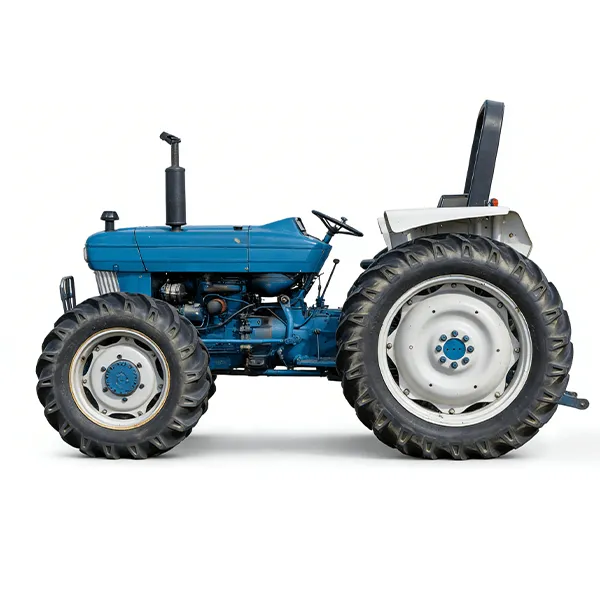
With the Ford 1500 tractor, steady maintenance is less about fancy diagnostics and more about preventing the common cascade: small leak → low fluid → heat → wear → expensive repair. The tractor’s age also means seals and rubber parts are often living on borrowed time, even if the machine has low hours.
Here’s how we approach a maintenance routine that fits real off-road use (mowing, loader work, light tilling). Instead of chasing a perfect schedule, we focus on inspection points that catch problems early:
A modern machine may tolerate small seepage for a while because it has tighter filtration and often better heat management. On an older compact tractor, a seep at a fitting or a damp axle area can quickly become a real problem because the system capacity isn’t huge, and because contamination (dust + oil film) accelerates wear.
A practical rule we use is: if a leak can fling oil onto a rotating part, it’s not “minor.” That includes axle areas, PTO seals, and anything near the clutch housing.
Even if your Ford 1500 “runs fine,” these items tend to be the best return on money and time because they stabilize the tractor:
Most Ford 1500 tractor problems fall into a few repeat categories: cold-weather behavior, PTO engagement complaints, hydraulic lift issues, and 4WD front axle seepage. The key is to diagnose by symptom and narrow the cause before buying parts. We’ve seen a lot of owners replace “the obvious part” only to find the root issue was adjustment, contamination, or a worn sealing surface
| Symptom you notice | Common root causes | What do you check before ordering parts |
| Hard shifting when cold | Oil viscosity is too heavy; the clutch is not fully releasing; the linkage needs adjustment | Correct fluid type for ambient temp; pedal free-play; linkage bind |
| PTO grinds or is hard to engage | PTO clutch wear; linkage out of adjustment; operator engagement technique | Linkage adjustment; clutch condition; verify mechanical engagement movement |
| 3‑point lift hesitates, chatters, or feels weak | Air in system; restricted filter; worn pump; internal leakage in lift circuit | Fluid level/condition; filter; suction leaks; bleed procedure after service |
| Lift drifts down under load | Internal hydraulic leakage (piston/seal wear in cylinder/lift circuit) | Load test; check for bypass symptoms vs external leaks |
| Wetness at 4WD hubs/knuckles | Front axle seal wear, bearing play, and shaft wear groove | Confirm axle type; inspect sealing surface; check bearing preload/play |
| Steering feels loose or wanders | Tie-rod/ends wear; steering box wear; front axle pivot wear | Check free play; inspect joints; verify wheel bearing tightness |
The Ford 1500 remains a practical compact off-road tractor because it’s simple, serviceable, and capable with the right maintenance. If you keep fluids clean, fix leaks early, and use the serial number to confirm configuration, you can avoid most repeat failures—especially hydraulic drift and front axle seepage. As an aftermarket parts supplier, we support these repairs with high-quality products at affordable prices, a vast inventory, and wide compatibility across many heavy equipment brands.