2026-09-07
Your machine gauge dashboard is your command center. It’s covered in pointers, indicators, and numbers that show you how your device is doing in real time. Generally speaking, the most common instrument combination for modern heavy equipment is: tachometer, fuel gauge, engine temperature gauge, plus the necessary voltage or warning indication system. What do these gauges meaning? We will solve your problems.
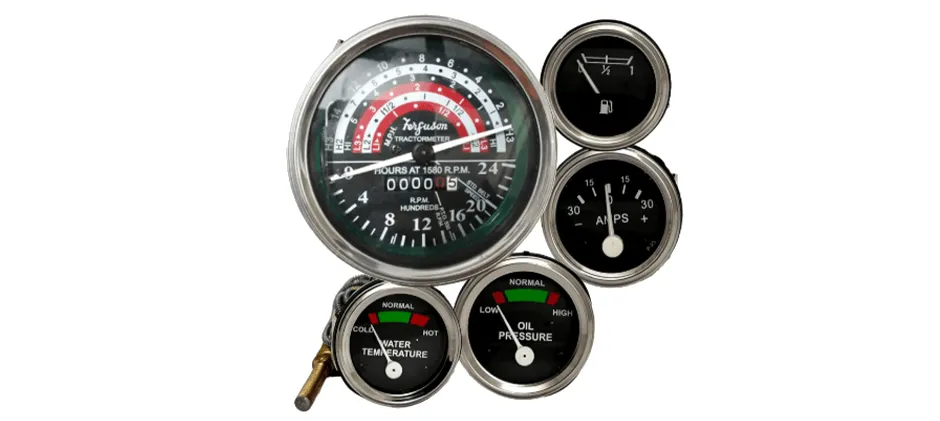
The hour meter is the most basic display on any heavy equipment: the hour meter. Unlike a car’s odometer tracking miles, the hour meter counts the total time your engine’s been running. This number is the most useful information for machine maintenance. Every service task—from oil changes and hydraulic fluid top-ups to big component overhauls—is scheduled by operating hours. A machine with 5,000 hours needs way different maintenance than one with just 500. Always keep an eye on your hour meter. Always stick to the manufacturer’s service schedule based on those hours. That’s the easiest way to keep your machine running strong and reliable for years.
The importance of a fuel gauge to a diesel engine goes far beyond simply preventing fuel from running out. It clearly shows how much diesel is left in the tank.
Once a diesel engine runs out of fuel, air can get into the fuel lines. If you want to restart the engine, you must first drain the air from the pipeline. This can be particularly time-consuming at construction sites. In addition to this, the fuel pump of the machine has been soaked in diesel fuel at the bottom of the tank. That diesel is what keeps the pump cool. If you’re always running the tank almost empty, the pump can overheat. It’ll die sooner, and replacing it costs a pretty penny.
Pro Tip: Get in the habit of checking your fuel filter’s water separator every day. Water is a diesel engine’s worst enemy. This quick check can save you from major damage to your injection system.
Operating under heavy loads, the engine generates a lot of heat. An engine coolant temperature gauge is your window into the performance of your cooling system. It measures the temperature of the coolant, which circulates through the engine.
When starting the machine, the pointer is in the “cold” (C) region. As the equipment operates, the temperature rises and stabilizes within the normal range. Usually, a green area or an area between “cold” (C) and “hot” (H) is normal.
The needle rises to the red area or near the “hot” (H) mark and the engine overheats. This can lead to cylinder head deformation, cylinder pad damage, or even complete engine lock.
What to do if it overheats:
The tachometer—we also call it an RPM gauge—tracks how fast your engine spins, measured in revolutions per minute. On heavy equipment, it works way differently than in a car. You don’t use it to time your gear shifts. Instead, it helps you run the machine the right way—efficient and effective.
And one more thing: Racing the engine going into the tach’s red zone can wreck the inside of the engine badly. Newer machines usually have a rev limiter to stop this from happening, but you should never test that limit.
Think of coolant temp as the engine’s fever—oil pressure is its blood pressure. The oil pressure gauge or warning light is hands down the most important safety feature for your engine. It checks how much pressure is pushing oil through the engine to lubricate all the moving parts. No proper oil pressure? Metal rubs against metal, and your engine can self-destruct in less than a minute.
Critical rule: If the oil pressure gauge drops to zero or the oil warning light comes on, turn off the engine immediately. Stop the machine safely first and turn off the power. Usually, there is not enough oil. But it could also be that the oil pump is broken or there is an oil leak inside. Don’t start the engine again until you find the problem.
The electrical system drives the engine control unit (ECU), lighting, accessories and many other components. It is important that the visible electrical system is healthy. This is what a voltmeter does. It monitors the operating status of the charging system. Most devices use a 12-volt or 24-volt system.
If the voltage drops below 12.5V (or 25V), your alternator is probably acting up. The machine will run only on battery power—and that’s really bad for it. If the voltage is way higher than 14.5V (or 29V), the voltage regulator is likely broken. This will fry your battery and all the sensitive electronics.
Tech keeps getting better—and so do dashboards. You might spot these other handy gauges, too:
If any gauge shows a problem, whether it’s low oil pressure or a faulty alternator, replace the broken part as soon as you can. Luckily, with MechLink, you can easily find the right replacement parts for your machine’s brand and model. All our products guarantee you get your money’s worth. Got any questions? Just reach out to our customer service team anytime.