2026-10-10
As MechLink, we talk to drivers, fleet managers, and shop techs every day about diesel fuel injector replacement cost. Prices swing a lot by engine and setup, and there are a few “gotchas” that blindside folks—core fees, coding, return line kits, and fuel system cleanup. In this guide, you’ll get straight numbers, what drives the total bill, and practical ways to shave the cost without cutting corners.
Three things move the needle the most: parts price, labor hours, and what else you touch while you’re in there. Parts cost ranges from budget reman injectors to premium new OEM. Labor sits anywhere from a quick few hours to a full-day job, depending on how buried the injectors are and whether the valve cover, intake, and fuel lines fight you. On some platforms, access is easy. On others (looking at you, certain Duramax and Power Stroke years), you’re pulling a lot of stuff just to see the injector rail.
Where you live matters, too. Big city labor rates in the U.S. can run 150–150–150–220 per hour at a dealer, 110–110–110–160 at a strong independent. Rural shops might be lower. Heavy-duty trucks usually book fewer hours per injector but use higher-rate shops. Light-duty diesels often book more hours due to packaging under the hood.
The last layer is add-ons: new seals and lines, coding or trim calibration, cleaning the fuel system after a failure, and replacing the fuel filter head or water separator if they’re leaking air. If your injector failed from metal debris (pump wear), you’re in for more parts—lines, rails, and sometimes a high-pressure pump. That’s a different budget. But for a straight bad injector swap, your bill is mostly parts plus labor and a few small items.
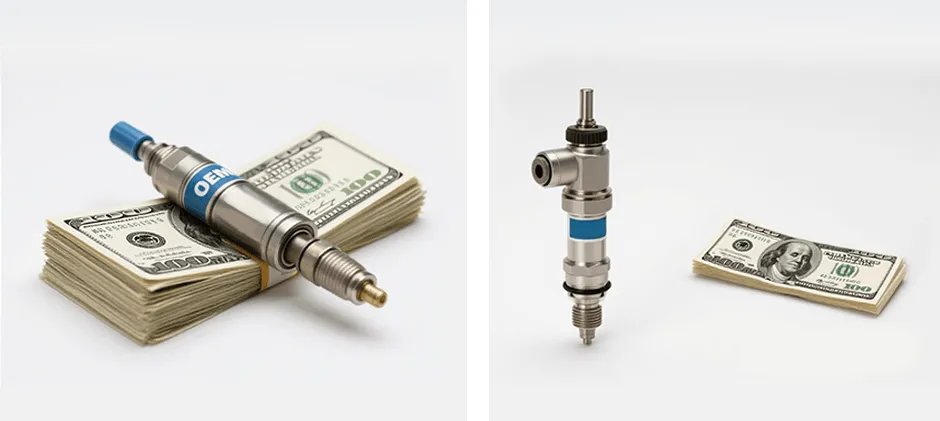
You’ve got choices. New OEM injectors cost more but come with tight tolerances and a solid warranty. Reman injectors save money if they’re built right—new nozzles, matched internals, tested on a bench, and shipped with the right codes. Aftermarket new can be a good value from known brands; bargain-bin units with shaky test data are a false win and can take out a piston if they overfuel.
Here’s what we see in today’s U.S. market:
Don’t forget the extras:
MechLink carries new and reman diesel injectors, matched seal kits, and return line kits for Duramax, Power Stroke, Cummins, Detroit Diesel, Caterpillar, and more. Tell us your VIN or engine code—we’ll match the exact part number and coding needs so you don’t guess.
Labor swings the most based on packaging. On many heavy-duty truck engines, you can pop the valve cover and get right to work. On some pickups, you’re pulling lots of plumbing and brackets first. That’s why the same injector price can turn into a very different total.
Duramax (varies by generation): a single injector can be 2–4 hours if it’s on the easy bank, but early LB7 full sets often run 10–16 hours because you’re under the valve covers and dealing with snug clearances.
Power Stroke:
Cummins 5.9/6.7 common rail: access is better, but rusted lines can slow you down; 3–6 hours for a set if everything plays nice, longer if you replace lines.
Multiply the hours by your local rate to ballpark the labor cost. At 140/hr,a6−hourjoblandsaround140/hr, a 6-hour job lands around 140/hr, a 6-hour job lands around 840 in labor; a 12-hour job
is roughly $1,680 before parts.
Use these ranges as a planning tool. Your actual bill depends on brand choices, shop rate, and how many injectors you replace.
| Engine | Per-Injector Total (parts + labor) | Full Set Total (parts + labor) |
| Duramax LB7 | 500–900$ | 3,000–5,500$+ |
| Duramax LLY/LBZ/LMM/LML | 450–850$ | 2,800–5,200$ |
| Power Stroke 7.3L | 350–700$ | 1,800–3,500$ |
| Power Stroke 6.0L | 400–800$ | 2,200–4,200$ |
| Power Stroke 6.7L | 500–950$ | 3,000–5,500$ |
| Cummins 5.9L CR | 400–800$ | 2,000–3,800$ |
| Cummins 6.7L | 450–900$ | 2,200–4,200$ |
| Detroit Series 60 | 450–900$ | 2,500–4,500$ |
| Detroit DD15 | 550–1,050$ | 3,200–5,800$ |
| Cummins ISX | 550–1,000$ | 3,000–5,500$ |
| Caterpillar C15 | 500–950$ | 2,800–5,200$ |
Notes:
When folks ask us, “What’s the cost of replacing a diesel fuel injector?” they usually mean parts and labor. But a few small items can stack up if you don’t plan for them.
Quick tip: Keep your receipts and the injector boxes with the printed codes until the job is complete and the engine is road-tested. If anything feels off, your tech will want to verify each code and part number fast.
You can replace a single injector, and sometimes that’s the right move—like a newer truck with one obvious outlier on balance rates and clean fuel history. But if your engine has high miles, multiple borderline injectors, or a known weak generation (LB7s come to mind), doing the set can save labor and keep you from opening the same valve cover twice.
Here’s how to decide:
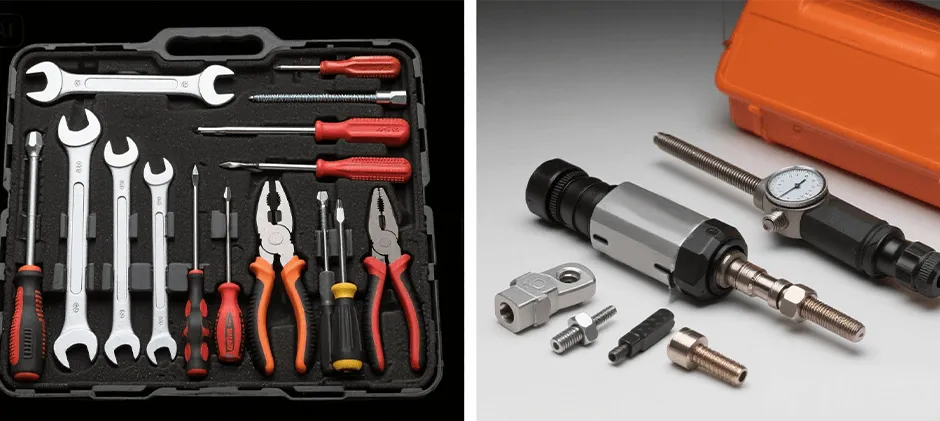
If you wrench on your own truck, a diesel injector job can be done at home with the right tools. You’ll need torque wrenches, line wrenches, a clean work setup, and a scan tool that can run balance rates and code injectors. On HEUI engines (7.3L/6.0L), the mechanical work is manageable, but you have to keep everything spotless and follow torque sequences. On common-rail engines, the high-pressure side is no joke—treat it with respect and always depressurize per the service manual.
Pros of DIY:
Cons of DIY:
Not sure? You can do the teardown, cleaning, and reassembly, and hire a mobile tech for coding and final checks. MechLink can kit your job with injectors, seals, return lines, filters, and any special tools you’ll need so you don’t stop mid-job.
You don’t have to buy the cheapest parts to keep costs down. Aim for value and prevention.
At MechLink, we bundle injectors with the right seals, lines, and filters for your engine so you don’t chase small parts. We can also match coding needs and include any tools you’ll want for a smooth install.
Upfront, one injector is cheaper. Long term, if access is tight or multiple injectors test weak, replacing the set often saves money by cutting a second round of labor. Check balance rates and return flow to decide.
They live under high pressure and tight tolerances. Common-rail injectors meter fuel in tiny pulses at 20,000–30,000+ psi. Building and testing them takes precision hardware. That’s why new OEM parts command a higher price and why solid reman work matters.
Cleaner helps sticky nozzles or mild deposits, but it won’t fix worn internals, cracked tips, or electrical faults. If you’ve got hard starts, cylinder-specific misfires, or high return flow, cleaner won’t save that injector.
Many do. Common-rail injectors ship with trim codes that must be entered so the ECM can balance fueling. Skipping coding can lead to rough idle, smoke, and fuel trim codes. Budget an extra 0.5–1.0 hours for this step.
For one injector on a pickup, plan 450–450–450–900 total. A full set usually lands between 2,000and2,000 and 2,000and5,500, depending on engine, brand choice, and labor rate. Heavy-duty trucks often run 2,500–2,500–2,500–5,800 for a set. If a high-pressure pump failed, the totals can be higher due to extra parts.
If you want exact pricing for your engine, message MechLink with your year, engine (Duramax, Power Stroke, Cummins, Detroit, Cat, etc.), and whether you want new or reman. We’ll quote injectors, seal kits, lines, and any coding notes so you can budget right and get the job done once.
Here are more replacement cost guides for the fuel filter, thermostat, blower motor, air filter, fuel pump, and water pump.