
2026-11-01
If you’re searching for a reliable tactor but find some confusing abbreviations like Cat 1 vs Cat 2 vs Cat 3, or more. It doesn’t stand for a cute cat or the famous company Caterpillar. Actually, it means the tractor category, and each of which is a standardized sizing system that matches your tractor’s 3‑point hitch. This guide will help you differentiate the three categories so you can pick the right machine and increase your working efficiency.
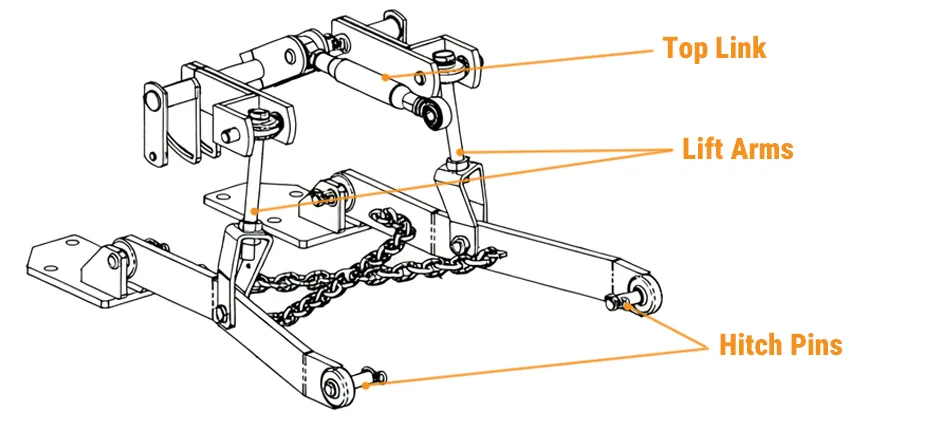
Each tractor category refers to the 3‑point hitch size — the triangular linkage at the back of your tractor that attaches to tools like tillers, plows, or box blades.
The rule is simple: The higher the category number, the larger and stronger the tractor and its hitch.
Two main factors define each category:
Who it’s for: Homeowners, hobby farmers, and landscapers managing 5–20 acres.
Typical Tractor: Compact or sub‑compact tractors (20–50 HP).
Example: MX compact tractor 3-point hitch kit Cat‑1.
What it does best:
Hitch Facts: Cat 1 lower hitch pins measure ⅞ inch in diameter, and the top link pin is ¾ inch.
Bottom Line: Cat 1 is the “do‑it‑all” category — ideal for small‑scale property management.
Who it’s for: Small-to mid-size farms and municipalities.
Typical Tractor: Utility tractors (45–125 HP).
Ideal Implements: Larger tillers, plows, hay tools, and seeders.
What it can handle:
Hitch Info: The Cat 2 3-point hitch uses 1 ⅛-inch lower pins and a 1-inch top link pin, along with heavier lift arms for stability and strength.
Bottom Line:
If your farm income depends on reliable power and productivity, a Category 2 tractor is your best match.
Who it’s for: Large farms and professional agricultural operations.
Typical Tractor: 100–225+ HP farm tractors.
Implements: Industrial‑scale implements like wide cultivators, rippers, or planters.
Hitch Details: A Cat 3 tractor hitch uses thick 1 7/16-inch lower hitch pins and a 1 ¼-inch top link pin, heavy-duty lift arms, and a robust top link to handle extreme working loads.
What it can do:
Bottom Line:
A Cat 3 tractor is a powerhouse for serious professionals managing large operations.
| Feature | Category 1 | Category 2 | Category 3 |
| User Type | Hobby Farmer / Landowner | Small‑Medium Farmer | Large‑Scale Farmer |
| Horsepower (HP) | 20–50 HP | 45–125 HP | 100–225+ HP |
| Tractor Type | Compact Tractor | Utility Tractor | Large Ag Tractor |
| Common Jobs | Mowing, Gardening, Landscaping | Hay Baling, Plowing, Planting | Large‑Scale Tillage, Seeding |
| Hitch Pin Size | Lower: ⅞ inch / Top: ¾ inch | Lower: 1 ⅛ inch / Top: 1 inch | Lower: 1 7/16 inch / Top: 1 ¼ inch |
| Analogy | The All‑Around SUV | The Heavy‑Duty Pickup | The Commercial Semi |
It really comes down to scale:
Knowing the differences of Cat 1 vs Cat 2 vs Cat 3 tractor categories helps you match:
Pick the right match to not only increase your working efficiency but also save your money!
Whenever your tractor has something wrong, you can also turn to MechLink. We offer high-quality tractor replacement parts covering cat 0 – 5 and more. Cost-effective and quality promised, shop today!
What series pto shaft do i need? a complete guide
2026-11-01
Nh workmaster 25s complete guide | specs, features & parts
2026-10-31
How to choose the right excavator sizes for your project?
2026-10-31
What is the biggest kubota skid steer? - mechlink blog
2026-10-30